
Related News
 Agricultural Equipment Buying Guide: Key Specs, Operating Costs and Dealer SupportJun 13, 2026
- Lean Manufacturing Techniques That Reduce Changeover Time and Shop Floor WasteJun 13, 2026
- What Drives Mineral Price Trends? Supply, Energy Costs, Policy and Demand FactorsJun 13, 2026
- Plastic Processing Equipment Types Explained: Extrusion, Injection, Blow Molding and MoreJun 13, 2026


Industry Briefing
Get the top 5 industry headlines delivered to your inbox every morning.
Why industrial machinery quotations vary more than expected





Industrial machinery quotation often varies far more than buyers expect because pricing depends on application, specs, sourcing, and supplier strategy. Whether comparing heavy industrial machinery for food processing, mining, construction, or the chemical industry, procurement teams must look beyond a simple industrial machinery price list. This article explains the real cost drivers behind industrial machinery specifications, supplier differences, and supply chain outsourcing decisions.
Why the same industrial machinery request can produce very different quotations
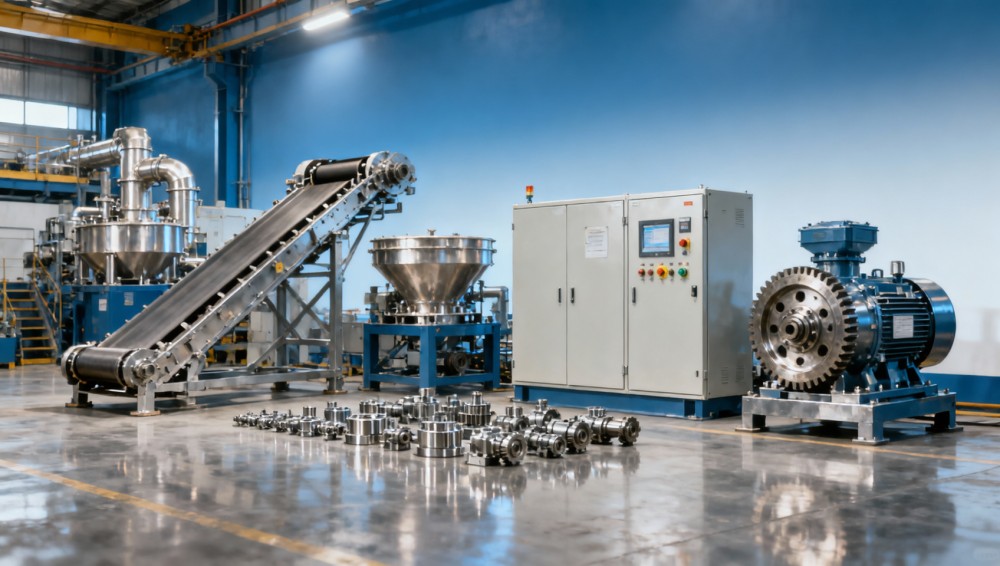
A machinery quotation is rarely just a number tied to a machine name. In heavy industry and related value chains, price changes usually begin with the operating scenario: continuous duty or intermittent duty, abrasive or clean material, indoor or outdoor installation, and expected service life. A conveyor for mining, a mixer for chemicals, and a packaging line for food processing may all look similar on paper, yet the industrial machinery specifications behind them can differ enough to shift total quoted value by 15% to 40%.
Another reason industrial machinery quotations vary is that buyers and suppliers often define scope differently. One supplier may include control cabinets, commissioning, spare parts, and export packing. Another may only quote the core equipment. When procurement teams compare an industrial machinery price list without aligning scope, they often mistake incomplete pricing for a lower-cost offer. In practice, 3 to 6 hidden line items can significantly change the decision.
For information researchers and decision-makers, the challenge is not only finding a quote but interpreting it. For operators and users, the real issue is whether the quoted machine matches throughput, safety, and maintenance conditions. For procurement teams, the pressure usually centers on budget ceilings, lead times of 4 to 12 weeks, and supplier risk. These needs require structured industry information rather than isolated catalog prices.
This is where a professional industry information platform creates value. By covering heavy industry and upstream and downstream markets, it helps users compare supply conditions, understand cost drivers, track delivery trends, and evaluate whether outsourcing, localization, or alternative sourcing is practical. That broader view is often what separates a workable quotation from a costly mismatch.
Common quotation variables buyers overlook
- Duty cycle: equipment designed for 8-hour shifts may be priced very differently from equipment intended for 24/7 operation.
- Material characteristics: corrosive, sticky, high-temperature, or high-wear materials can require upgraded alloys, seals, and liners.
- Automation level: manual loading, semi-automatic control, and PLC-based integration usually create different electrical and software costs.
- Site conditions: voltage standards, altitude, dust level, and explosion-risk zones can alter compliance and component selection.
A useful first check
Before asking whether one quote is too high, ask whether all suppliers are quoting the same 5 core elements: capacity, material, controls, installation scope, and after-sales terms. If these are not aligned, the comparison is not yet meaningful.
Which cost drivers matter most in industrial machinery pricing?
In most industrial machinery quotations, the largest price movements come from a small set of technical and commercial variables. Capacity is an obvious one, but not the only one. A machine rated for 5 tons per hour versus 8 tons per hour may need a different motor range, stronger frame, larger gearbox, and upgraded cooling or lubrication. In many categories, moving from a standard configuration to a reinforced one can increase the quote more than buyers expect.
Materials of construction are another major factor. Carbon steel may fit dry bulk or general-duty applications, while stainless steel is often required in food processing or corrosive chemical environments. Wear-resistant liners, coated surfaces, and high-temperature components all add cost. These are not optional upgrades if the machine will face abrasion, washdown cleaning, or product contamination risk. A low initial quote can become expensive if replacement intervals shorten from 24 months to 6 months.
Commercial terms also reshape the quotation. Export packaging, local taxes, inland freight, marine shipping, installation supervision, and training are frequently priced separately. Even payment structure matters. A supplier offering 30% deposit and 70% before shipment may quote differently from one carrying staged payment through factory acceptance and site acceptance. From a procurement standpoint, cash flow and risk allocation are part of the true machinery cost.
The table below helps translate abstract cost drivers into a more practical quotation review framework. It is especially useful when multiple suppliers provide offers that appear similar at first glance but differ in scope, lifecycle impact, or compliance assumptions.
The key lesson is that industrial machinery pricing is usually a scope and lifecycle question, not a catalog question. Procurement teams that compare only the base equipment price often miss operating cost, maintenance intervals, and implementation work. A better approach is to evaluate the quotation in 3 layers: machine hardware, service scope, and lifecycle risk.
How supplier strategy changes the final quotation
Two suppliers may use similar components but apply very different pricing strategies. One may pursue market entry with lower margin and limited service. Another may include engineering review, documentation, and stronger after-sales response. Neither approach is automatically better. The right choice depends on whether the buyer needs speed, local support, customization, or lower upfront spend.
Lead time pressure can also raise quotations. When buyers need shipment in 2 to 4 weeks instead of a standard 6 to 10 weeks, suppliers may pay more for priority material, overtime production, or non-standard logistics. The quote may therefore reflect urgency rather than a permanent market price level.
For global trade participants, currency movement and regional sourcing conditions are additional variables. Motors, bearings, control parts, and steel plate often come from different supply chains. A quotation issued today may not fully match one issued 30 to 60 days later if upstream inputs shift or import conditions change.
How should procurement teams compare industrial machinery quotations correctly?
A reliable comparison starts with a normalized request for quotation. If one buyer sends only a machine name and target output, while another sends process flow, material properties, utility conditions, and quality requirements, the quotation quality will differ immediately. In heavy industry, a good RFQ typically includes at least 6 fields: capacity, operating hours, material characteristics, site conditions, preferred control level, and service expectations.
Procurement should also separate “must-have” requirements from “nice-to-have” upgrades. This keeps suppliers from quoting dissimilar solution levels. For example, if remote diagnostics, stainless contact parts, and spare seal kits are optional, they should be priced separately. This helps the buying team compare a common base configuration first, then decide where upgrades genuinely improve long-term value.
Users and operators should be involved early, not only after purchase approval. They can identify cleaning access, changeover time, vibration behavior, lubrication points, and safety guarding issues that procurement may miss. A machine that saves 8% on purchase price but adds 20 minutes of downtime per shift can be the more expensive decision over time.
The comparison table below is designed for cross-functional teams. It brings together technical, commercial, and operational criteria so that the industrial machinery quotation process supports not just buying, but implementation and uptime.
Once quotations are normalized, buyers can score them more fairly. In many projects, a 4-step process works well: align specifications, compare scope, evaluate lifecycle support, and confirm implementation risk. This method is far more reliable than selecting the lowest figure on a spreadsheet.
A practical shortlist checklist
- Confirm whether the quoted machine rating reflects normal operation or short-term peak operation.
- Check whether wear parts, control panels, sensors, and manuals are included.
- Review acceptance terms such as factory testing, on-site commissioning, and training hours.
- Ask for expected maintenance intervals, recommended spares for the first 12 months, and major exclusion notes.
What decision-makers should watch
Executives often focus on CAPEX, but industrial machinery quotations also shape startup speed, compliance exposure, and operating continuity. A slightly higher quote may support faster commissioning, lower troubleshooting time, and more predictable spare parts planning. That matters when lost production carries a much larger cost than the purchase delta.
How application scenarios, outsourcing, and compliance affect the final price
Application scenarios are one of the most underappreciated reasons why industrial machinery quotations vary. In food processing, surfaces may need easier cleaning, better sealing, and more hygiene-conscious design. In mining, impact resistance and dust control matter more. In chemical handling, corrosion resistance, seal compatibility, and risk-area requirements may dominate. Even if equipment categories look similar, the design basis changes significantly across sectors.
Supply chain outsourcing decisions also affect pricing. Some suppliers fabricate core structures in-house but outsource motors, drives, panels, machining, or coatings. Others rely on contract fabrication for multiple subassemblies. Outsourcing is not automatically negative, but it changes lead time control, traceability, and quality coordination. When 3 or more external supply nodes are involved, quotation volatility usually increases because each node has its own timeline and cost pressure.
Compliance can be another major quotation factor. Different markets may expect different documentation and conformity practices, especially for electrical systems, safety guarding, pressure-related accessories, or hazardous-area components. Buyers do not need to request every possible certification, but they should specify applicable standards early. Late-stage compliance changes can delay shipment by 2 to 6 weeks and trigger redesign cost.
For market researchers and procurement managers, access to timely industry information is essential here. Understanding whether steel prices are stable, whether imported components face delays, and whether local alternatives can meet specification helps teams decide whether to buy now, standardize configuration, or phase the project. In complex supply chains, good timing can matter almost as much as good negotiation.
Scenario-based quotation differences
- Food and hygienic processing: quotation may rise due to stainless contact parts, smooth weld treatment, and easier washdown access.
- Mining and bulk materials: reinforced structures, wear liners, dust sealing, and heavy-duty drive systems are common cost additions.
- Chemical industry: chemical compatibility, sealing systems, ventilation considerations, and instrumentation can materially affect the machinery quotation.
- Construction applications: mobility, rough-site durability, and quick maintenance access often shape both cost and delivery expectation.
When outsourcing makes sense
Outsourcing can support lower cost or shorter delivery when standard components are widely available and specification risk is low. It is less suitable when equipment requires tight integration, custom tolerances, or strict documentation packages. Buyers should ask which parts are made directly, which are sourced externally, and which components have the longest replenishment cycle.
Common mistakes, FAQ, and what smart buyers do next
The most common mistake is treating industrial machinery pricing as a fixed market number. In reality, quotation quality depends on information quality. If the request lacks process detail, utility conditions, or service expectations, suppliers must make assumptions. Those assumptions then appear as price gaps, exclusions, or later change orders. Better inputs usually create better quotations.
A second mistake is overvaluing the cheapest visible offer. Buyers sometimes compare a fully engineered proposal with a minimal quote that excludes installation, testing, documentation, or warranty detail. The lower figure may look attractive, but risk moves downstream. In industrial projects, unclear exclusions are often more expensive than clearly priced inclusions.
A third mistake is not using industry intelligence to judge timing and sourcing strategy. If a project can wait 4 to 8 weeks for component availability to improve, a better quotation may be possible. If a plant shutdown window is fixed, faster supply may be worth a premium. Timely market information helps decision-makers balance price, risk, and schedule rather than chasing a single variable.
Below are common buyer questions that arise when comparing industrial machinery quotations across suppliers, sectors, and implementation conditions.
How can I tell if an industrial machinery quotation is incomplete?
Check for omissions in 5 areas: controls, installation scope, testing, spare parts, and warranty terms. If the quotation does not specify these items, ask for clarification before comparing price. Also confirm whether shipping terms, packing, and electrical standards are defined. A short quote is not necessarily efficient; it may simply leave major costs outside the offer.
What lead time is normal for heavy industrial machinery?
It depends on complexity and component sourcing. Standard or lightly customized equipment may fall in the 4 to 8 week range, while engineered systems often require 8 to 16 weeks or longer when control integration, imported components, or site acceptance planning are involved. Always ask whether lead time counts from deposit, drawing approval, or material arrival.
Should procurement prioritize local suppliers or global suppliers?
The answer depends on service expectations, component traceability, and project urgency. Local supply may help with response time and easier communication. Global sourcing may offer broader configuration options or stronger cost competitiveness for certain assemblies. The best decision usually comes from comparing total delivered value, not geography alone.
What information should I prepare before requesting a quote?
Prepare at least these 6 items: required throughput, material or product characteristics, operating schedule, installation environment, available utilities, and target delivery date. If possible, add layout constraints, preferred brands for key components, and any applicable safety or documentation requirements. This reduces quotation variance caused by guesswork.
Why choose us for machinery market insight and quotation support
For companies working across heavy industry and related supply chains, the hardest part is often not getting a quote but getting a decision-ready view. Our platform focuses on timely, professional, and actionable industry information for business users, procurement decision-makers, industry professionals, investors, and global trade participants. That means you can assess industrial machinery quotations in the context of market conditions, sourcing shifts, delivery patterns, and application-specific requirements.
We help users move from fragmented pricing to structured judgment. If you need support with parameter confirmation, product selection, lead time review, sourcing comparison, compliance direction, or quotation communication points, our industry-centered information services can help you frame the right questions before cost and schedule risks expand. This is particularly useful when comparing multiple suppliers across upstream and downstream channels.
You can contact us to clarify 4 practical areas: required industrial machinery specifications, suitable configuration level for your operating scenario, realistic delivery windows based on supply conditions, and which quotation items should be separated as optional scope. For projects involving outsourcing, localization, or alternative sourcing, we can also help map the likely impact on timeline and procurement complexity.
If your team is currently comparing an industrial machinery price list, preparing an RFQ, or trying to understand why supplier quotations differ so much, reach out with your application, capacity target, expected operating conditions, and delivery plan. With clearer inputs and stronger market visibility, your next quotation discussion is more likely to lead to a workable purchase decision rather than a costly revision cycle.