
Related News




Industry Briefing
Get the top 5 industry headlines delivered to your inbox every morning.
Related News
- heavy machinery
- machinery procurement
- industrial machinery
- heavy industry
- supply chain
- procurement
- global trade
- industrial machinery manufacturers
- heavy industrial machinery
- industrial machinery suppliers
- industrial machinery price list
- industrial machinery quotation
- industrial machinery specifications
- industrial machinery wholesaler
What an industrial machinery price list rarely tells you





An industrial machinery price list may look straightforward, but it rarely reveals the full cost, performance risks, or supply chain trade-offs behind heavy industrial machinery purchases. For buyers comparing industrial machinery suppliers, industrial machinery manufacturers, or an industrial machinery wholesaler, understanding industrial machinery specifications, quotation terms, and after-sales capabilities is essential before making high-stakes procurement decisions.
Why a machinery price list is only the starting point
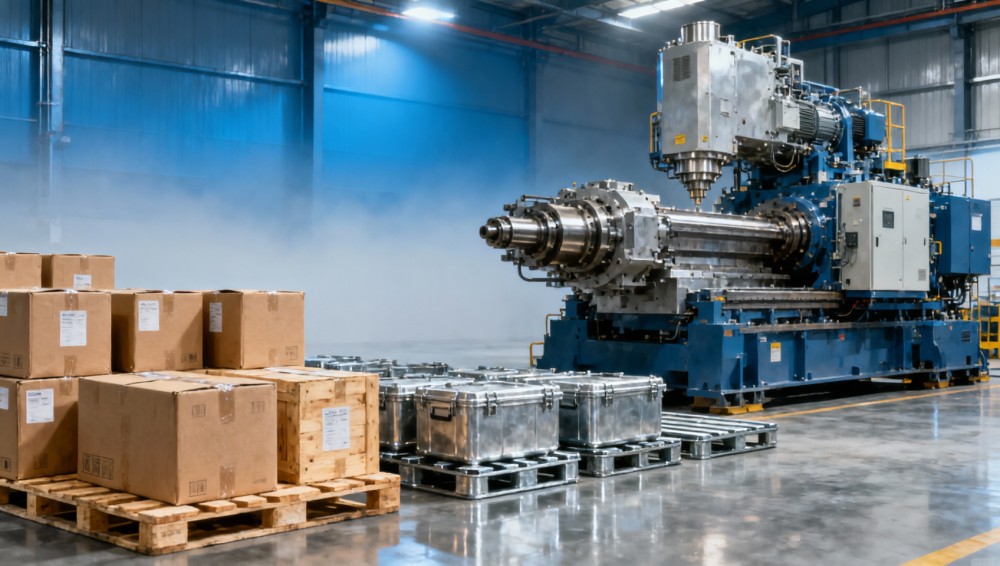
In heavy industry, a listed price often reflects the visible equipment body, not the full procurement reality. For information researchers, operators, buyers, and business decision-makers, the real comparison usually begins after the first quotation arrives. A machine can appear competitive on paper, yet become costly when commissioning, spare parts, operator training, and downtime exposure are added over the first 12–24 months.
This is especially true when comparing industrial machinery suppliers across regions. Some quotations include standard accessories only, while others cover packaging, basic installation guidance, or trial operation support. The difference may not be obvious in a one-page industrial machinery price list. In practical procurement, buyers usually need to verify at least 5 core areas: specifications, scope of supply, lead time, service terms, and payment conditions.
For upstream and downstream heavy industry participants, timing matters as much as unit price. A lower quote can lose its advantage if the delivery window extends from 4–6 weeks to 10–14 weeks, or if imported components create uncertain replenishment cycles. Procurement teams that focus only on the initial number often underestimate the operational impact of delayed start-up, lower throughput, or weak technical support.
What buyers usually do not see in the first quotation
Most industrial machinery manufacturers prepare quotations around a baseline configuration. That baseline may exclude application-specific items such as upgraded motors, reinforced frames, dust protection, higher-grade electrical components, local voltage adaptation, or control system integration. In sectors with continuous or semi-continuous operation, these omitted details can determine whether equipment runs reliably for 8 hours per shift or 20 hours per day.
- Freight and packaging method, especially for oversized or export-bound machinery.
- On-site installation scope, foundation readiness, and utility connection responsibility.
- Commissioning duration, which can range from 2–3 days for standard equipment to 2–3 weeks for integrated systems.
- Spare parts package, wear-part life, and emergency response arrangement after handover.
A professional industry information platform helps users move beyond price-only comparison. By tracking supplier capability, market movement, lead-time patterns, and downstream application needs, decision-makers gain a more realistic basis for evaluating industrial machinery specifications and commercial terms. That is far more useful than relying on a single number detached from production reality.
Which hidden cost items affect total purchase value most?
Total cost is not limited to the machine invoice. In heavy industrial procurement, a realistic evaluation often spans 6 cost layers: equipment price, logistics, installation, utilities adaptation, maintenance, and downtime risk. For procurement personnel, this wider view is essential when comparing an industrial machinery wholesaler with a direct manufacturer or a regional systems integrator.
Operators also experience these hidden costs directly. If a machine requires frequent alignment, has short wear-part intervals, or lacks local-language manuals and service instructions, production continuity suffers. Even a small stoppage repeated every week can outweigh an initial discount. Decision-makers should therefore ask not only “What is the price?” but also “What is the running burden over the next 3, 6, and 12 months?”
The table below shows common cost categories that are often underexplained in an industrial machinery price list. These are not hypothetical add-ons. They are standard evaluation items in many heavy industry sourcing processes, especially when equipment affects line balance, safety, or delivery commitments to downstream customers.
The key lesson is simple: lower quoted price does not necessarily mean lower ownership cost. Buyers should ask for a structured quote with separate line items, expected wear-part intervals, commissioning assumptions, and acceptance conditions. When these details are transparent, it becomes easier to compare industrial machinery suppliers on a like-for-like basis.
A practical cost review checklist
- Confirm whether the quotation is EXW, FOB, CIF, or another trade term, and how this changes the landed budget.
- Check if installation support is remote only or includes on-site service within a defined period such as 3–7 days.
- Request a recommended spare parts list for the first 6–12 months of operation.
- Verify utility requirements such as voltage, compressed air, cooling, lubrication, and floor load.
- Review acceptance criteria based on actual material, not test conditions that differ from your plant environment.
These checks reduce the gap between quotation and operational reality. They also help information researchers and investors interpret supplier competitiveness more accurately across the heavy industry value chain.
How to compare industrial machinery suppliers beyond headline price
A meaningful supplier comparison should combine technical fit, commercial clarity, and service reliability. In practice, procurement teams often shortlist 3 types of partners: industrial machinery manufacturers, trading companies, and industrial machinery wholesalers. Each has advantages, but the right choice depends on complexity, customization level, urgency, and post-sale expectations.
Manufacturers are usually stronger when buyers need custom dimensions, process adaptation, control logic changes, or engineering clarification. Wholesalers may support faster availability for standard equipment and parts, especially when local stock is available. Traders can be useful when sourcing across multiple categories, but buyers need to verify technical depth and after-sales coordination capability before signing.
The comparison table below helps procurement personnel evaluate suppliers using decision criteria that matter in industrial projects. It is particularly relevant when an industrial machinery price list from different vendors appears similar, yet actual service quality and delivery certainty vary significantly.
A good comparison should also test responsiveness. For example, can the supplier answer specification questions within 24–72 hours? Can they provide drawings, utility lists, and wear-part references before contract finalization? These signals often reveal more than sales language. In industrial procurement, responsiveness is an early indicator of future service discipline.
Five questions that improve supplier evaluation
Technical and commercial alignment
- What exact industrial machinery specifications are included, and which optional upgrades affect performance or durability?
- What is the standard production lead time: 3–5 weeks, 6–8 weeks, or longer for custom builds?
- Which documents are delivered before shipment, such as layout drawing, utility schedule, packing list, and operation manual?
- How are warranty boundaries defined for wear parts, consumables, and operator-caused faults?
- What support path exists after start-up: remote guidance, local partner service, or factory technician dispatch?
When supplier answers are specific, measurable, and documented, comparison becomes far less subjective. This is where professional industry information services create value: they connect market intelligence with procurement discipline, helping users benchmark vendors with fewer blind spots.
Which specifications and compliance details should buyers verify first?
Industrial machinery specifications are not just technical data. They define whether equipment can operate safely, fit the process, and pass internal acceptance. Before final selection, procurement teams should verify at least 4 specification groups: capacity, utility requirements, operating environment, and control or safety features. Skipping any one of these can turn a low-cost purchase into a difficult implementation project.
Capacity should always be tied to actual material and duty cycle. A nominal output figure under ideal conditions is less useful than stable performance across expected production ranges. For many heavy industry applications, the more relevant question is not peak rate but whether the machine can maintain required output within normal fluctuations, such as material variation, ambient temperature change, or multi-shift operation.
Compliance matters too. Depending on market and use case, buyers may need to review electrical conformity, safety guarding, labeling, documentation, and operator instructions. Even when no single certification is specified in the quotation stage, industrial users should confirm whether the machine design supports common export or plant compliance requirements. Early clarification avoids redesign and shipping delays later.
Priority checks before purchase approval
These checks support both operators and executives. Operators need predictable usability and maintenance access. Decision-makers need confidence that the purchase will not trigger extra capex, rework, or compliance friction. A structured review of industrial machinery specifications also creates stronger alignment between technical teams and commercial teams.
Common specification mistakes
- Accepting nominal output without matching material properties or actual shift pattern.
- Ignoring maintenance clearance, which later affects service access and workshop layout.
- Overlooking local power or environmental conditions, such as dust, humidity, or temperature range.
- Assuming every quotation includes the same control panel, safety interlocks, or documentation package.
For companies active across upstream materials, production, logistics, and global trade, these details shape investment confidence. Good information reduces procurement ambiguity, shortens internal review cycles, and improves implementation outcomes.
How should different buyers use market information before requesting quotes?
Not every buyer reads an industrial machinery price list for the same reason. Information researchers want market context, buyers want negotiating leverage, operators want usability clarity, and decision-makers want risk visibility. That is why pre-quote intelligence is valuable. It helps each stakeholder ask better questions before engaging industrial machinery suppliers.
A platform focused on heavy industry and its upstream and downstream value chains provides a stronger decision base than isolated product browsing. It can connect equipment trends, supply movements, raw-material impacts, regional trade dynamics, and project demand signals. This broader view helps users judge whether a quote reflects temporary market pressure, normal lead-time conditions, or a mismatch between supplier capacity and project schedule.
Before requesting quotations, stakeholders can work through a 4-step internal preparation process. This approach usually reduces unnecessary quote revisions, shortens supplier clarification cycles, and improves the quality of returned proposals within the first 1–2 rounds of communication.
A 4-step pre-quotation process
- Define the application scenario: material type, operating hours, throughput target, and site constraints.
- Set procurement boundaries: budget range, delivery deadline, preferred trade terms, and service expectations.
- Collect market signals: lead-time norms, supply chain bottlenecks, component sensitivity, and substitute options.
- Issue a structured inquiry: required specifications, acceptance conditions, documentation list, and spare-part request.
This method improves quotation quality because suppliers respond more precisely when the requirement is clear. It also reduces the chance of comparing dissimilar offers. For global trade participants and investors, the same process supports better market interpretation, especially in sectors where machinery demand reflects wider industrial cycle changes.
Who benefits most from better information flow?
Information researchers gain a cleaner view of supplier positioning and industry timing. Operators gain equipment details that affect training, maintenance intervals, and line compatibility. Procurement personnel gain negotiation structure and cost transparency. Business decision-makers gain clearer visibility into delivery risk, implementation effort, and return-on-use assumptions. In all cases, better information leads to better industrial machinery procurement choices.
FAQ: common questions behind industrial machinery quotations
Many search queries around industrial machinery suppliers and industrial machinery price lists come from recurring procurement concerns. The answers below focus on practical B2B judgment rather than generic sales language.
How many quotations should a buyer compare?
For standard machinery, 3 qualified quotations are often enough if the technical scope is aligned. For customized or integrated systems, 3–5 quotations may be more useful because design assumptions differ. The goal is not maximum quantity. It is comparable quality. Too many incomplete quotes can slow down selection without improving confidence.
What is a reasonable delivery period for industrial machinery?
It depends on standardization and component availability. Stock-supported units may move within 7–15 days. Standard production orders often require 4–8 weeks. Customized heavy machinery or integrated systems can take 8–16 weeks or longer if design approval, special motors, or imported control components are involved. Buyers should always ask what drives the lead time, not just the final date.
Is buying from an industrial machinery wholesaler riskier than buying from a manufacturer?
Not necessarily. The risk depends on the machinery type and after-sales structure. A wholesaler can be efficient for standard models, urgent replacement units, or recurring maintenance items. A manufacturer may be more suitable for process customization and engineering support. The safer choice is the one that can document scope, service path, spare parts access, and response responsibility clearly.
Which quotation term causes the most misunderstanding?
Scope of supply is often the biggest source of confusion. Buyers may assume a quoted system includes installation materials, software logic changes, safety accessories, or operator training when it does not. That is why every quotation should be reviewed against a line-by-line inclusion and exclusion list before commercial approval.
What should decision-makers ask before final approval?
They should ask 5 direct questions: Is capacity verified under real conditions? Is the delivery schedule realistic? What site preparation is required? What support is available during the first 30–90 days? What hidden costs remain outside the quote? These questions bring financial, operational, and implementation risk into one decision frame.
Why work with a heavy industry information platform before making a final decision?
Industrial machinery procurement is rarely just a transaction. It sits inside a wider chain of raw materials, production planning, logistics, capital discipline, and market timing. A heavy industry information platform adds value by turning fragmented data into actionable judgment. Instead of reacting to isolated supplier offers, users can assess machinery choices in the context of industry movement and business priorities.
This is particularly useful for business users, procurement decision-makers, industry professionals, investors, and global trade participants who need timely, professional, and actionable insight. The advantage is not only access to information, but also the ability to connect upstream and downstream signals with equipment procurement decisions. That makes quotation review more strategic and less reactive.
If you are comparing industrial machinery manufacturers, checking industrial machinery specifications, or validating whether an industrial machinery price list reflects the real project scope, we can support the process with practical market-oriented guidance. You can consult us on parameter confirmation, supplier comparison, lead-time expectations, service scope review, spare-parts planning, compliance considerations, and quotation communication priorities.
What you can contact us about
- Clarifying industrial machinery specifications before sending inquiries to suppliers.
- Comparing offers from industrial machinery suppliers on a like-for-like basis.
- Estimating realistic delivery cycles such as 4–8 weeks versus custom 8–16 week projects.
- Reviewing after-sales scope, spare-parts preparation, and start-up support expectations.
- Discussing customized sourcing plans, quotation strategy, and trade-oriented procurement decisions.
When the visible price is only one part of the story, better information becomes a cost-control tool. Contact us if you need support with model selection, quotation interpretation, delivery planning, certification-related questions, or a more structured comparison of industrial machinery suppliers before you commit budget and timeline.