
Related News
 European Commission Updates CBAM Emissions Accounting Guidance for Definitive PhaseOct 19, 2026
 Documentation and Test Runs That Reduce Risk in Used Extruder PurchasesOct 09, 2026
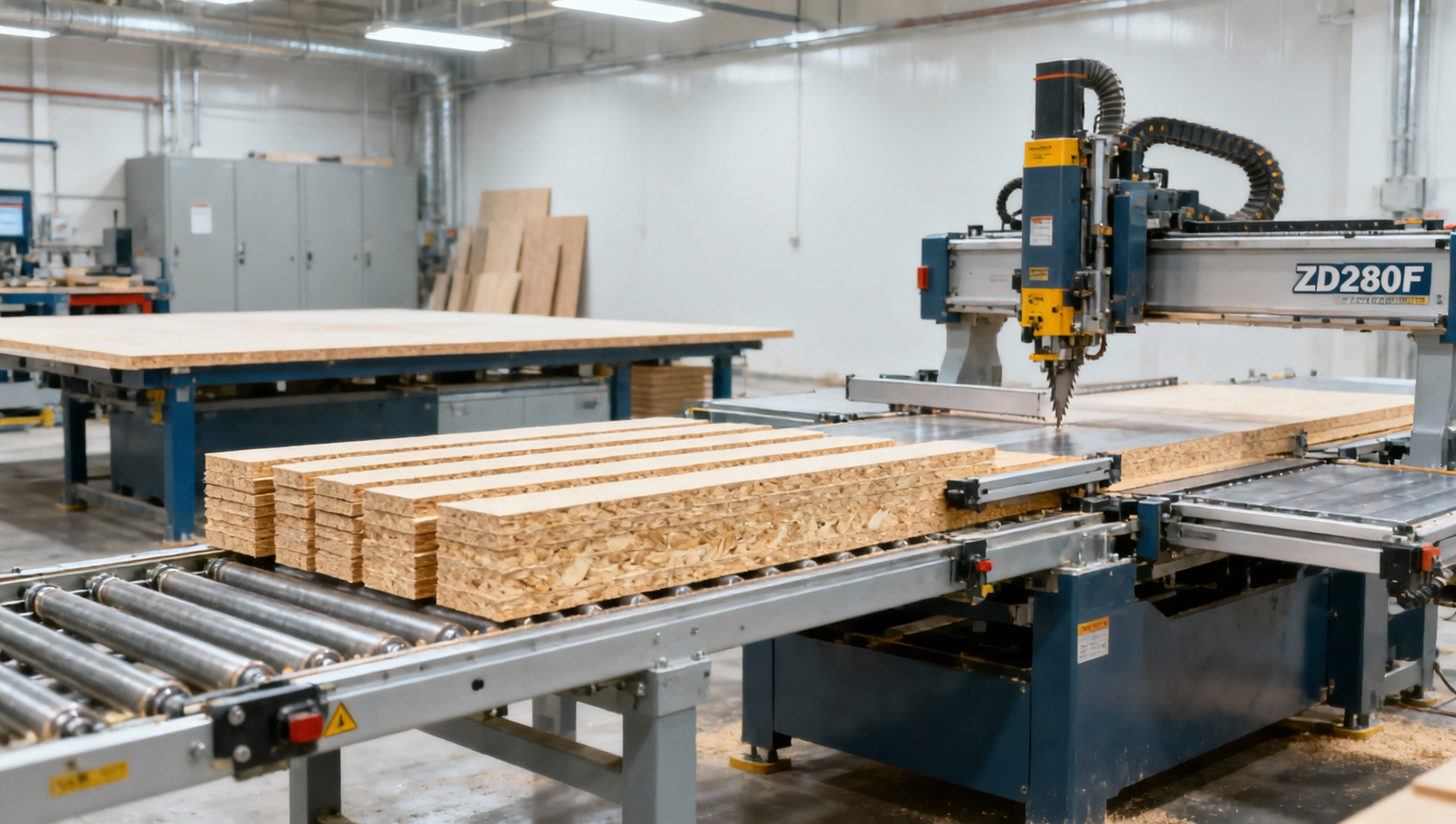
- What to Verify in ZD280F Cutting Capacity Before Panel Saw PurchaseOct 08, 2026
- What Are the Reliability Benchmarks for Industrial Power Equipment?Oct 08, 2026



Industry Briefing
Get the top 5 industry headlines delivered to your inbox every morning.
Related News
Unitree Robotics Clears IPO Review in 66 Days Amid Major Strategic Investments




On June 1, 2026, Unitree Robotics—a leading developer of quadruped robots—successfully completed its IPO review with China’s securities regulator. The accelerated 66-day timeline from filing to review reflects heightened regulatory support for domestically advanced robotics firms, particularly those demonstrating high localization rates and strong industrial backing. This event signals potential shifts in compliance expectations, certification pathways, and supply chain due diligence standards across the intelligent robotics sector.
Key Facts of the IPO Review Event
Unitree Robotics officially underwent its IPO review on June 1, 2026. The company achieved this milestone just 66 days after submitting its application. Early-stage investors—including DHL Venture Capital (DeXun), Sequoia Capital China, and Shunwei Capital—remained anchored shareholders, while strategic and state-affiliated investors joined at scale: Alibaba Group, Tencent Holdings, Ant Group, Geely Holding Group, Meituan, and Beijing GuoRui Capital. Unitree reports a core component localization rate exceeding 92%, and has delivered over 100,000 complete robot units and SDK development platforms to customers in 32 countries.
Implications Across the Robotics Supply Chain
Direct Exporters and Trading Firms
Exporters engaging with Unitree’s hardware or SDK platforms must now anticipate stricter documentation requirements—including origin declarations, conformity assessments for dual-use components, and updated export control classifications under evolving national AI-enabled robotics guidelines. The rapid listing may trigger enhanced scrutiny of cross-border technology transfer protocols.
Raw Material and Component Procurement Entities
Suppliers providing critical subsystems (e.g., actuators, IMUs, battery modules) face growing pressure to demonstrate traceability, domestic substitution readiness, and alignment with Unitree’s >92% localization benchmark. Procurement contracts may increasingly reference localization thresholds as contractual performance criteria.
Contract Manufacturers and Assembly Facilities
Manufacturers supporting Unitree’s production ecosystem must verify compliance with updated quality management frameworks—especially regarding firmware validation, cybersecurity hardening, and lifecycle documentation. Certification bodies are expected to intensify audits focused on software-defined hardware integrity.
Logistics, Certification, and Compliance Service Providers
Third-party service providers—including testing labs, certification agencies, and customs advisory firms—will likely see rising demand for integrated support covering CE/UKCA marking, FCC/IC radio approvals, ISO/IEC 27001-aligned security assessments, and country-specific robotic safety certifications (e.g., Japan’s JIS B 8451, South Korea’s KC Mark).
Critical Focus Areas for Enterprise Stakeholders
Localization Verification and Component Traceability
Enterprises sourcing from or supplying into Unitree’s value chain should prioritize verification of component origin, bill-of-materials transparency, and audit-ready documentation—particularly where localization rates serve as eligibility criteria for government-backed procurement or subsidy programs.
SDK Integration and Technical Specification Alignment
System integrators and OEM partners adopting Unitree’s SDK must ensure compatibility with evolving API versioning policies, real-time OS requirements (e.g., ROS 2 Humble/Foxy), and functional safety profiles—especially for applications in industrial inspection or public infrastructure.
Export Documentation and Dual-Use Technology Screening
Given Unitree’s global delivery footprint across 32 countries—and its use of AI-accelerated perception and motion control—exporters must reassess classification under national and multilateral dual-use control lists (e.g., Wassenaar Arrangement Category 4.A.1, 4.D.1), including firmware and algorithmic capabilities embedded in shipped units.
Post-Delivery Support Infrastructure and Lifecycle Compliance
Service providers and distributors must formalize technical documentation retention, firmware update logging, and failure mode reporting systems—aligned with emerging industry norms for autonomous system accountability and incident investigation readiness.
Industry Perspective: Acceleration as a Regulatory Signal
Analysis shows that Unitree’s 66-day IPO review is not merely procedural efficiency—it reflects a deliberate policy signal: regulators are prioritizing firms that combine technological sovereignty (≥92% core localization), scalable commercial deployment (100,000+ units shipped), and diversified strategic ownership (tech platforms, automakers, state capital). From an industry perspective, this suggests future IPO reviews for robotics and AI-hardware firms may increasingly weigh localization maturity and export compliance infrastructure—not just financial metrics—as decisive evaluation criteria. What deserves closer attention is whether certification timelines for safety-critical robotic functions will synchronize with such accelerated capital market pathways.
Strategic Takeaway for the Robotics Ecosystem
This milestone underscores a broader recalibration: regulatory speed is now contingent on demonstrable supply chain resilience and technical autonomy—not just corporate governance or profitability. For manufacturers, suppliers, and service providers, the implication is clear—compliance readiness must evolve from a static checklist into a dynamic, auditable capability embedded across R&D, procurement, and post-sale operations.
Source Attribution and Monitoring Guidance
This article is based solely on the provided title, event date (June 1, 2026), and summary. Specific official source links were not provided in the input and should be verified continuously. Stakeholders are advised to monitor upcoming updates on national AI hardware certification guidelines, revisions to the Catalogue of Dual-Use Items and Technologies, and implementation details of robotics-specific safety standards currently under development by standardization committees.