
Related News
 European Commission Updates CBAM Emissions Accounting Guidance for Definitive PhaseOct 19, 2026
 Documentation and Test Runs That Reduce Risk in Used Extruder PurchasesOct 09, 2026
- What to Verify in ZD280F Cutting Capacity Before Panel Saw PurchaseOct 08, 2026
- What Are the Reliability Benchmarks for Industrial Power Equipment?Oct 08, 2026




Industry Briefing
Get the top 5 industry headlines delivered to your inbox every morning.
Related News
How Buyers Can Source Carbon Steel Pipe Without Hidden Specification Gaps





Industrial purchasing teams often begin with a product name and a target budget, but reliable procurement needs more context. For importers, steel distributors, fabrication shops, plant maintenance teams, and industrial project buyers, Carbon Steel Pipe should be reviewed through application, operating environment, inspection, delivery, and long-term usability. A product that appears suitable in a catalog can still create avoidable cost when the specification does not describe how it will be installed, processed, maintained, or resold.
This article provides a buyer-facing framework for evaluating the product category without relying on fabricated prices, unsupported market numbers, or vague claims. It explains how to ask better questions, compare suppliers more fairly, and connect technical details with business risk. The result is a more useful purchasing conversation for both first-time buyers and teams placing repeat orders.
Define the Buying Purpose First
Define the Buying Purpose First is a practical checkpoint for importers, steel distributors, fabrication shops, plant maintenance teams, and industrial project buyers. The product is commonly connected with structural fabrication, plant piping, machinery frames, general engineering, and regional steel stock programs, so the buyer should define the use case before comparing quotations. A short inquiry may be quick, but it can hide details that later affect installation, commissioning, resale, or project acceptance.
The main procurement risk is grade confusion, wall-thickness mismatch, poor end condition, unclear inspection scope, and document gaps at receiving. These issues are easier to prevent during supplier discussion than to solve after shipment. A better request records material expectations, process conditions, inspection needs, document format, and packing requirements in the same place, so every supplier answers the same practical question.
For this reason, buyers should treat grade matching, dimensional control, supplier comparison, inspection records, and shipment planning as one connected decision. When one field changes, such as capacity, coating, surface requirement, recipe range, support spacing, or wall thickness, the buyer should review the effect on cost, lead time, quality control, and after-arrival handling. That habit turns sourcing into a repeatable workflow rather than a one-time price negotiation.
Compare Grade, Size, and Tolerance Together
Compare Grade, Size, and Tolerance Together is a practical checkpoint for importers, steel distributors, fabrication shops, plant maintenance teams, and industrial project buyers. The product is commonly connected with structural fabrication, plant piping, machinery frames, general engineering, and regional steel stock programs, so the buyer should define the use case before comparing quotations. A short inquiry may be quick, but it can hide details that later affect installation, commissioning, resale, or project acceptance.
The main procurement risk is grade confusion, wall-thickness mismatch, poor end condition, unclear inspection scope, and document gaps at receiving. These issues are easier to prevent during supplier discussion than to solve after shipment. A better request records material expectations, process conditions, inspection needs, document format, and packing requirements in the same place, so every supplier answers the same practical question.
For this reason, buyers should treat grade matching, dimensional control, supplier comparison, inspection records, and shipment planning as one connected decision. When one field changes, such as capacity, coating, surface requirement, recipe range, support spacing, or wall thickness, the buyer should review the effect on cost, lead time, quality control, and after-arrival handling. That habit turns sourcing into a repeatable workflow rather than a one-time price negotiation.
Review Ends, Surface, and Packing
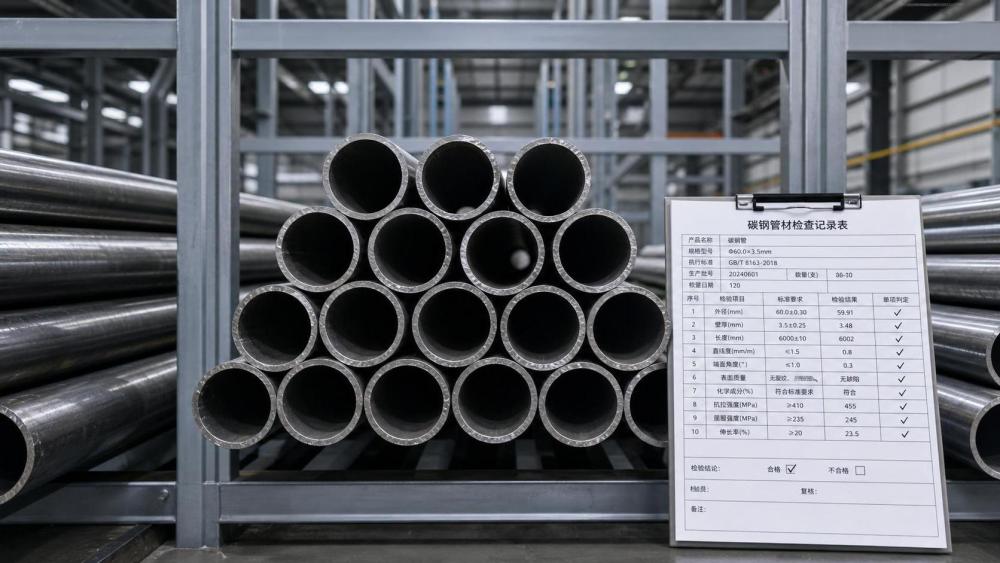
Review Ends, Surface, and Packing is a practical checkpoint for importers, steel distributors, fabrication shops, plant maintenance teams, and industrial project buyers. The product is commonly connected with structural fabrication, plant piping, machinery frames, general engineering, and regional steel stock programs, so the buyer should define the use case before comparing quotations. A short inquiry may be quick, but it can hide details that later affect installation, commissioning, resale, or project acceptance.
The main procurement risk is grade confusion, wall-thickness mismatch, poor end condition, unclear inspection scope, and document gaps at receiving. These issues are easier to prevent during supplier discussion than to solve after shipment. A better request records material expectations, process conditions, inspection needs, document format, and packing requirements in the same place, so every supplier answers the same practical question.
For this reason, buyers should treat grade matching, dimensional control, supplier comparison, inspection records, and shipment planning as one connected decision. When one field changes, such as capacity, coating, surface requirement, recipe range, support spacing, or wall thickness, the buyer should review the effect on cost, lead time, quality control, and after-arrival handling. That habit turns sourcing into a repeatable workflow rather than a one-time price negotiation.
Ask for Inspection Records Before Shipment
Ask for Inspection Records Before Shipment is a practical checkpoint for importers, steel distributors, fabrication shops, plant maintenance teams, and industrial project buyers. The product is commonly connected with structural fabrication, plant piping, machinery frames, general engineering, and regional steel stock programs, so the buyer should define the use case before comparing quotations. A short inquiry may be quick, but it can hide details that later affect installation, commissioning, resale, or project acceptance.
The main procurement risk is grade confusion, wall-thickness mismatch, poor end condition, unclear inspection scope, and document gaps at receiving. These issues are easier to prevent during supplier discussion than to solve after shipment. A better request records material expectations, process conditions, inspection needs, document format, and packing requirements in the same place, so every supplier answers the same practical question.
For this reason, buyers should treat grade matching, dimensional control, supplier comparison, inspection records, and shipment planning as one connected decision. When one field changes, such as capacity, coating, surface requirement, recipe range, support spacing, or wall thickness, the buyer should review the effect on cost, lead time, quality control, and after-arrival handling. That habit turns sourcing into a repeatable workflow rather than a one-time price negotiation.
Evaluate Supplier Communication Quality
Evaluate Supplier Communication Quality is a practical checkpoint for importers, steel distributors, fabrication shops, plant maintenance teams, and industrial project buyers. The product is commonly connected with structural fabrication, plant piping, machinery frames, general engineering, and regional steel stock programs, so the buyer should define the use case before comparing quotations. A short inquiry may be quick, but it can hide details that later affect installation, commissioning, resale, or project acceptance.
The main procurement risk is grade confusion, wall-thickness mismatch, poor end condition, unclear inspection scope, and document gaps at receiving. These issues are easier to prevent during supplier discussion than to solve after shipment. A better request records material expectations, process conditions, inspection needs, document format, and packing requirements in the same place, so every supplier answers the same practical question.
For this reason, buyers should treat grade matching, dimensional control, supplier comparison, inspection records, and shipment planning as one connected decision. When one field changes, such as capacity, coating, surface requirement, recipe range, support spacing, or wall thickness, the buyer should review the effect on cost, lead time, quality control, and after-arrival handling. That habit turns sourcing into a repeatable workflow rather than a one-time price negotiation.
Plan Repeat Orders With a Master Spec
Plan Repeat Orders With a Master Spec is a practical checkpoint for importers, steel distributors, fabrication shops, plant maintenance teams, and industrial project buyers. The product is commonly connected with structural fabrication, plant piping, machinery frames, general engineering, and regional steel stock programs, so the buyer should define the use case before comparing quotations. A short inquiry may be quick, but it can hide details that later affect installation, commissioning, resale, or project acceptance.
The main procurement risk is grade confusion, wall-thickness mismatch, poor end condition, unclear inspection scope, and document gaps at receiving. These issues are easier to prevent during supplier discussion than to solve after shipment. A better request records material expectations, process conditions, inspection needs, document format, and packing requirements in the same place, so every supplier answers the same practical question.
For this reason, buyers should treat grade matching, dimensional control, supplier comparison, inspection records, and shipment planning as one connected decision. When one field changes, such as capacity, coating, surface requirement, recipe range, support spacing, or wall thickness, the buyer should review the effect on cost, lead time, quality control, and after-arrival handling. That habit turns sourcing into a repeatable workflow rather than a one-time price negotiation.
Practical Buyer Evaluation Table
Pre-Order Checklist
- Write the final application and operating environment into the inquiry.
- Confirm size, capacity, coating, grade, surface, recipe range, or layout fields before comparing price.
- Ask which assumptions are included in the quotation and which items require separate confirmation.
- Request drawings, specification sheets, inspection notes, packing details, or sample output when the order has project risk.
- Check delivery, unloading, storage, and installation requirements before the shipment date.
- Keep a repeat-order record so later purchases can follow the approved specification.
FAQ
Why should buyers avoid price-only comparison?
Two offers may use different tolerance assumptions, packing methods, documents, and delivery schedules. A lower price can become costly if critical fields are missing.
Is stock availability enough to confirm an order?
No. Stock must still match grade, size, surface condition, length, packing, and document requirements. Availability is only one part of procurement quality.
What is the best way to manage repeat orders?
Keep an approved specification sheet, supplier notes, inspection records, and receiving feedback so the next order can repeat what worked.
Editorial Review Note
This article is buyer-facing guidance prepared for external publishing. It avoids fabricated prices, unsupported project claims, invented case numbers, and overstated performance promises.