
Related News
Industry Briefing
Get the top 5 industry headlines delivered to your inbox every morning.
Factory Automation Process Control: Common Integration Mistakes and Fixes





Where factory automation process control projects usually go off track
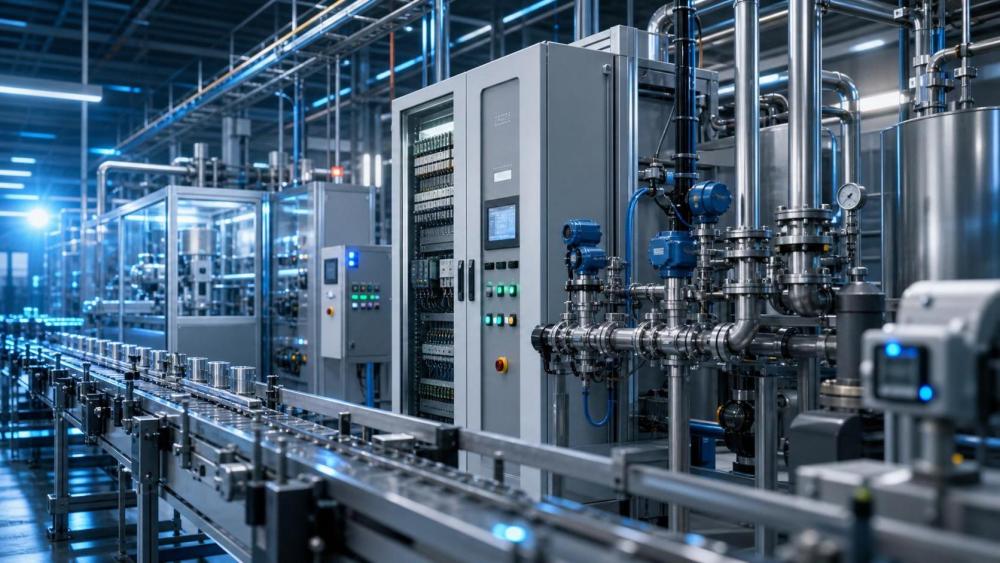
Factory automation process control is often discussed as a technology upgrade.
In heavy industry, it is closer to an operating discipline.
It shapes how plants stabilize output, react to price swings, and meet tighter regulatory demands.
That matters across steel, mining, petrochemicals, power, building materials, and industrial equipment production.
The problem is not whether factory automation process control adds value.
The problem is that integration decisions are often made with incomplete operational context.
One site may need tighter batch consistency.
Another may need better energy balancing across aging assets.
A third may be under pressure from export compliance, emissions reporting, or production line expansion.
When these differences are ignored, factory automation process control becomes fragmented.
Data stays trapped in silos.
Operators distrust dashboards.
Maintenance teams inherit complexity that was never designed around real plant conditions.
A more useful way to assess factory automation process control is by application setting.
The right fix in a continuous process line is rarely the same as the right fix in mixed-product equipment assembly.
Different production settings create very different control priorities
In continuous operations, the biggest integration risk is usually instability between control layers.
This appears in rolling mills, refining units, power systems, and bulk materials handling.
A small timing mismatch between sensors, PLC logic, and supervisory software can distort the whole process picture.
Teams often blame instrumentation first.
In practice, the issue is often inconsistent data mapping or uncoordinated control refresh rates.
Discrete and hybrid lines create a different challenge.
Construction machinery, transport equipment, and heavy equipment assembly rely on event-driven coordination.
Here, factory automation process control must connect machines, quality checkpoints, material flow, and changeover logic.
A system that controls one station well may still fail at line level.
The usual mistake is treating integration as machine commissioning rather than process orchestration.
There is also a growing middle ground.
Many plants are upgrading old units while adding smarter subsystems for energy saving, emissions control, or remote diagnostics.
In these cases, factory automation process control must bridge old protocols and new analytics without interrupting production.
That retrofit pressure is common where capital budgets are tight but compliance pressure is rising.
A practical comparison of demand differences
The integration path becomes clearer when control requirements are compared by operating context.
The most common mistakes appear before software is even configured
A frequent mistake is starting from feature lists instead of process risks.
Factory automation process control should begin with the operational loss points that matter most.
That may be scrap variation, unplanned stoppages, steam imbalance, recipe drift, or loading delays.
Without that baseline, integration produces data but not usable decisions.
Another misjudgment is assuming similar plants need the same architecture.
Two cement lines may look alike on paper.
One may run stable raw material inputs.
The other may face frequent quality fluctuations from upstream supply.
Their factory automation process control priorities will not match.
The first may focus on optimization.
The second may need resilience and faster operator intervention.
Market and policy factors also change integration needs.
Plants serving export markets may require tighter traceability and reporting integrity.
Facilities under stricter carbon or emissions frameworks may prioritize verified data capture over advanced optimization at first.
In that sense, factory automation process control is not isolated from trade rules, compliance shifts, or project expansion cycles.
What gets overlooked most often
- Sensor placement is accepted from legacy layouts, even when process bottlenecks have changed.
- Alarm strategies are copied from old systems, creating noise instead of response value.
- Network reliability is assumed, while harsh environments still affect packet consistency.
- Maintenance workflows are ignored, leaving technicians with poor fault visibility after handover.
- Integration cost is judged by installation only, not by downtime risk and future modification effort.
In energy-intensive operations, visibility matters as much as automation
Energy and utility coordination is one of the most misunderstood factory automation process control scenarios.
Plants often invest in automated controls, yet still lack a shared view of electricity, steam, gas, compressed air, and thermal loads.
That gap is costly in steel, power, petrochemicals, and mining support systems.
More automation does not automatically create better balancing decisions.
When utility data is not aligned with production states, control actions can be technically correct but economically poor.
A line may be optimized locally while the broader site absorbs higher energy peaks.
The better approach is to connect factory automation process control with contextual production data.
This makes it easier to identify whether consumption changes come from process instability, raw material variation, or scheduling decisions.
In actual operations, that distinction is critical.
It affects both cost control and environmental reporting credibility.
When expansion or modernization is underway, phased integration usually works better
Corporate project tracking across heavy industry shows a clear pattern.
Capacity additions, line upgrades, and cross-border partnerships often compress implementation timelines.
That pressure can push factory automation process control into an all-at-once rollout.
It looks efficient during planning.
It usually creates avoidable commissioning risk.
A phased model is often more reliable.
Start with the interfaces that control product quality, throughput bottlenecks, or compliance reporting.
Then extend factory automation process control to optimization layers, predictive functions, and broader site analytics.
This reduces the chance that one unstable interface delays the whole project.
It also makes it easier to verify benefits in measurable steps.
Where imported equipment, regional standards, or export obligations are involved, phased integration helps expose hidden incompatibilities early.
That is especially useful when documentation quality differs across vendors.
A more grounded checklist before rollout
- Confirm which process variables directly affect quality, compliance, or throughput.
- Map every required data path from field device to control room and reporting layer.
- Check whether legacy assets support the sampling rate and signal quality being assumed.
- Define manual fallback procedures before any cutover window starts.
- Test alarm rationalization with actual operating shifts, not only simulation cases.
What strong factory automation process control decisions usually have in common
Better outcomes rarely come from choosing the most advanced stack alone.
They come from matching factory automation process control to real production behavior, asset limits, and reporting demands.
The strongest projects usually share three habits.
They define scenarios clearly, compare short-term gains with long-term maintainability, and validate integration under plant conditions rather than ideal assumptions.
That approach is increasingly important as heavy industry faces volatile input prices, stricter environmental expectations, modernization pressure, and shifting global trade conditions.
Before moving forward, it helps to sort the exact operating scenarios first.
Then compare where factory automation process control needs stability, where it needs traceability, and where it needs phased flexibility.
That kind of structured review usually reveals the real integration priorities, the hidden cost drivers, and the risks worth fixing early.