
Related News
 Are Carbon Fiber Composites Ready for Mass Use in Construction Equipment?Oct 08, 2026
- How to Verify an Industrial Supplier’s Delivery Track RecordOct 08, 2026
 What Should Buyers Do When a Key Supplier Raises Prices Mid-Contract?Oct 08, 2026
- How Do Trade Sanctions Affect Heavy-Industry Supply Chains?Oct 08, 2026
Industry Briefing
Get the top 5 industry headlines delivered to your inbox every morning.
Heavy Industry Autonomous Vehicles: Where They Deliver Real ROI





Where heavy industry autonomous vehicles create value first
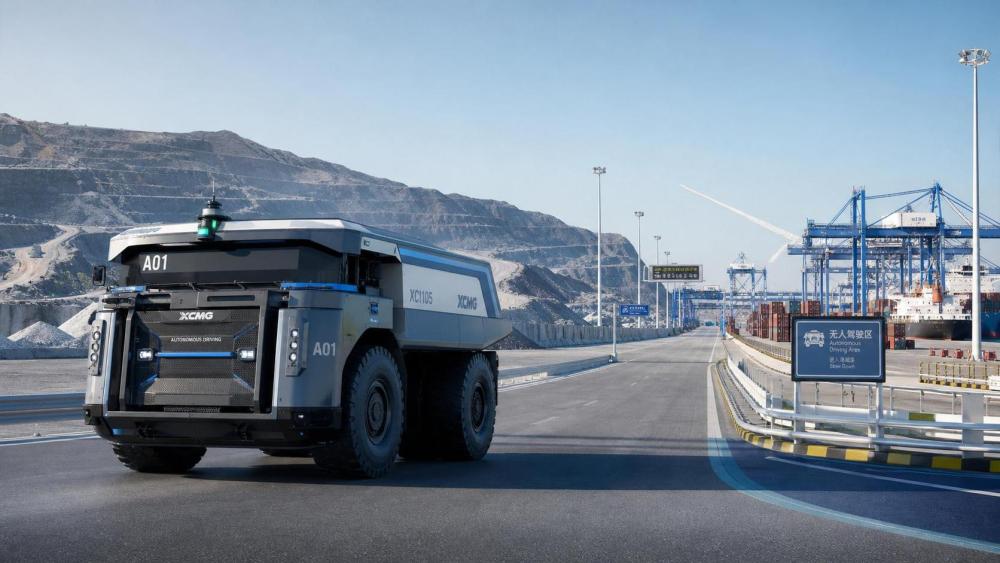
Heavy industry autonomous vehicles now matter because many operations have moved beyond trial-stage automation.
The stronger question is where these systems improve output, safety, and asset use fast enough to justify capital and integration effort.
In heavy industry, ROI rarely comes from automation alone.
It comes from matching autonomous driving capability to repetitive routes, harsh environments, labor constraints, and schedule-sensitive material flow.
That is why heavy industry autonomous vehicles perform differently in mining, ports, industrial parks, construction sites, and closed-loop logistics yards.
The business context also matters.
News on mine expansion, steel output changes, carbon rules, equipment upgrades, and export demand often changes the timing of automation investment.
When fuel prices rise, safety requirements tighten, or project delivery windows shrink, autonomous fleets look less experimental and more operational.
Different sites ask different things from the same technology
At first glance, heavy industry autonomous vehicles seem like one category.
In practice, site geometry, traffic density, payload variability, and weather exposure reshape the value case.
A haul truck route inside a mine is predictable but punishing.
A container yard is structured yet congested.
A construction site changes weekly, which affects mapping quality, obstacle detection, and dispatch logic.
A more useful judging method is to compare route repeatability, safety exposure, loading consistency, and the cost of stopping operations.
When these four elements are clear, the likely ROI of heavy industry autonomous vehicles becomes easier to estimate.
Mining favors scale, repetition, and safety distance
Mining remains one of the clearest use cases for heavy industry autonomous vehicles.
Routes are repetitive, payloads are large, and the cost of human exposure is high.
The real gain often appears in dispatch stability, fewer idle cycles, and tighter coordination between loading and dumping points.
However, not every mine gets the same return.
Sites with unstable road conditions, fragmented pit design, or mixed traffic usually need more infrastructure and control layers before automation scales smoothly.
Ports and bulk terminals care about flow continuity
In ports, heavy industry autonomous vehicles are judged less by speed and more by throughput consistency.
Short-haul container transfer, bulk material handling, and yard shuttle movements benefit when vehicle behavior becomes predictable.
That predictability reduces waiting time between cranes, gates, storage zones, and loading points.
The better deployments are usually linked to terminal operating systems, maintenance planning, and weather disruption protocols.
Without that integration, even advanced vehicles become isolated assets instead of productivity tools.
Construction and industrial parks need flexible autonomy
Construction sites present a harder environment for heavy industry autonomous vehicles.
Routes change, temporary barriers appear, and subcontracted equipment creates irregular traffic patterns.
Here, the highest ROI often comes from semi-structured tasks.
Examples include earthmoving corridors, material shuttles, or repetitive plant-to-yard transfers inside large industrial projects.
In industrial parks, the value shifts toward 24-hour circulation, lower incident rates, and better scheduling between warehouses, workshops, and outbound loading areas.
The ROI gap usually comes from operational details
Two projects can buy similar systems and achieve very different outcomes.
The main reason is that heavy industry autonomous vehicles depend on operating conditions more than headline specifications.
The table below shows where judgment should focus.
This is also where market intelligence becomes useful.
Steel demand shifts, bulk commodity prices, power costs, and export cycles can change equipment utilization assumptions very quickly.
A good ROI model for heavy industry autonomous vehicles should therefore reflect production cycles, not just engineering capability.
Where companies often misread deployment readiness
A common mistake is comparing autonomous vehicles by sensor suite or top-level autonomy claims alone.
That misses the harder question of recovery handling.
How quickly can the system respond to blocked routes, dust interference, loading imbalance, or communication loss?
Another weak assumption is that similar sites have similar requirements.
Two ports may look alike, yet differ sharply in berth rhythm, weather exposure, and IT maturity.
Two mines may move the same material, yet one faces steeper roads, stricter environmental controls, or higher seasonal disruption.
Heavy industry autonomous vehicles also create hidden cost layers.
These include digital mapping updates, site connectivity, edge computing, charging or refueling adaptation, and operator retraining.
If those costs are ignored, projected ROI often looks better on paper than on site.
Regulation and trade conditions can alter the business case
Policy shifts increasingly affect heavy industry autonomous vehicles.
Environmental compliance, carbon accounting, local industrial policy, and import rules can all influence sourcing and deployment timing.
In cross-border equipment programs, tariffs, certification differences, and data handling requirements may change total cost more than expected.
That is why regulatory tracking and project news should sit beside technical evaluation, not after it.
A practical way to match heavy industry autonomous vehicles to site conditions
The strongest deployments usually begin with a narrow operating corridor, then expand once performance data becomes reliable.
In actual use, a phased method reduces both integration risk and internal resistance.
- Map repetitive routes with clear loading and unloading logic.
- Separate stable tasks from highly variable site movements.
- Measure delay costs, idle time, and safety exposure before deployment.
- Check whether fleet software can connect with dispatch, maintenance, and compliance records.
- Model total cost with infrastructure, service support, and downtime recovery included.
This approach is especially relevant when following project expansion news, production line upgrades, or large industrial investments.
Those moments often create the best opening for heavy industry autonomous vehicles because site processes are already being redesigned.
If the operating model remains unchanged, automation may be added without unlocking its full value.
What to clarify before the next investment decision
Heavy industry autonomous vehicles deliver real ROI when the site is repetitive enough, the disruption cost is high enough, and the control systems are mature enough.
The most useful next step is not broad comparison.
It is narrowing the decision to specific routes, load patterns, safety constraints, and uptime expectations.
From there, compare implementation difficulty, regulatory exposure, maintenance requirements, and recovery capability under real operating conditions.
When site data, market signals, policy changes, and project timing are read together, heavy industry autonomous vehicles become easier to evaluate as business infrastructure rather than novelty technology.
That is usually where stronger investment decisions begin.