
Related News
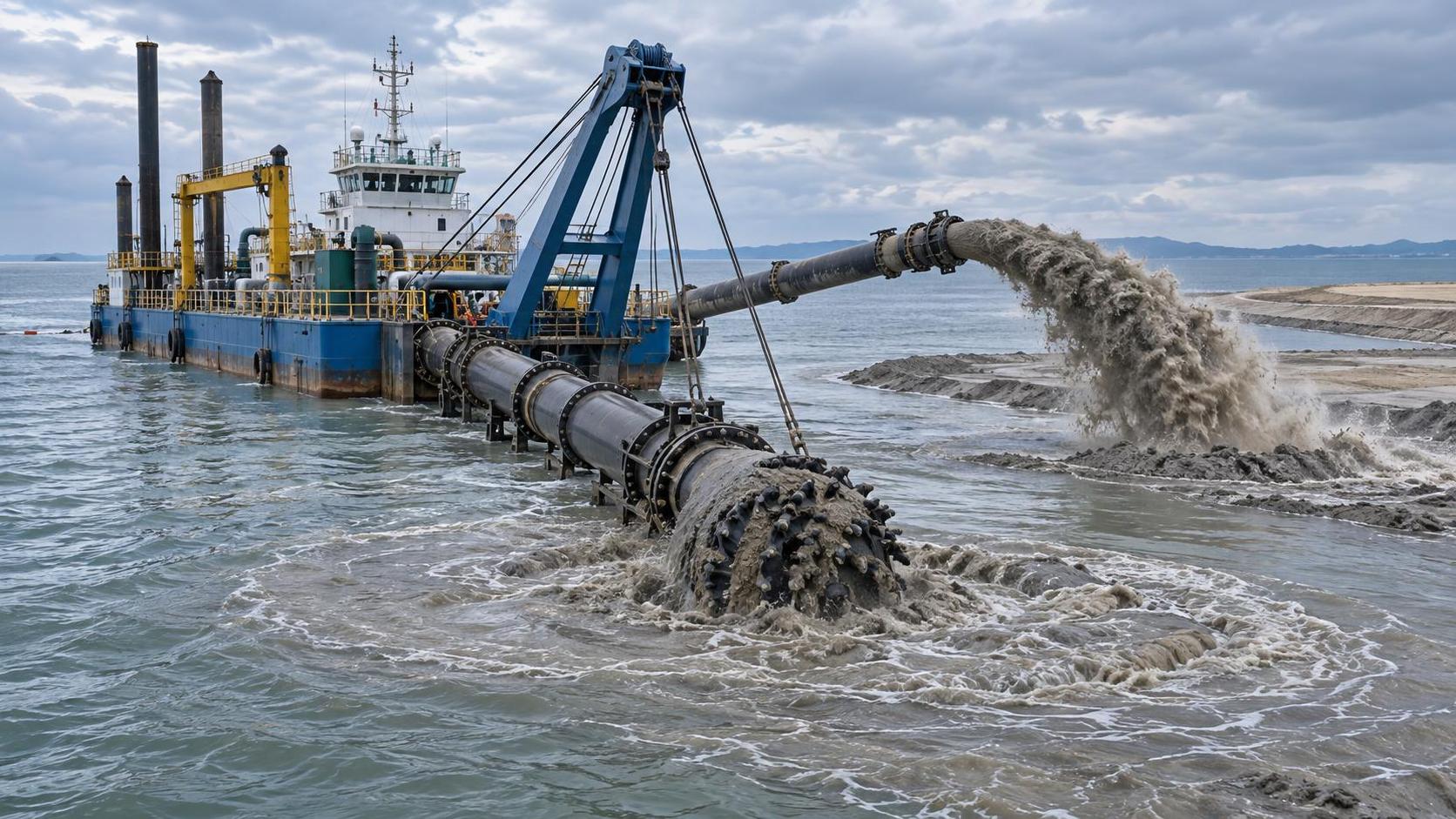
 How Cutter Suction Dredger Specifications Affect Slurry Dredging Efficiency in Coastal Reclamation ProjectsSep 14, 2026
- Critical Factors in Selecting Steam Turbine Spare Parts for Power Plant ReliabilitySep 11, 2026
- Lead-Time Variability in Steam Turbine Spare Parts Procurement: Risk Factors and Mitigation Strategies for 2026 ProjectsSep 11, 2026
 What to Check Before Sourcing a YLCSD350 Cutter Suction Dredger for ProjectsAug 24, 2026



Industry Briefing
Get the top 5 industry headlines delivered to your inbox every morning.
Related News
USTR Tariff Plan Raises Pressure on China Supply Chains




On June 10, 2026, the Office of the United States Trade Representative (USTR) announced a proposed tariff plan covering imports from 60 economies under Section 122 of the Trade Act of 1974, with China identified as the primary target. With tariff rates ranging from 10% to 60% and an implementation window of 12 to 18 months, the development deserves close attention from exporters, manufacturers, sourcing teams, distributors, and supply chain service providers, because it points not only to higher trade costs but also to renewed pressure on compliance, capacity allocation, and cross-border delivery planning.
What Has Been Confirmed So Far
Based on the information provided, USTR formally announced on June 10, 2026 that it plans to impose additional tariffs of 10% to 60% on imported goods from 60 economies under Section 122 of the Trade Act of 1974. China is the primary target in this proposed measure. The announced scope is broad, the tariff range is high, and the execution timetable is relatively clear, with a stated window of 12 to 18 months. The information provided also indicates that moving production offshore is no longer a full shield against tariff exposure, and in the scenario described, such a shift may reduce the tariff burden from 60% to 25% rather than eliminate it.
Where the Pressure May Be Felt First
Export-facing manufacturers may face dual cost and planning strain
From an industry perspective, manufacturers serving the U.S. market may be among the first to feel the impact because tariff exposure can affect both pricing and production planning. The key pressure points are likely to include order allocation, delivery scheduling, and decisions about where capacity should sit during the 12- to 18-month window.
Sourcing and procurement teams may need to reassess supplier structures
Analysis shows that procurement functions could be affected because a broad tariff list changes the risk profile of supplier geography. What deserves closer attention is not only the origin of finished goods, but also whether upstream sourcing arrangements, supporting documentation, and supplier qualifications remain workable under a stricter trade environment.
Channel and distribution businesses may need to revisit margin assumptions
For distributors and circulation businesses tied to imported goods, the impact may appear in landed cost calculations, quotation cycles, and contract discussions with customers. Observably, a tariff range as wide as 10% to 60% makes it harder to rely on existing pricing assumptions, especially where contracts and replenishment cycles were built around more stable import conditions.
Supply chain service providers may see rising demand for compliance support
Logistics, customs, and trade compliance service providers may face greater demand for origin review, documentation checks, and routing assessment. From an industry perspective, the message in the provided information is that capacity relocation alone may not be sufficient, which raises the practical importance of compliant execution and traceable supply chain structures.
What Companies Should Watch Now
Track how official wording and implementation rules evolve
Analysis shows that the announced tariff plan should be monitored not only at the headline level but also through subsequent official wording and rule clarification. For companies, the practical difference between a policy signal and an enforceable operating rule can be significant, especially when planning shipments, inventory, and customer commitments.
Review which product lines and customer flows are most exposed
What deserves closer attention is the concentration of exposure by product category, destination market, and account structure. Businesses with heavy dependence on U.S.-bound exports may need to identify which orders, contracts, and delivery cycles would be most sensitive if tariff implementation proceeds within the stated window.
Separate offshore capacity decisions from tariff assumptions
Observably, the provided information challenges the idea that overseas production is a guaranteed solution. If offshore manufacturing only reduces a tariff burden rather than removing it, companies may need to examine capacity deployment, compliance readiness, and customer communication together instead of treating plant relocation as a standalone answer.
Strengthen documentation and communication readiness
From an operational perspective, supplier qualifications, origin-related documents, fulfillment lead times, and client communication plans deserve immediate review. Analysis shows that when policy pressure builds around tariffs, documentation quality and delivery coordination can become as important as production cost itself.
Why This Looks Like More Than a Short-Term Headline
Observably, this development is more meaningful as a policy and supply chain signal than as a one-day market headline. The combination of broad coverage, high tariff rates, and a defined 12- to 18-month window suggests that companies should not read it as a passing fluctuation alone. At the same time, it is more appropriate to understand this as a development that still requires continued observation, because the provided information confirms the announced plan and its direction, but does not by itself establish every downstream business outcome.
How This Is Best Understood at Present
At this stage, the announcement is best understood as a clear warning that tariff risk, compliance scrutiny, and capacity reallocation may need to be addressed together rather than separately. For China-linked export supply chains, the key industry meaning lies less in any single percentage point and more in the indication that established assumptions about production location and tariff avoidance are under pressure. A neutral reading is that this is neither a completed end state nor a routine short-term adjustment, but a material policy signal with operational consequences that merit ongoing attention.
Basis of This Article and What Still Needs Verification
This article is based on the user-provided news title, event date, and event summary. For developments of this type, relevant source categories typically include official government announcements, company disclosures, industry association updates, authoritative media reporting, and related policy or standards documents. A specific official source link was not provided in the input, so the exact source text and any later rule updates still need continued verification. Follow-up attention should focus on later official clarification, implementation details, and any changes affecting tariff scope, timing, or compliance expectations.