
Related News
 How Does the EU Carbon Border Tax Affect Steel Exports?Oct 08, 2026
- What Maintenance Costs Should You Expect for Imported Construction Machinery?Oct 08, 2026
- Are Carbon Fiber Composites Ready for Mass Use in Construction Equipment?Oct 08, 2026
- How to Verify an Industrial Supplier’s Delivery Track RecordOct 08, 2026




Industry Briefing
Get the top 5 industry headlines delivered to your inbox every morning.
Related News
PPGI Explained: What Buyers Should Know Before Choosing Color Coated Steel





For many construction-material distributors, roofing sheet producers, enclosure manufacturers, and light fabrication buyers, PPGI is not simply a colorful steel product. It is a finished material system that combines a metallic-coated steel substrate, surface pretreatment, primer, top paint, back paint, color control, packaging discipline, and downstream forming behavior into one procurement decision.
This matters because color coated steel is usually bought for visible applications. When a buyer chooses coil or sheet for roofing, wall cladding, garage doors, sandwich panels, household appliance panels, ceiling systems, or decorative metal parts, the customer will notice not only whether the steel is strong enough, but also whether the surface looks consistent, forms cleanly, resists reasonable weather exposure, and arrives without avoidable scratches or moisture marks. A technically correct steel order can still create commercial problems if color, gloss, paint film, coating adhesion, or packaging expectations are not clearly aligned before shipment.
What PPGI Means in Practical Buying Terms
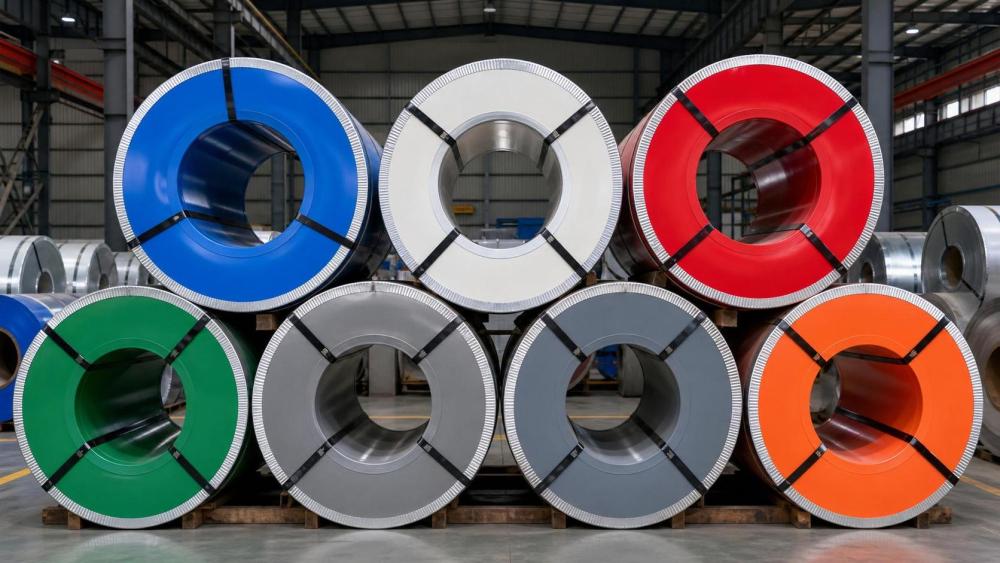
PPGI is commonly understood as pre-painted galvanized iron or pre-painted galvanized steel. In practical trade language, it usually refers to a galvanized steel base that has been coated with paint before the material reaches the buyer's production line. Instead of buying bare galvanized coil and painting it later, a downstream user can purchase color coated coil or sheet that is already prepared for forming, cutting, corrugating, profiling, or assembly.
The term sounds simple, but it includes several layers of specification. The buyer needs to understand the base metal, zinc coating, surface pretreatment, paint system, color requirement, gloss preference, thickness, width, coil weight, and intended use. For example, a roofing customer may care about outdoor color stability and appearance. A sandwich panel manufacturer may focus on adhesion and consistency during continuous line production. A distributor may want a specification that balances broad market demand with manageable inventory risk.
A strong purchase decision begins with the application, not just the product name. If the material will be used in a dry indoor panel, the required performance conversation may be different from a roof sheet exposed to sun, rain, wind, and storage conditions at a jobsite. Buyers should therefore treat the keyword as the starting point and use the inquiry process to define the actual material system.
Why Buyers Choose Pre-Painted Galvanized Steel
Pre-painted galvanized steel is widely used because it helps downstream companies simplify production. It can reduce the need for separate painting operations, support faster sheet forming, provide a controlled appearance, and help manufacturers offer a consistent product line. For many buyers, the advantage is not only the color; it is the ability to convert coil into finished components with fewer processing steps.
Another reason buyers choose color coated material is predictability. When the substrate, coating, paint, and color are defined correctly, the buyer can plan repeat production with clearer expectations. This is especially valuable for distributors and processors serving building projects, where customers often need repeat colors, similar surface appearance, and stable sheet performance across multiple deliveries.
However, predictability requires specification discipline. If a buyer only requests "blue color coated steel" or "roofing coil," the supplier may not have enough information to recommend the right option. A better inquiry should state the use case, thickness, width, color code if available, gloss preference if important, quantity, packing method, destination, and any processing steps such as corrugating, roll forming, bending, or cutting.
Common Applications and What They Require
Color coated steel is often used in buildings, prefabricated structures, light industrial facilities, agricultural buildings, household appliances, ventilation parts, furniture panels, and metal enclosures. These applications share a need for usable strength and surface appearance, but they do not all require the same specification. The more clearly a buyer understands the final application, the easier it becomes to avoid overbuying or under-specifying the material.
Roofing and wall cladding usually require attention to forming behavior, scratch resistance during installation, and color consistency across sheets. Appliance or decorative panels may place more emphasis on surface smoothness and visual uniformity. Industrial enclosure applications may need reasonable corrosion protection and predictable bending. For sandwich panels, bonding compatibility and continuous production performance may be more important than a single visual parameter.
Substrate and Coating: The Foundation Behind the Color
Buyers sometimes focus too heavily on the visible paint color and forget that the base steel and metallic coating carry much of the material's functional value. The substrate affects strength, forming behavior, and dimensional stability. The galvanized layer helps protect the steel beneath the paint. Surface pretreatment and primer help the paint system adhere to the substrate. The top coat provides color, appearance, and part of the environmental resistance expected by the final user.
For export orders, these layers should be discussed in straightforward language. Buyers do not need to turn every inquiry into a laboratory report, but they should know what they are buying. If the intended application involves outdoor exposure, frequent handling, or visible building surfaces, the buyer should ask more than one question about the paint and coating system. If the material is for indoor decorative use, the emphasis may shift toward surface consistency, color match, and clean processing.
Storage conditions also matter. Pre-painted material should be protected from water ingress, rough handling, and prolonged exposure before installation. Even a suitable product can suffer if coils or sheets are stored carelessly after arrival. For this reason, serious buyers include packaging, labeling, and warehouse handling in the sourcing discussion rather than treating them as small details.
How to Build a Better Inquiry
A good inquiry saves time for both buyer and supplier. It should be specific enough to guide a meaningful quotation but practical enough for the supplier to answer quickly. At minimum, buyers should include the product form, application, thickness, width, color, quantity, destination, and packing expectations. If the buyer has a known processing method, such as corrugating or roll forming, that should be stated early.
Buyers should also explain whether they are looking for trial material, regular distribution stock, or project-based supply. A trial order may focus on sample evaluation and line testing. A distribution order may focus on common colors, popular sizes, and fast turnover. A project order may require consistent batches and careful delivery coordination. These different buying situations should not be handled with the same level of detail.
Supplier Evaluation Factors for Color Coated Steel
Supplier evaluation should cover more than price. A reliable supplier should be able to discuss available specifications, product form, surface expectations, packing method, and documentation. The buyer should pay attention to whether the supplier asks useful questions about the application. A supplier who clarifies the use case may help prevent mistakes that a simple quotation cannot reveal.
For international buyers, document clarity is also important. The invoice, packing list, labels, product description, and shipping information should match the agreed specification. When the goods arrive, warehouse teams need to identify coils or sheets quickly. If the buyer resells material, traceability and clear labels can reduce confusion during distribution.
Basic Procurement Checklist
- Define the end use before choosing color, paint system, and substrate thickness.
- Confirm whether the product will be used as coil, flat sheet, corrugated sheet, or formed component.
- State the required width, thickness, quantity, coil weight preference, and destination market.
- Share color code, sample requirement, gloss preference, or acceptable visual range when appearance matters.
- Ask about packaging protection for sea freight, inland transport, and warehouse storage.
- Request clear documentation, labeling, and product photos before shipment when appropriate.
- Use a trial order or sample confirmation before committing to a new color or application.
- Record customer feedback after processing so future orders can be adjusted with evidence.
FAQ
Is PPGI the same as galvanized steel?
No. Galvanized steel usually refers to steel with a zinc coating. PPGI generally refers to galvanized steel that has also been pre-painted. The paint system adds color and surface functionality, while the galvanized substrate supports corrosion protection beneath the coating.
Why does application information matter when buying color coated steel?
The same product name can cover different performance expectations. Roofing, sandwich panels, decorative panels, and industrial enclosures may require different attention to forming, appearance, paint adhesion, packing, and outdoor exposure.
Should buyers choose a category page as the landing page?
For a broad product term, a category page can be useful because it lets visitors see the product family and request the most suitable specification. A focused category page is especially appropriate when the buyer has not yet narrowed the order to one exact color, thickness, or project use.
What is the biggest mistake in color coated steel procurement?
A common mistake is treating color coated steel as a simple color-and-price item. Buyers should also confirm substrate, coating, paint system, forming needs, packaging, documentation, and storage expectations.
Editorial Review Note
This article is buyer-facing basic knowledge content for steel and metals readers. It avoids fabricated prices, unsupported market-size claims, invented customer cases, and unverified certification statements.