
Related News
 China's Energy Administration Releases 2026 Hydrogen and Green Fuels Pilot CasesNov 07, 2026
- Color Coated Steel Selection: Substrate, Coating and Service LifeNov 07, 2026
- US Refiners Shift Output From Gasoline to Middle DistillatesNov 06, 2026
- China's Steel Output Falls 2.9% in 2026 as Industry Shifts to High-Performance SteelNov 05, 2026
Industry Briefing
Get the top 5 industry headlines delivered to your inbox every morning.
Related News
Color Coated Steel Selection: Substrate, Coating and Service Life





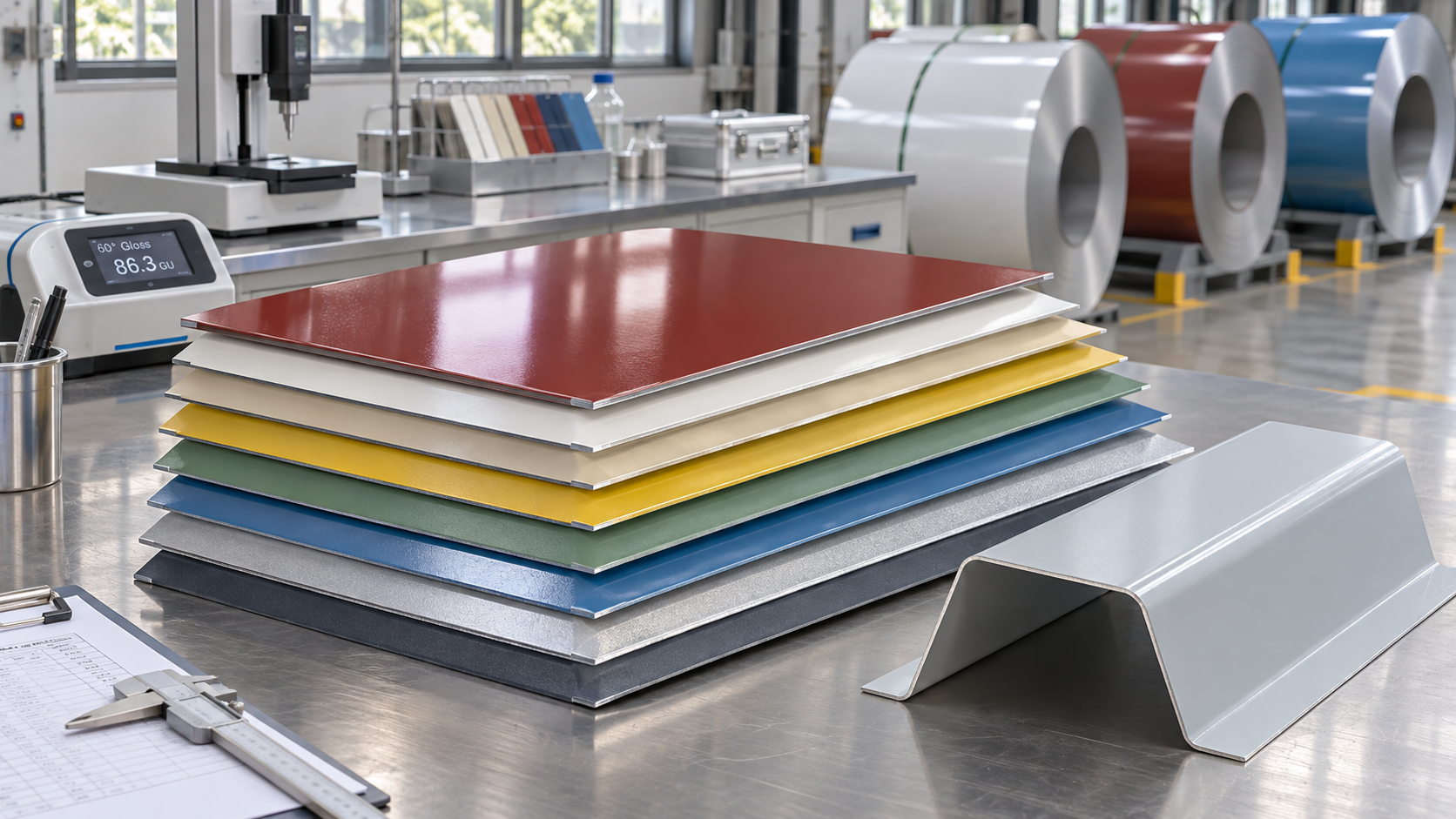
Color coated steel is often introduced to a project as a choice of color. In practice, it is a system that combines a metallic substrate, pretreatment, primer, topcoat, back coat, forming method, fasteners and installation details. The same color can perform differently when the substrate, resin system or exposure environment changes. A low initial price can also become an expensive choice if it creates early fading, difficult forming, damaged edges or repeated maintenance.
For industrial buildings, warehouses, commercial façades and other envelope projects, a better approach is to define the application first and then compare material systems against it. A project team can use the color coated steel product category as a starting point, but the final decision should connect the product to location, exposure, fabrication, appearance and service responsibility.
Begin with the building environment
Coastal salt, industrial fallout, high humidity, strong ultraviolet exposure, condensation and large day-night temperature changes all affect a coated surface. An interior partition, a roof panel and an exterior façade may use similar-looking steel, but they do not face the same water, heat, cleaning and weather conditions. The request for quotation should describe the project location, building use, exposure direction, distance from the coast, nearby chemical activity and the likelihood of standing water or condensation.
“Outdoor use” is too broad to support a defensible comparison. A dry inland warehouse and a coastal processing building can both be outdoors while requiring different attention to the substrate, coating and edge details. Environment information also helps the supplier explain what is known about the material and what still needs project-specific confirmation.
Evaluate the substrate and coating as one system
The substrate contributes to basic corrosion resistance, strength, forming behavior and compatibility with the building assembly. Galvanized and aluminum-zinc coated substrates are common options, but the relevant grade, coating mass, thickness and tolerance still need to be confirmed. The paint system contributes to color retention, gloss, surface protection and resistance to the intended environment. A topcoat name alone does not describe the complete performance of a coil.
When a fluorocarbon system deserves consideration
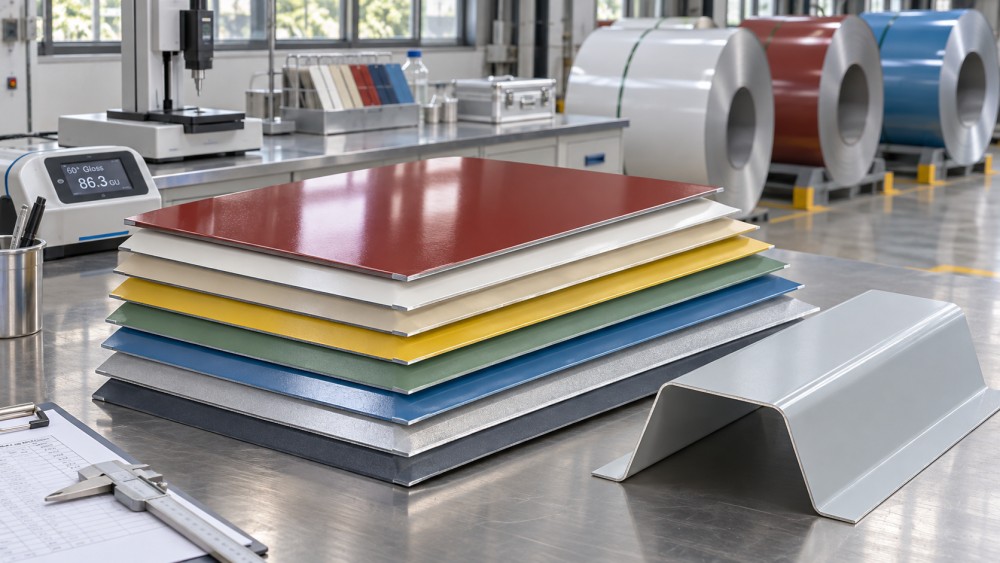
Fluorocarbon systems are often considered where a project places more weight on weathering, appearance retention or long-term exterior presentation. The Huijin product page for H.FIPTE Fluorocarbon describes premium color-coated steel made with galvanized or aluminum-zinc coated steel substrates and coil coatings containing more than 70% Kynar 500 or Hylar 5000 fluorocarbon resin, together with heat-resistant ceramic pigments. For a buyer, the useful lesson is to verify the resin description, coating structure, substrate and application limits instead of treating “fluorocarbon” as a complete specification.
Not every project requires the highest-weathering option. A sheltered interior application, a temporary structure or a building with a mild environment may be better served by a more conventional system. The evaluation should compare expected exposure, visual requirements, maintenance access and project duration. A more advanced coating can be reasonable when it solves a defined risk; it should not be selected simply because the name sounds premium.
Forming and installation can change the result
A coated coil is not finished when it leaves the line. It may be slit, roll formed, punched, folded, laminated, transported and installed. Each step can introduce scratches, edge exposure, local cracking or contamination. The design team should share bend radii, seam details, fastener locations, overlap conditions and drainage slopes before the material is released for production.
Protective film can reduce surface damage during fabrication and delivery, but it also creates a removal and storage responsibility. The team should agree on when the film is removed, how long it may remain exposed, and how adhesive residue is prevented. Materials should be stored dry and supported so that water cannot remain trapped between sheets or coils.
Color, gloss and batch planning matter on large surfaces
Color approval should be based on a project sample and an agreed viewing condition. The same color can appear different under daylight, artificial lighting and adjacent materials. Long buildings and large façades should be planned by coil, production sequence and installation direction. A supplier can provide the same nominal color while the visual result still varies if different batches or paint systems are combined without approval.
Procurement should therefore record the approved sample, color code, gloss expectation, coil width, coating orientation and acceptable variation. Where a project uses multiple delivery batches, the team should decide whether adjacent panels can be mixed or must be installed in a controlled sequence. This is a practical quality measure, not a decorative afterthought.
Compare suppliers beyond the catalogue
A catalogue explains the available families, but it cannot answer every site question. Ask for the technical data sheet, substrate description, coating information, packaging method, forming guidance and batch documentation. For a large order, run a small sample through the actual bending, cutting or composite process before approving the full coil plan.
Supplier evaluation should also cover communication and responsibility. Who confirms the approved color? Who checks the batch before dispatch? How are damaged sheets recorded? Which documents travel with each shipment? A clear answer to these questions often reduces project risk more effectively than another page of general product claims.
A practical selection workflow
- Describe the location, building use, exposure faces, moisture and maintenance conditions.
- Define substrate type, thickness, forming method and structural coordination.
- Shortlist coating systems according to weathering, appearance and service expectations.
- Confirm resin, pigment, back coat, protective film and edge-treatment information.
- Approve a sample and test forming, cutting, lamination and installation handling.
- Record batch, packaging, storage, delivery and damage-reporting requirements in the order.
Use lifecycle cost instead of coating price alone
A fair comparison includes more than the price per square metre. Add the cost of additional substrate thickness, forming losses, protective film, special packaging, installation labor, cleaning access and likely maintenance. A system that requires frequent repainting or early replacement can be more expensive than a higher-specification option that solves a clearly defined exposure problem. The calculation does not need a speculative service-life promise. It can compare known project costs, maintenance responsibilities and the consequences of surface damage.
Lifecycle thinking also improves communication between the owner, fabricator and installer. The owner can state the appearance and maintenance priority, the fabricator can confirm what the coil can tolerate, and the installer can plan storage and handling. When those responsibilities are recorded, a color or coating decision is less likely to become a dispute after the panels arrive on site.
FAQ
Is color coated steel the same as ordinary painted steel?
No. Color coated steel is a factory-coated metal product in which the substrate, pretreatment, primer, topcoat and back coat work as a system. The performance depends on the complete specification and the way the material is fabricated and installed.
Does every outdoor building need a fluorocarbon coating?
No. The choice depends on exposure, appearance requirements, maintenance access, expected service period and budget. A fluorocarbon system should be selected when its characteristics address a documented project need.
What is commonly missed during procurement?
Fabrication and storage are often left out. Bend radius, edge protection, protective-film handling, dry storage and batch sequencing can determine whether the installed surface matches the approved sample.