
Related News
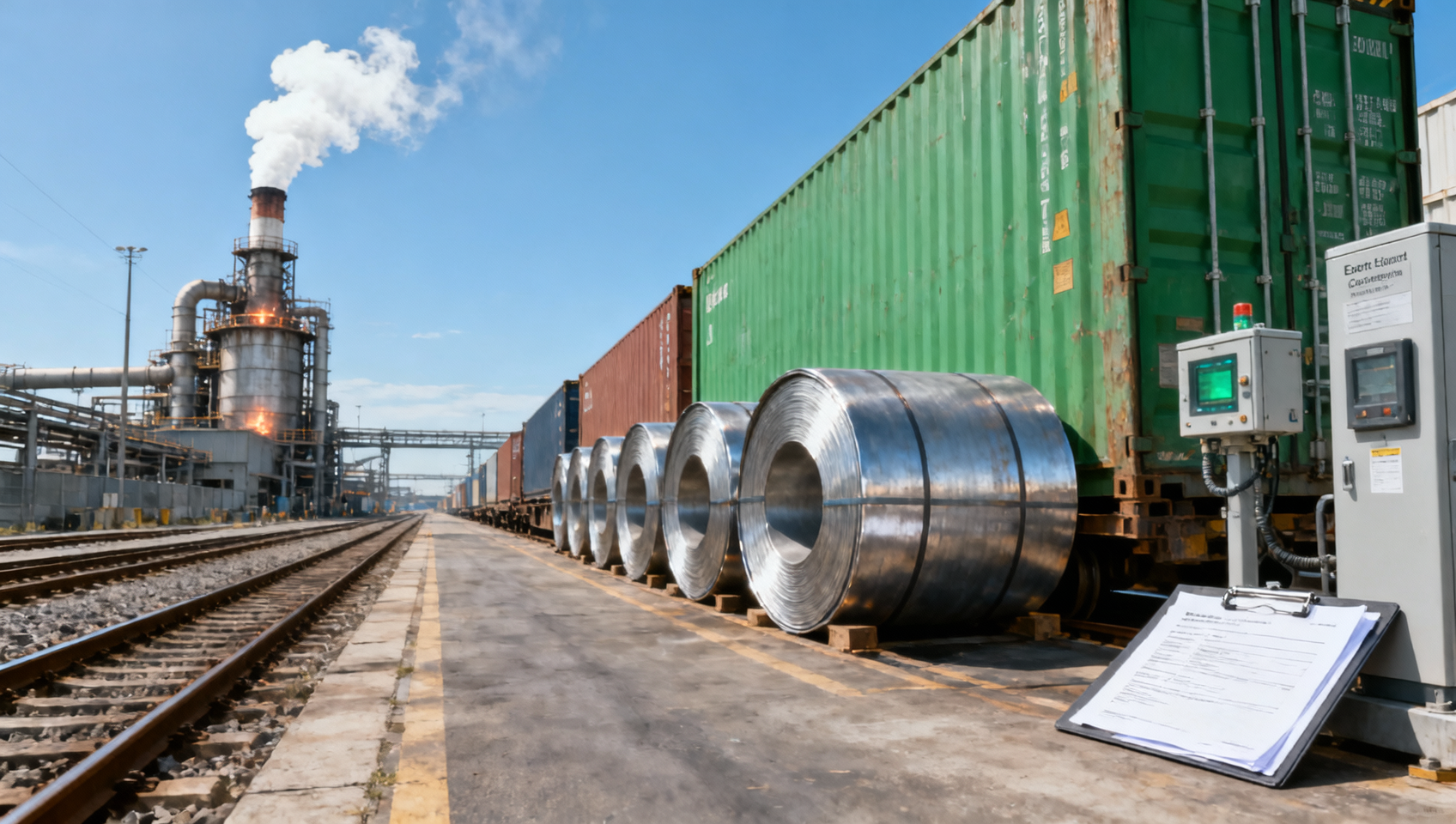
 How Does the EU Carbon Border Tax Affect Steel Exports?Oct 08, 2026
- What Maintenance Costs Should You Expect for Imported Construction Machinery?Oct 08, 2026
- Are Carbon Fiber Composites Ready for Mass Use in Construction Equipment?Oct 08, 2026
- How to Verify an Industrial Supplier’s Delivery Track RecordOct 08, 2026
Industry Briefing
Get the top 5 industry headlines delivered to your inbox every morning.
Related News
Galvanized Coil Market Outlook: Why Corrosion-Resistant Steel Is Becoming a Strategic Material for Global Buyers





Global steel procurement is entering a more selective and performance-driven era. Buyers are no longer evaluating steel products only by tonnage price, mill availability, or short-term delivery schedules. Across construction, infrastructure, renewable energy, transportation, home appliances, and industrial manufacturing, procurement teams are paying closer attention to lifecycle value, corrosion resistance, coating quality, processing stability, and supply reliability. In this changing environment,galvanized coil has become one of the most practical steel materials for companies that need a balance of durability, formability, cost control, and broad application flexibility.
The market trend behind galvanized coil is not built on a single industry boom. It is supported by several overlapping forces: global infrastructure renewal, urban housing demand, the expansion of prefabricated building systems, the growth of solar mounting structures, steady appliance manufacturing, and the need for more resilient industrial supply chains. While steel markets continue to experience price fluctuations, galvanized steel products remain attractive because they help downstream users reduce maintenance risks and extend product service life in real-world operating environments.
Corrosion Resistance Is Becoming a Procurement Priority
One of the clearest market shifts is the rising importance of corrosion protection. In many industrial and construction applications, material failure is not caused by load-bearing weakness alone. Moisture, salt air, chemical exposure, humidity, and outdoor temperature changes can gradually reduce the strength and appearance of ordinary steel. For buyers working in coastal construction, roofing, fencing, HVAC components, agricultural buildings, storage systems, and transportation equipment, corrosion resistance directly affects product life and long-term customer satisfaction.
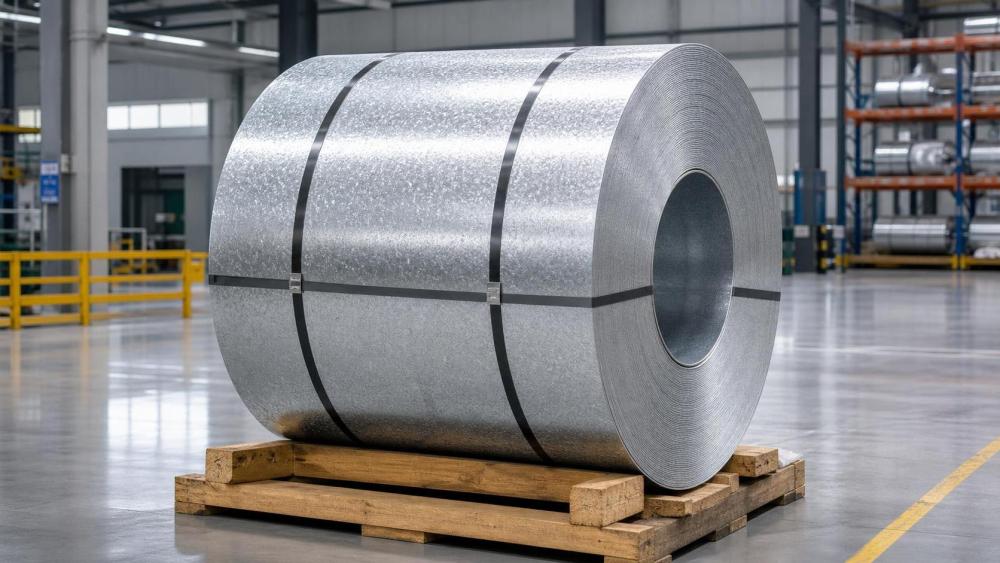
Galvanized coil answers this need through its zinc coating, which acts as a protective barrier between the steel substrate and the surrounding environment. The zinc layer also provides sacrificial protection, helping protect exposed steel areas when minor scratches or processing marks occur. This practical performance advantage explains why galvanized steel continues to be widely used in roofing sheets, wall panels, ductwork, cable trays, guardrails, structural components, appliance panels, and fabricated metal parts.
From a procurement perspective, this means galvanized coil is not simply a raw material. It is a risk-control material. Buyers use it to reduce warranty claims, slow rust development, improve outdoor durability, and support more predictable product performance. As infrastructure owners and manufacturing brands become more sensitive to lifecycle cost, this protective value is becoming more important than initial material savings alone.
Construction and Infrastructure Demand Remain Strong Drivers
Construction remains one of the most important demand engines for galvanized coil. Around the world, building developers and contractors are looking for materials that can support fast installation, consistent quality, and lower maintenance requirements. Galvanized steel is widely used in roofing, cladding, wall panels, steel framing, purlins, decking, drainage systems, fencing, and other building components.
The rise of prefabricated and modular construction is also supporting galvanized coil demand. Factory-made building components require materials that can be cut, formed, punched, profiled, and assembled efficiently. Galvanized coil fits this model because it can be processed into many shapes while maintaining practical surface protection. For suppliers serving construction markets, consistent coil thickness, coating weight, surface finish, and flatness are becoming key selling points.
Infrastructure projects also create long-term demand. Bridges, highways, rail facilities, public buildings, warehouses, logistics centers, and municipal structures all use corrosion-resistant steel components in different forms. In regions with humid climates, high rainfall, or coastal exposure, galvanized steel can reduce maintenance pressure over the project lifecycle. This is especially relevant as governments and private developers try to balance construction budgets with long-term asset durability.
Another important factor is the expansion of logistics and warehousing infrastructure. E-commerce, cold-chain distribution, and regional manufacturing networks are driving demand for industrial buildings. These structures often require roofing panels, wall systems, ventilation ducts, doors, shelves, and other metal components that can benefit from galvanized coil. As warehouse construction continues in Asia, the Middle East, Latin America, Africa, and parts of Europe, galvanized steel consumption is likely to remain stable.
Renewable Energy Adds a New Growth Layer
Renewable energy development is becoming an increasingly important application area for corrosion-resistant steel. Solar photovoltaic projects require large amounts of mounting structures, brackets, cable management systems, support frames, and related metal components. These systems are installed outdoors for long periods, often under high UV exposure, rainfall, dust, wind, and temperature fluctuation. Material durability is therefore essential.
Galvanized steel has become a practical choice for many solar mounting and support applications because it combines structural strength with corrosion resistance. As utility-scale solar farms, commercial rooftop systems, and distributed solar projects expand, buyers are paying more attention to coating performance, mechanical properties, and dimensional consistency. A mounting system failure can affect the energy output and maintenance cost of an entire project, so steel quality is not a secondary consideration.
Wind power and energy storage infrastructure can also create related demand for galvanized components. Cable trays, enclosures, support systems, access platforms, and auxiliary structures often require coated steel materials. While not every renewable energy component uses galvanized coil directly, the broader energy transition strengthens demand for protective steel materials in project construction and equipment support systems.
This trend is particularly important because renewable energy projects are often evaluated through long-term financial models. Project developers care about total cost of ownership, not just initial purchase price. Materials that reduce maintenance visits and support stable outdoor performance can improve project economics. As a result, galvanized coil suppliers that can provide stable quality, clear specifications, and export-ready documentation are better positioned in global procurement discussions.
Manufacturing Buyers Need Flexible Processing Performance
Another reason galvanized coil remains relevant is its processing flexibility. Downstream manufacturers need materials that can be slit, cut, roll-formed, stamped, bent, and assembled without frequent quality issues. In appliance manufacturing, HVAC systems, automotive components, electrical cabinets, doors, shelving, furniture, and metal packaging, galvanized steel must meet both performance and processing expectations.
For appliance and equipment manufacturers, surface quality is especially important. A galvanized coil may need to support painting, forming, or visible exterior use. Buyers may evaluate spangle type, surface smoothness, oiling, passivation, coating adhesion, and defect control. Inconsistent surface condition can create production delays or increase scrap rates.
For roll-forming applications, dimensional control matters. Thickness tolerance, width accuracy, edge condition, and coil shape can affect production efficiency. A coil that performs well in a continuous production line helps manufacturers reduce downtime and maintain stable output. This is why global buyers increasingly look for suppliers who understand not only steel chemistry and coating, but also downstream processing requirements.
In a competitive manufacturing environment, material consistency is becoming a form of hidden value. A lower-priced coil that causes production problems may become more expensive than a slightly higher-priced product with stable processing performance. This is especially true for exporters, appliance producers, construction panel manufacturers, and metal fabrication plants working under tight delivery schedules.
Price Volatility Is Changing Buyer Behavior
Steel markets are closely connected to raw material prices, energy costs, trade policy, freight rates, currency changes, and regional demand cycles. Galvanized coil pricing can be affected by hot-rolled coil costs, zinc prices, coating line capacity, export policies, and shipping conditions. For global buyers, this volatility has changed procurement behavior.
Instead of relying only on spot purchases, more buyers are building supplier networks that can provide flexible order planning, stable communication, and reliable lead times. They want to avoid supply interruptions, especially when serving construction seasons or long-term manufacturing contracts. This is creating opportunities for steel suppliers that can support repeat orders, specification consistency, and responsive export service.
Inventory strategy is also changing. Some buyers keep more safety stock when market uncertainty rises, while others prefer smaller but more frequent orders to manage cash flow. In both cases, supplier reliability becomes important. Galvanized coil buyers need accurate product information, realistic delivery schedules, clear packaging standards, and documentation that supports customs clearance and downstream quality checks.
Market volatility also increases the importance of product selection. Buyers may compare galvanized coil with galvalume steel, pre-painted steel, stainless steel, or other coated materials depending on application requirements. Galvanized coil remains competitive because it offers a strong balance between cost and performance for many mainstream applications. It may not be the highest-end corrosion-resistant steel option, but it is often one of the most commercially practical.
Quality Standards Are Becoming More Visible
As international steel trade becomes more professional, buyers are paying closer attention to specifications and standards. Common evaluation factors include steel grade, yield strength, tensile strength, elongation, zinc coating weight, surface treatment, coating adhesion, coil weight, inner diameter, width tolerance, and packaging method. These details affect how the material performs during processing and final use.
For construction markets, coating weight and corrosion resistance are central. For manufacturing markets, mechanical properties and surface quality may be equally important. For export buyers, documentation and consistency between batches can influence long-term cooperation. A supplier that can communicate these specifications clearly will usually appear more reliable than one that only lists product names.
The market is also moving toward more transparent procurement. Buyers often request mill test certificates, photos, videos, packaging details, and sometimes third-party inspection. This is not only about trust; it is also about operational efficiency. When buyers receive accurate technical information before shipment, they can plan production, sales, and project delivery with fewer surprises.
For galvanized coil suppliers, this means content and communication should focus on practical buyer concerns. Articles, product pages, and technical resources should explain coating options, application suitability, common thickness ranges, surface treatments, packaging methods, and how buyers can choose the right material for specific environments. This type of information supports SEO visibility while also improving buyer confidence.
Sustainability and Lifecycle Value Support Long-Term Demand
Sustainability is another factor shaping the galvanized coil market. Steel is recyclable, and corrosion protection can extend the useful life of steel products. When a material lasts longer, requires fewer replacements, and reduces maintenance activity, it can contribute to more efficient resource use over the product lifecycle.
Green building standards, infrastructure durability requirements, and corporate environmental goals are pushing buyers to think beyond upfront price. A roof panel, wall system, support frame, or fabricated component that lasts longer can reduce replacement waste and maintenance costs. In this context, galvanized coil can support sustainability goals through durability and recyclability.
At the same time, steel producers and processors are under pressure to reduce emissions, improve energy efficiency, and provide clearer environmental information. Buyers may increasingly ask about production routes, recycled content, carbon impact, and compliance with regional environmental rules. While these requirements vary by market, the general direction is clear: material suppliers need to be prepared for more detailed sustainability-related questions.
This does not mean every buyer will choose the lowest-carbon option immediately. Price remains important, especially in cost-sensitive construction and manufacturing markets. However, sustainability is becoming part of the value conversation. Suppliers that can combine competitive pricing, reliable quality, and responsible production awareness will be better positioned as procurement standards evolve.
Regional Market Opportunities Are Expanding
Demand for galvanized coil varies by region, but several markets show strong long-term potential. In Southeast Asia, urbanization, industrial parks, logistics facilities, and infrastructure development continue to support steel demand. In the Middle East, construction, energy, warehousing, and public infrastructure projects create opportunities for corrosion-resistant materials, especially in harsh climate conditions. In Africa, housing, commercial buildings, agriculture facilities, and infrastructure expansion can support demand for affordable and durable steel products.
Latin America also presents opportunities in construction, appliances, agriculture, and industrial fabrication. In Europe and North America, demand may be more influenced by renovation, energy projects, manufacturing reshoring, and stricter building performance expectations. These mature markets may place greater emphasis on standards, documentation, coating consistency, and environmental compliance.
For exporters, the key is not to treat all markets the same. A buyer in a coastal construction market may prioritize corrosion resistance and packaging protection. A manufacturer producing appliance parts may focus on surface quality and forming performance. A solar mounting buyer may care about coating durability and dimensional accuracy. A building materials distributor may need stable supply, competitive pricing, and a wide specification range.
This diversity creates space for suppliers that can present galvanized coil as a solution for multiple buyer scenarios, rather than only a commodity product.
Outlook: Galvanized Coil Will Remain a Practical Strategic Material
Looking ahead, galvanized coil is likely to remain an important product category in the global steel market. Its strength lies in practicality. It is widely understood, broadly applicable, relatively cost-effective, and suitable for many downstream industries. As buyers face pressure to control cost while improving durability, galvanized coil offers a balanced answer.
The most competitive suppliers will not be those that only compete on price. They will be the companies that understand market applications, provide stable quality, support flexible specifications, communicate clearly with international buyers, and help customers reduce procurement risk. In a market shaped by infrastructure growth, renewable energy expansion, manufacturing modernization, and supply chain uncertainty, reliability is becoming as valuable as price.
For buyers, the best procurement strategy is to evaluate galvanized coil through a combination of coating performance, mechanical properties, processing needs, application environment, supplier capability, and long-term availability. For suppliers, the opportunity is to move beyond basic product listings and present galvanized coil through market insight, technical clarity, and application-based value.
As global industries continue to demand materials that are durable, economical, and adaptable, galvanized coil will remain a strategic steel product for construction companies, manufacturers, project developers, distributors, and industrial buyers seeking dependable corrosion-resistant solutions.