
Related News
 How Does the EU Carbon Border Tax Affect Steel Exports?Oct 08, 2026
- What Maintenance Costs Should You Expect for Imported Construction Machinery?Oct 08, 2026
- Are Carbon Fiber Composites Ready for Mass Use in Construction Equipment?Oct 08, 2026
- How to Verify an Industrial Supplier’s Delivery Track RecordOct 08, 2026
Industry Briefing
Get the top 5 industry headlines delivered to your inbox every morning.
Related News
Chemical processing equipment mistakes that raise downtime





Unexpected downtime in chemical plants often starts with avoidable decisions around chemical processing equipment. From poor material selection to skipped maintenance and improper operator use, small mistakes can trigger costly shutdowns, safety risks, and lower productivity. Understanding these common issues helps operators identify warning signs early and keep equipment running more reliably.
For most operators, the real question is not whether equipment can fail. It is why familiar systems suddenly begin tripping, leaking, fouling, vibrating, or losing efficiency faster than expected.
In many plants, the biggest causes of downtime are not dramatic disasters. They are routine mistakes in equipment choice, operating practice, inspection discipline, cleaning methods, and response timing.
This article focuses on the chemical processing equipment mistakes that most often raise downtime, what operators should watch for, and how to reduce repeat failures before they become shutdown events.
Which equipment mistakes cause the most unplanned downtime in chemical plants?
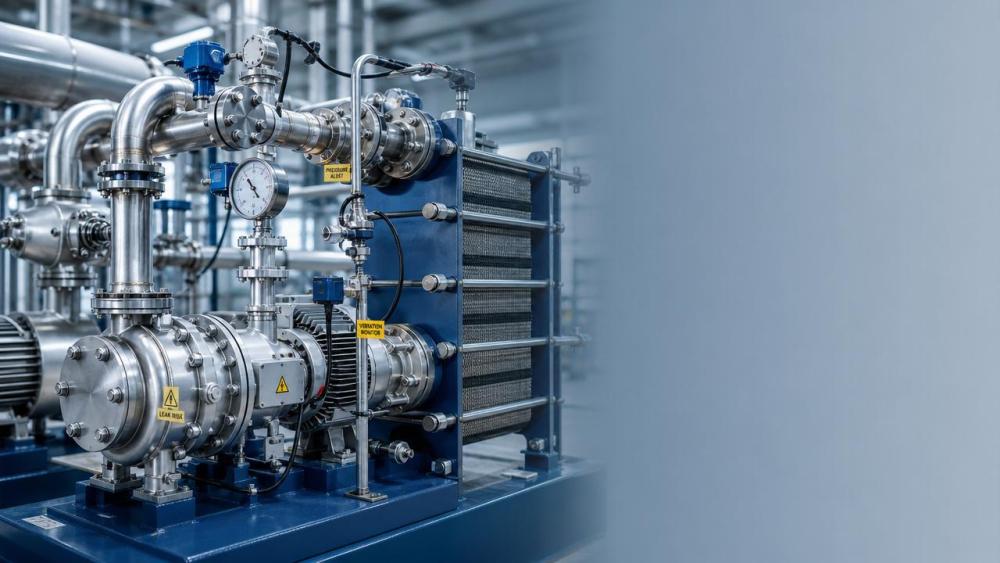
The most damaging mistakes usually begin long before a breakdown. They are built into daily decisions about how pumps, valves, heat exchangers, reactors, tanks, piping, seals, and instruments are selected and used.
Operators often see the first symptoms: unstable pressure, unusual noise, rising motor load, poor heat transfer, repeated seal leakage, blocked lines, slow response from controls, or product quality drifting off target.
When those symptoms are treated as isolated issues, plants may keep restarting the same equipment without fixing the root cause. That pattern increases downtime, maintenance cost, and safety exposure.
In practice, the most common downtime drivers include wrong material selection, operating outside design limits, poor preventive maintenance, contamination, weak lubrication control, inadequate cleaning, and missed early warning signs.
For operators, the value lies in recognizing which failures are random and which are predictable. Most chronic downtime in chemical processing equipment leaves clues well before production stops.
Using the wrong materials for the process environment
One of the most expensive mistakes is assuming standard materials can handle aggressive chemicals, temperature swings, abrasive solids, or corrosive vapors without long-term damage.
A pump casing that looks acceptable on paper may degrade quickly in a real process where concentration, pH, chloride level, slurry content, or cleaning chemicals change during startup and shutdown.
Material mismatch does not always fail immediately. It may appear first as thinning walls, pitting, seal face damage, gasket swelling, embrittlement, coating breakdown, or contamination entering the process.
Operators should pay attention to recurring leaks at the same points, unusual rust patterns, discoloration, rough internal surfaces, frequent gasket replacement, or unexplained solids in product streams.
If the same component repeatedly fails after replacement, the issue may not be workmanship. It may mean the selected material is not suitable for actual chemical exposure or thermal cycling.
This matters across all chemical processing equipment, especially pumps, piping, valves, agitators, filters, and heat exchangers where corrosion and erosion can quietly reduce reliability over time.
Running equipment outside normal design conditions
Many downtime events begin when equipment is pushed beyond the range it was designed to handle, even if only during short periods of upset, startup, cleaning, or batch changeover.
Centrifugal pumps may suffer from cavitation when suction conditions change. Heat exchangers may foul faster when flow drops. Agitators may overload when viscosity rises above expected levels.
Operators sometimes focus on keeping production moving and accept temporary instability as normal. But repeated operation outside limits can shorten equipment life much faster than one major incident.
Watch for signs such as pressure fluctuations, repeated trips, abnormal amperage, unstable level control, increased vibration, steam imbalance, or temperature overshoot after product changes.
Frequent stop-start cycles are especially hard on motors, seals, bearings, couplings, and instrumentation. Even if equipment restarts successfully, repeated mechanical stress raises the likelihood of sudden failure later.
Good operating discipline means knowing the practical limits of each asset, not just the nameplate rating. In chemical plants, process reality often differs from design assumptions.
Skipping routine inspection because equipment is still running
A dangerous mindset in operations is assuming that if equipment is still running, inspection can wait. Many failures happen on equipment that appeared functional until the final hours before shutdown.
Routine checks help catch the small changes that precede major problems: hotter bearings, slower valve travel, small seal drips, plugged strainers, drifting transmitters, loose fasteners, or rising vibration trends.
Without inspection discipline, operators lose the chance to intervene during a planned window. Then a minor repair becomes a line stoppage, emergency isolation, cleanup event, or safety incident.
The best inspections are simple, repeatable, and tied to known failure modes. Operators do not need to dismantle equipment daily, but they do need structured observation and escalation rules.
Visual checks, sound changes, smell, touch-safe temperature awareness, trend logs, and comparison against normal baseline behavior remain highly effective in reducing downtime in chemical processing equipment.
Ignoring contamination and housekeeping issues
Contamination is often underestimated because it does not always look like a mechanical problem. Yet dirt, moisture, solids carryover, polymer buildup, and foreign particles can quickly damage critical equipment.
Small contamination sources may enter through open containers, poor transfer practices, damaged strainers, failed seals, maintenance residue, or improper storage of spare parts and lubricants.
Once contamination enters the system, it can block nozzles, scratch seal faces, foul exchanger surfaces, jam valve internals, interfere with instrumentation, and accelerate wear in rotating equipment.
Operators are usually first to notice the pattern: filters plugging too often, product appearance shifting, valves sticking, pump efficiency falling, or pressure drop increasing across the same section.
Good housekeeping is not cosmetic. In chemical operations, it directly affects uptime. Clean platforms, protected connections, closed containers, and contamination-aware handling reduce avoidable equipment stress.
Poor lubrication and seal management
Lubrication errors remain a common but preventable source of equipment downtime. Bearings, gearboxes, drives, and rotating assemblies can fail early from wrong lubricant type, overgreasing, undergreasing, or contamination.
Mechanical seals also fail prematurely when flush plans are unsuitable, cooling is inadequate, alignment is poor, dry running occurs, or solids are not controlled before reaching the seal faces.
Operators should not treat lubrication as a maintenance-only issue. Daily operating conditions strongly influence lubricant breakdown, including heat load, moisture, washdown exposure, and stop-start frequency.
Warning signs include milky or dark lubricant, leaking housings, rising bearing temperature, increased noise, visible shaft movement, repeated seal drip changes, or shortened intervals between top-ups.
When the same pump or agitator repeatedly returns from repair, review lubrication practice, seal support conditions, and actual process conditions before assuming the equipment itself is poor quality.
Cleaning and maintenance practices that create new failures
Not all maintenance improves reliability. In some plants, cleaning methods, rushed part replacement, and incomplete reassembly introduce new problems that later appear as unexpected downtime.
Examples include using aggressive cleaning chemicals that attack elastomers, flushing debris deeper into lines, overtightening bolts, misaligning couplings, damaging threads, or reinstalling worn auxiliary components.
Another common issue is replacing only the failed part while leaving the cause untouched. A new seal will not last if shaft runout, contamination, cavitation, or improper operating practice continues.
Operators can help by documenting what changed before the problem returned. If failure follows maintenance repeatedly, the plant should review the work method, not just the equipment condition.
Reliable chemical processing equipment depends on maintenance quality, correct procedures, and good handover between operations and maintenance teams after each intervention.
Missing instrument and control problems until equipment is affected
Some downtime blamed on mechanical equipment actually starts with bad measurements or unstable control. When instruments drift, stick, or respond slowly, operators may unknowingly push equipment into harmful conditions.
A faulty level reading can cause pump dry running. A drifting temperature sensor can overheat product and foul exchangers. Poor valve positioning can create oscillation that stresses the entire system.
Because the equipment is the visible victim, plants sometimes replace pumps, seals, or motors without fixing the control issue that triggered the failure in the first place.
Operators should question repeated process instability, unexplained cycling, inconsistent manual versus automatic performance, or measurements that do not match field observation.
Instrument reliability is part of equipment reliability. In chemical plants, mechanical uptime and control accuracy are tightly connected, especially in continuous and tightly balanced processes.
Not responding early enough to small deviations
One of the costliest mistakes is normalizing abnormal behavior. Teams get used to a leak, a hot bearing, a noisy gearbox, or a slowly rising pressure drop because production is still possible.
That tolerance often grows until the plant has no good repair window left. Then the same issue forces an emergency shutdown at the worst possible moment for production and safety.
Early response does not always mean immediate shutdown. It means classifying deviation correctly, increasing monitoring, reducing load if needed, preparing parts, and escalating before failure becomes uncontrolled.
Operators create major value here because they are closest to real-time equipment behavior. Their observations often reveal downtime risk earlier than formal reports or periodic inspections.
Plants that reduce downtime usually build a culture where small deviations are logged, reviewed, and acted upon rather than absorbed into the definition of normal operation.
What operators can do to keep chemical processing equipment running longer
Operators cannot control every design or procurement decision, but they strongly influence uptime through consistency, observation quality, and disciplined response to early warning signs.
Start with baseline knowledge. Know how each critical asset normally sounds, feels, and performs during stable operation, startup, shutdown, cleaning, and process transitions.
Use checklists that focus on actual failure risks: leaks, vibration, suction conditions, filter loading, lubrication status, temperature trend, unusual odor, control stability, and visible corrosion.
Record changes, not just failures. Trend information is often more useful than a single alarm because it shows whether equipment condition is gradually moving away from normal.
Communicate clearly with maintenance and engineering. Describe what changed, when it changed, under which process conditions, and whether the issue worsens during rate changes or product shifts.
Where possible, verify whether repeated failures share a root cause. Recurrence usually means the plant is treating symptoms instead of addressing the condition damaging the equipment.
Final takeaway
The chemical processing equipment mistakes that raise downtime are rarely mysterious. Most involve material mismatch, operation outside limits, skipped inspection, contamination, poor lubrication, weak maintenance practice, or delayed response.
For operators, the key advantage is proximity. You see the small changes first, often before dashboards, repair orders, or shutdown meetings capture the seriousness of the problem.
Reducing downtime starts with treating repeated minor issues as reliability signals, not routine inconvenience. That shift helps plants protect safety, production stability, maintenance budgets, and equipment life at the same time.
When teams understand how ordinary decisions affect chemical processing equipment, they make better calls earlier. That is often the difference between a manageable correction and a costly plant stoppage.