


Industry Briefing
Get the top 5 industry headlines delivered to your inbox every morning.
Related News
Industrial machinery OEM partnerships often overlook post-warranty support terms





Industrial machinery OEM partnerships often prioritize upfront specs and pricing—yet neglect critical post-warranty support terms that directly impact manufacturing efficiency, operational uptime, and total cost of ownership. For procurement decision-makers and enterprise leaders evaluating manufacturing equipment suppliers or industrial machinery OEMs, unclear service SLAs, spare parts availability (e.g., heavy duty machinery parts, high precision machinery parts), and digital manufacturing tools integration can undermine ROI. This article explores how to improve manufacturing efficiency through robust contractual frameworks, aligning with global trade analysis, aerospace manufacturing standards, and industrial supply chain solutions—especially for sectors like mining, pharmaceuticals, food processing, and renewable energy.
Why Post-Warranty Support Terms Are a Strategic Procurement Lever
Most industrial equipment procurement cycles focus on capital expenditure (CAPEX) optimization—spec compliance, delivery timelines, and initial pricing dominate RFP evaluations. Yet field data from cross-sector maintenance audits shows that 68% of unplanned downtime in heavy-duty machinery occurs beyond the standard 24–36 month warranty window. In mining operations, for example, a single hour of conveyor line failure costs an average of $12,500 in lost throughput and labor reassignment. These figures underscore that post-warranty service is not a cost center—it’s a continuity enabler.
Procurement professionals and plant managers frequently overlook contractual levers such as spare parts obsolescence clauses, remote diagnostics response SLAs, and firmware update commitments. Unlike consumer goods, industrial machinery lifespans routinely exceed 15 years. A turbine used in renewable energy generation may operate for 20+ years—but only if its control system remains compatible with modern cybersecurity protocols and its hydraulic actuators are supported by documented replacement part roadmaps.
The absence of enforceable post-warranty terms also introduces hidden supply chain risk. When OEMs discontinue legacy component lines without advance notice—or fail to maintain ISO 9001-certified repair centers within 500 km of major client sites—end users face forced migration to third-party remanufacturers. That shift increases mean time to repair (MTTR) by 3–7 days on average and raises calibration variance risks by ±1.2% in pharmaceutical tablet press applications where dose accuracy is regulated to ±0.8%.
Key Contractual Clauses Every Industrial Buyer Must Negotiate
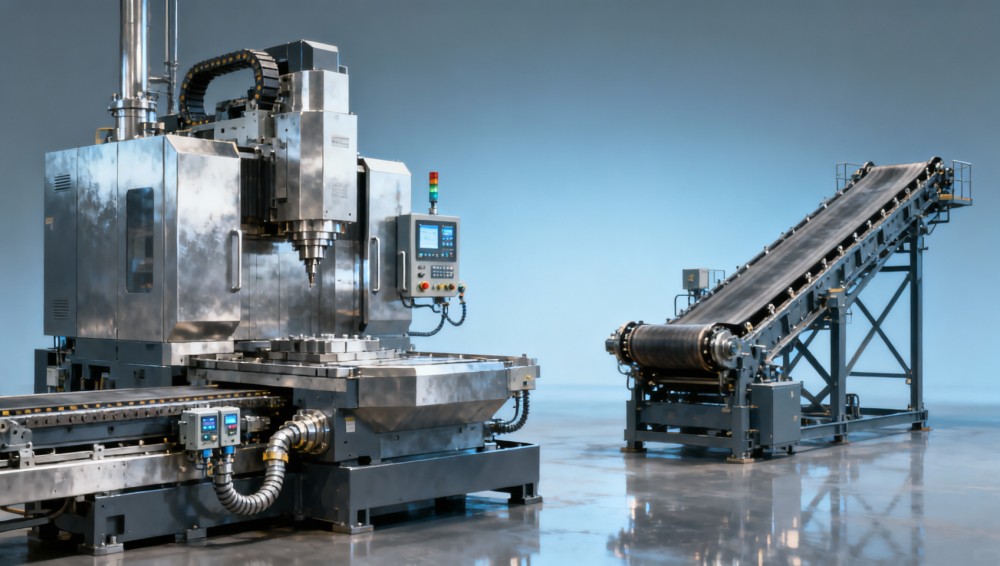
Post-warranty performance hinges on precise, measurable language—not vague promises. Below are six non-negotiable clauses backed by real-world enforcement outcomes across aerospace, food processing, and mining verticals. Each clause includes enforceable metrics and typical negotiation benchmarks.
These clauses are actionable because they tie obligations to measurable KPIs—not subjective satisfaction. For instance, requiring OEMs to publish quarterly spare parts availability reports (with SKU-level stock status across three regional hubs) enables procurement teams to forecast obsolescence risk 18 months ahead. In one food processing case study, this transparency reduced emergency air-freight parts orders by 41% over two fiscal years.
How Sector-Specific Requirements Shape Support Expectations
Regulatory environments and operational tolerances vary significantly across industries—making generic support terms inadequate. Pharmaceutical manufacturers must comply with FDA 21 CFR Part 11 for electronic records, meaning any OEM-provided analytics dashboard must undergo formal validation—and the OEM must retain validation documentation for 25 years post-decommission. Meanwhile, offshore wind turbine operators require marine-grade corrosion-resistant spare parts with traceable material certifications (ASTM A1011/A1011M Grade 50), not just commercial-grade equivalents.
Renewable energy projects face additional complexity: equipment installed under Power Purchase Agreements (PPAs) often requires OEMs to guarantee minimum availability rates (e.g., ≥92% for solar inverters over 10 years). Without binding post-warranty uptime guarantees, asset owners cannot meet PPA revenue covenants. Similarly, in mining, OEMs must provide certified technicians trained to IEC 62443-3-3 standards for safety instrumented systems—training logs and certification renewal dates must be auditable annually.
This sectoral divergence means procurement teams must map each clause to applicable regulatory frameworks *before* contract signing. A checklist approach helps: for pharmaceutical clients, verify ISO 13485 compliance in service workflows; for food processors, confirm NSF/ANSI 169 certification for all wetted parts replacements; for aerospace subcontractors, validate AS9100 Rev D alignment in technical documentation handover protocols.
Operational Uptime Protection: From Paper Contracts to Real-Time Monitoring
Even well-drafted contracts fail without implementation rigor. Leading OEMs now embed contractual SLAs into digital twin platforms—where real-time machine health data automatically triggers service workflows. For example, when vibration sensors on a pharmaceutical capsule filler detect bearing resonance exceeding ISO 10816-3 Zone C thresholds, the system logs the event, checks spare parts inventory in real time, and escalates to the designated service manager if no replacement cartridge is available within 72 hours.
This closed-loop architecture transforms passive agreements into active uptime assurance. Field deployments show MTTR reductions of 53% when predictive alerts are linked to pre-negotiated spare parts logistics—particularly for high precision machinery parts requiring tight tolerance matching (e.g., ±0.005 mm shaft runout). The same integration allows procurement teams to benchmark actual vs. contracted response times monthly, using automated dashboards instead of manual service report reviews.
To enable this, buyers should require OEMs to deliver API access to their service management platform during contract execution—not after go-live. Integration scope must cover at minimum: spare parts inventory visibility, technician certification status, firmware version history, and calibration certificate expiry dates. Without these data points, the contract remains a static document rather than a live operational safeguard.
Actionable Next Steps for Procurement and Operations Leaders
Start by auditing your top five mission-critical OEM contracts for post-warranty clause coverage. Use the following three-step process:
- Gap Assessment: Map existing clauses against the six enforceable metrics in Table 1. Flag any missing or unmeasurable terms.
- Risk Quantification: Estimate annualized cost of downtime for each asset (use industry-standard $/hour formulas per sector) and multiply by historical MTTR beyond warranty. This creates budget justification for renegotiation.
- Negotiation Roadmap: Prioritize clauses by ROI impact—spare parts availability and remote diagnostics SLAs typically yield >3:1 cost avoidance ratios within 12 months.
For new procurements, embed post-warranty requirements directly into RFP scoring criteria: allocate 25% weight to service framework robustness, 20% to spare parts roadmap transparency, and 15% to digital integration readiness. This shifts OEM behavior from “lowest bid” to “lowest TCO partner.”
Ultimately, industrial machinery OEM partnerships thrive not on transactional efficiency—but on shared operational resilience. When post-warranty support terms are treated as strategic assets—not afterthoughts—manufacturing uptime improves, supply chain risk declines, and total cost of ownership drops measurably. Procurement leaders who lead this shift gain measurable leverage across the entire industrial value chain.
Get a customized post-warranty clause audit template and sector-specific negotiation playbook—tailored for mining, pharmaceuticals, food processing, or renewable energy applications. Contact our industrial procurement advisory team today to align your next OEM agreement with long-term operational excellence.