
Tighter Phytosanitary Checks Delay Brazil Soybean Exports to China





Lead
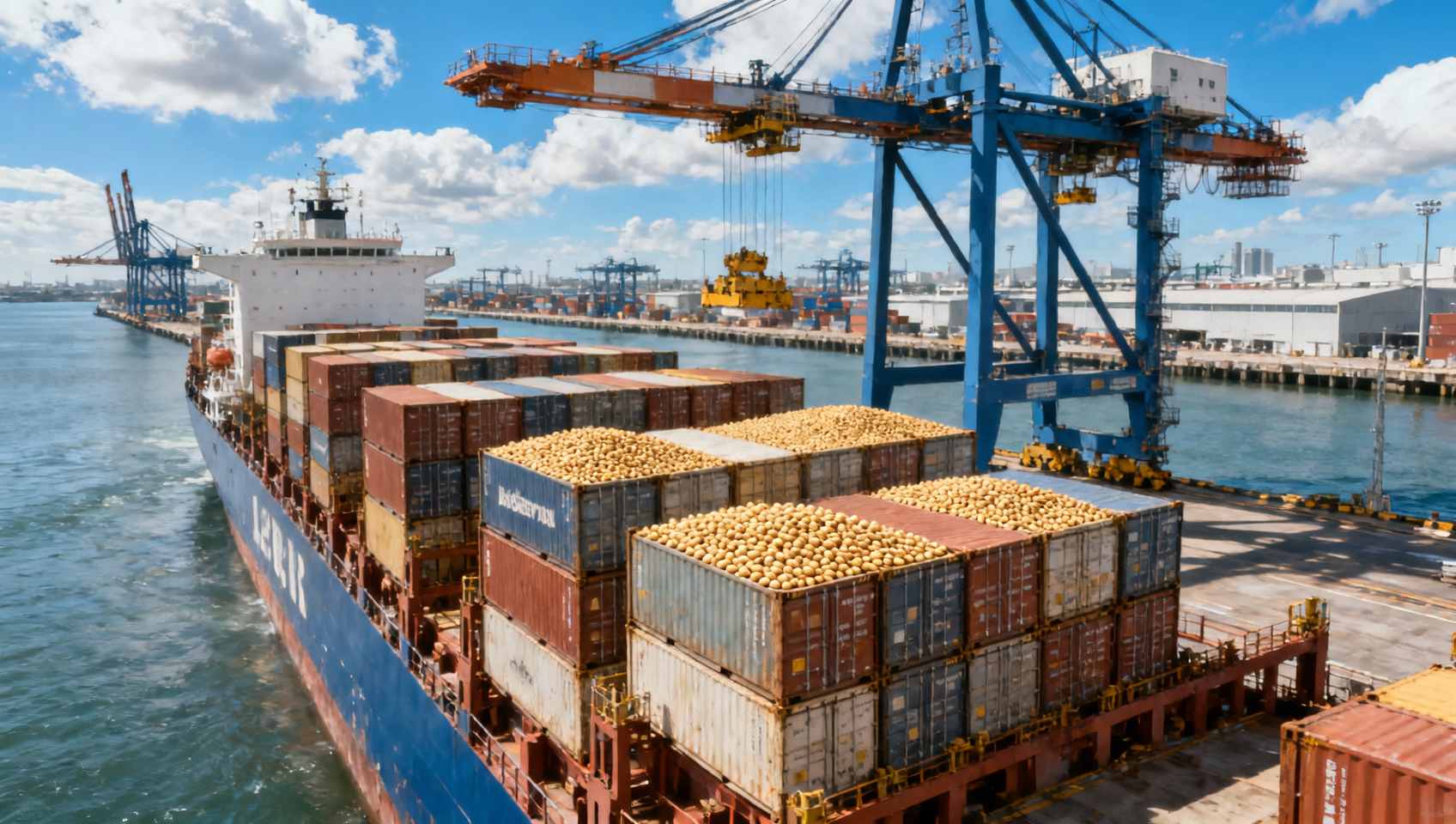
Brazil’s soybean exports to China have recently faced delays during the peak shipping season, drawing close attention from the grain trade and broader agricultural supply chain. According to publicly available information, after China introduced stricter phytosanitary requirements, Brazilian agricultural authorities tightened inspections on soybean exports. These measures have already affected port shipment schedules and triggered knock-on effects on pricing, logistics costs, and cargo flows. For industries involved in soybean trade, raw material procurement, oilseed processing, and cross-border supply chains, this is not only a compliance issue tied to plant quarantine, but also an export development worth monitoring closely.
H2: Event Overview
According to public reporting, after China introduced stricter phytosanitary requirements, Brazilian agricultural authorities strengthened inspections of soybean exports. The report noted that the tighter controls were linked to repeated issues found in earlier shipments, including contamination, live insects, and heat-damaged soybeans.
As a result, Brazil’s soybean exports to China have experienced shipping delays during the peak season. Port operations have come under pressure, while demurrage and freight costs have risen. At the same time, some export quotes have weakened, and part of the cargo has been redirected to the domestic market. Based on the information currently confirmed, the core issue is that stricter phytosanitary enforcement has already had a direct impact on Brazil’s soybean export efficiency and shipment pace to China.
H2: Which Industry Segments Are Affected
H3: The Soybean Trade Is Directly Impacted
The first and most direct impact falls on the soybean trade. Brazil is one of the world’s key soybean exporters, and any disruption to shipment flows to China immediately raises concern among traders, importers, and distribution-related businesses.
From an industry perspective, the impact is not limited to delays in individual cargoes. It also affects broader market confidence in shipment stability. During the peak export season in particular, any sign of reduced shipping efficiency tends to heighten market sensitivity.
H3: Oilseed Processing and Raw Material Procurement Need Closer Attention
For oilseed processors and raw material buyers that depend on imported soybeans, this development also carries practical implications. While the current report does not confirm that a broader supply disruption has already taken shape, shipment delays, changes in arrival timing, and pressure on export quotations are all factors that can influence procurement decisions.
From an observational standpoint, what matters for these businesses is not only price, but whether raw material supply rhythms continue to be affected and whether short-term market sentiment further spills over into procurement behavior.
H3: Port Logistics and Cross-Border Supply Chain Services Are Under More Immediate Pressure
This event also has a relatively direct effect on port logistics, international transportation, customs-related services, and cross-border supply chain providers. Since tighter inspections have already resulted in higher demurrage and freight costs, the service side of the supply chain is likely to feel the pressure quickly.
For companies handling bulk agricultural cargo transport and related services, shipment delays can create additional strain in vessel scheduling, warehousing, and customer coordination. Even if total trade volumes do not fundamentally change, operational pressure on the supply chain is already evident.
H3: Market Intelligence and Price Monitoring Functions Need More Frequent Tracking
Because the event has already affected some quotations and altered part of the cargo flow, businesses involved in market analysis, price monitoring, and agricultural intelligence services also need to increase their tracking frequency.
From an analytical perspective, although the starting point of this event is a change in phytosanitary requirements, its impact can quickly spread into market expectations, price assessments, and observations of international trade flows. Its relevance therefore extends beyond a simple quarantine-related update.
H2: What Businesses and Industry Participants Should Watch, and How They Should Respond
H3: First, Watch Whether Phytosanitary Enforcement Remains Tight
The most important issue at this stage is whether stricter phytosanitary enforcement will continue to affect the pace of Brazil’s soybean exports to China. For soybean traders and procurement-related businesses, the intensity of inspection enforcement has already become a key variable influencing shipment efficiency.
Businesses should therefore focus not just on the delays themselves, but on how inspection practices and export checks continue to evolve.
H3: Second, Track Port Throughput, Vessel Schedules, and Arrival Timing
Since the report clearly states that port shipments are under pressure and loading delays have emerged, related businesses need to keep tracking shipment flows, vessel schedules, and arrival timing changes.
For importers, processors, and supply chain service providers, such tracking can help identify short-term delivery risks earlier and support better operational coordination.
H3: Third, Distinguish Short-Term Market Volatility from Long-Term Trade Shifts
What is currently confirmed is that some quotations have softened and some cargo has been redirected to the domestic market. This is better understood as a short-term supply chain adjustment and market response, rather than clear evidence that long-term trade patterns have already changed.
When assessing procurement and market trends, businesses should distinguish between temporary volatility and structural change, and avoid overextending conclusions from a single development.
H3: Fourth, Prepare Procurement and Supply Chain Communication in Advance
For companies on the procurement, trading, and logistics sides, the more practical response at this stage is to prepare in advance for communication around key operational links, including purchase scheduling, shipment expectations, arrival coordination, and customer notifications.
This does not necessarily mean changing overall business strategy immediately. It means ensuring that if conditions continue to shift, the company can respond more quickly and more smoothly.
H2: Editorial View / Industry Observation
From an industry observation perspective, the significance of this event is not limited to the fact that “Brazil’s soybean exports have been delayed.” More importantly, it serves as another reminder that in global bulk agricultural trade, phytosanitary compliance and quality control have become major factors affecting export efficiency.
From this angle, the current development is better understood as a supply chain stress signal. It shows that changes in phytosanitary requirements do not only affect inspections or clearance procedures, but can also feed through into port shipment flows, logistics costs, cargo allocation, and short-term market interpretation. For the soybean trade, oilseed processing, and agricultural supply chain sectors, this is a development worth following closely.
Conclusion
Overall, the delays in Brazil’s soybean exports to China during the peak season, under tighter phytosanitary requirements, represent an industry update with implications for trade, compliance, and supply chain operations. It creates new points of attention for several segments, including soybean trading, oilseed processing, raw material procurement, port logistics, and market intelligence.
Based on the information currently available, this event is better understood as a short-term signal of shipment and market rhythm disruption, rather than confirmation of a lasting structural shift. For related businesses, tracking inspection enforcement, shipment flows, and quotation changes in a measured and rational way will be the more prudent response.
Related News
 What’s Driving Recent Steel Price Trends — and Why Supply Chain Leaders Are Adjusting Sourcing Strategies Now2026-03-20
- Why energy-intensive industries now treat industrial supply chain transparency as a safety requirement, not just a compliance checkbox2026-03-19
- Manufacturing procurement leaders say supplier diversification reduced risk exposure by 52% — but only with this verification process2026-03-19
- How construction machinery dealers use real-time supply chain data to forecast demand spikes in Q3 20262026-03-19




Industry Briefing
Get the top 5 industry headlines delivered to your inbox every morning.