
Chemical Industry Machinery Failures Often Start Small





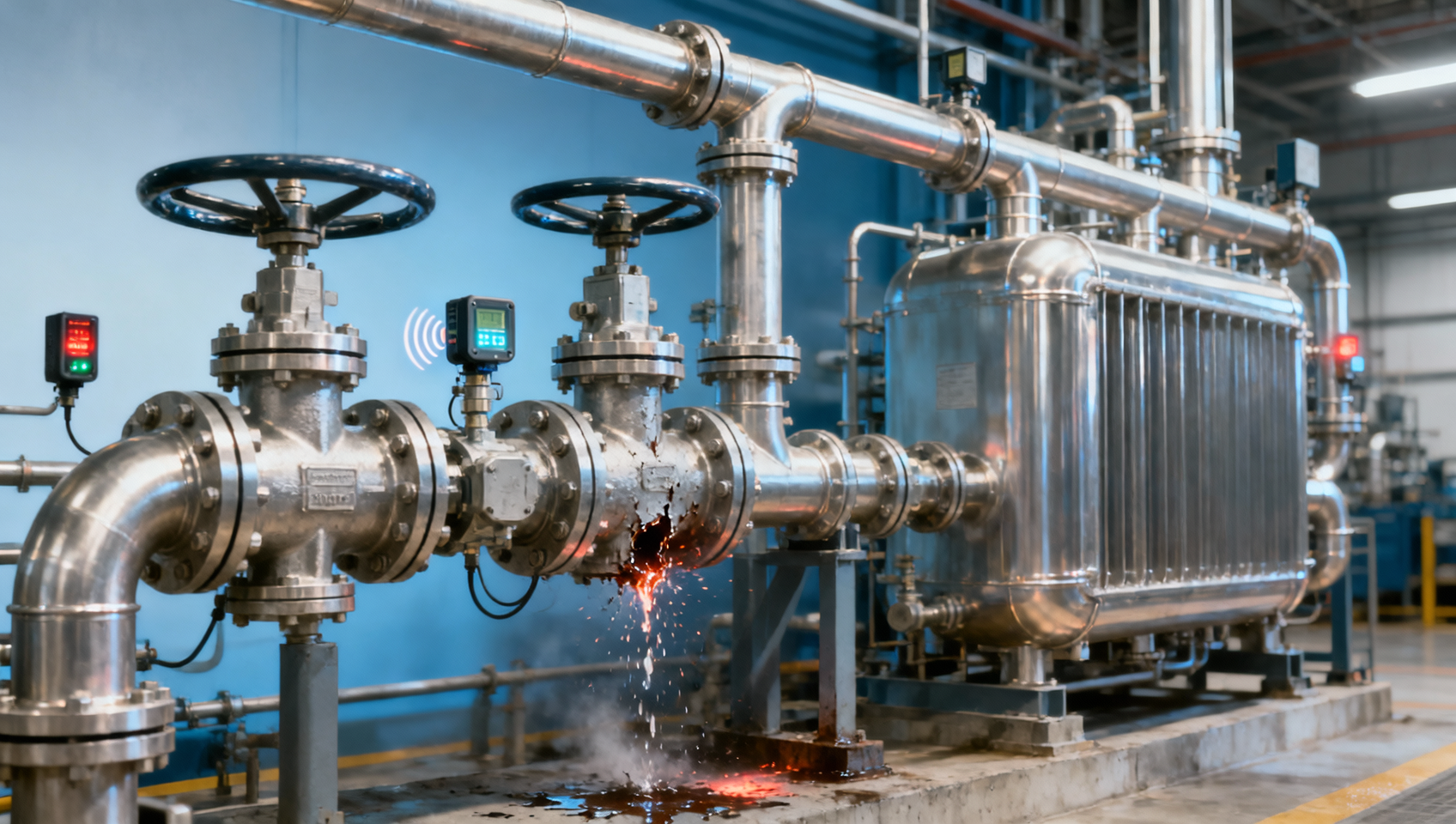
In heavy industry, major breakdowns in chemical systems often begin as minor faults that go unnoticed. From heavy industrial machinery and industrial machinery for chemical industry to connected sectors such as industrial machinery for steel plants and industrial machinery for power plants, early warning signs matter. For researchers, operators, buyers, and decision-makers, understanding failure patterns, industrial machinery specifications, and supply chain outsourcing risks is essential to reduce downtime, control costs, and make smarter procurement decisions.
In practice, a seal that starts leaking by a few drops per hour, a vibration level that climbs from 2.8 mm/s to 4.5 mm/s, or a temperature deviation of 8°C in a transfer line can be the first visible clue of a broader failure chain. In chemical processing environments, these small signals affect not only pumps, valves, heat exchangers, reactors, and compressors, but also upstream material handling and downstream utility systems.
For B2B users across heavy industry value chains, the challenge is not just fixing equipment after it fails. The real task is identifying weak points early, linking technical symptoms to procurement decisions, and reducing exposure to poor specification matching, delayed spare parts, and outsourcing gaps. A structured view of machinery failure helps every stakeholder make better operational and investment choices.
Why Small Faults Escalate in Chemical Industry Machinery
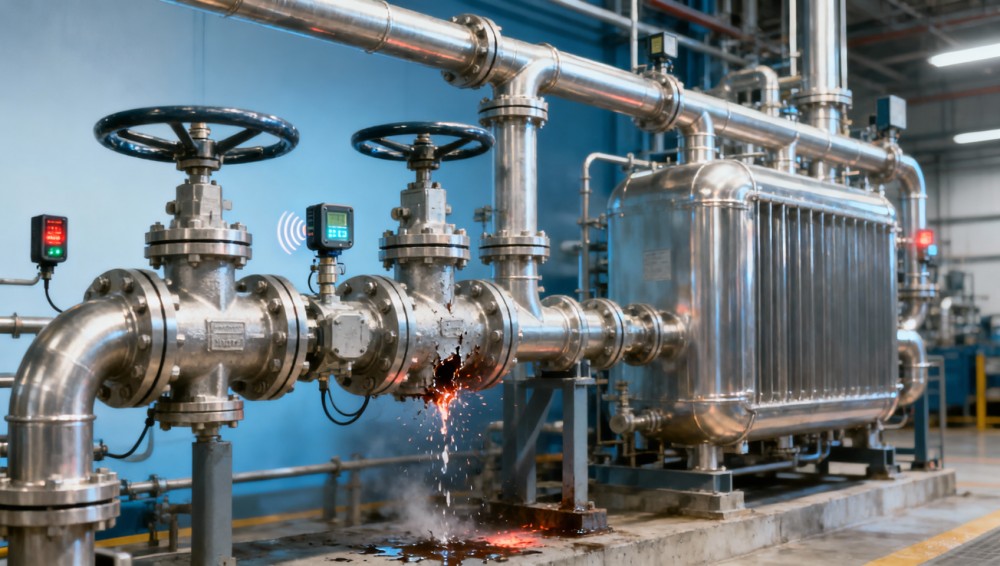
Chemical industry machinery often operates under continuous duty cycles of 16–24 hours per day, with exposure to corrosive media, thermal shock, pressure fluctuation, and abrasive solids. Under these conditions, small defects do not remain small for long. A minor alignment issue in a pump train, for example, can increase bearing load within 2–6 weeks and trigger seal wear, shaft damage, and energy loss.
This pattern is not limited to chemical plants. Industrial machinery for steel plants and industrial machinery for power plants face similar escalation paths because they also combine high load, harsh environments, and interconnected process lines. A single underperforming component can reduce line stability, affect utility consumption, and interrupt multiple production stages instead of one isolated asset.
Researchers and information analysts should pay attention to recurring failure clusters rather than isolated incidents. In many facilities, 3 root categories account for a large share of avoidable shutdowns: mechanical degradation, process deviation, and maintenance execution errors. The problem is usually cumulative. By the time a trip alarm activates, the machine may already have passed several earlier warning thresholds.
Common early-stage failure signals
Operators often encounter the same first-stage indicators across rotating and static equipment. These include rising vibration, unstable pressure, irregular motor current, local hot spots, abnormal noise, and gradual output drift. A 3% decline in flow rate may look manageable in one shift, but over 30 days it may indicate impeller wear, fouling, or suction-side restrictions.
- Vibration increase above baseline by 20%–30% within one maintenance cycle
- Seal leakage progressing from intermittent seepage to visible dripping
- Heat exchanger approach temperature widening by 5°C–12°C
- Valve response time extending from seconds to over 1 minute
- Filter differential pressure rising beyond normal cleaning interval
Why these signals are often ignored
Many plants normalize low-level abnormalities because production targets take priority over investigation. If a machine is still running, teams may postpone action until the next monthly or quarterly shutdown window. Procurement teams may also underestimate the cost of delay because the direct replacement price looks small, while the total cost of unplanned downtime, emergency labor, and expedited logistics is much higher.
The table below summarizes how small defects typically develop into larger failures across common heavy industry machinery categories.
The key takeaway is simple: early-stage anomalies are rarely random. They usually map to predictable wear patterns, process mismatch, or maintenance gaps. For buyers and decision-makers, this means failure prevention starts long before a breakdown report appears. It begins with correct machinery selection, realistic operating windows, and a spare-parts plan that matches lead time and criticality.
Failure Modes That Matter Most to Operators and Decision-Makers
Different stakeholders see machinery failure through different lenses. Operators focus on stable running conditions, maintenance teams on repairability, procurement teams on specification and availability, and executives on cost, output, and risk. A useful failure strategy must connect all 4 viewpoints rather than treat machinery only as a maintenance issue.
In heavy industrial machinery used for chemical, steel, and power applications, 5 failure modes repeatedly drive losses: corrosion, erosion, thermal fatigue, lubrication failure, and instrumentation drift. Each one starts with small changes that are easy to miss during routine shifts. Corrosion may begin as coating damage or pitting under insulation. Instrument drift may appear as a 1%–2% mismatch before causing larger control errors.
For enterprise decision-makers, the risk is amplified by system dependency. A chemical transfer pump is not just a pump. It may be linked to storage, dosing, reaction control, emissions handling, and finished-product delivery. If one component fails, the resulting impact can extend across safety, compliance, customer delivery, and working-capital cycles.
Priority failure categories by business impact
The following comparison helps procurement and technical teams prioritize which failure categories deserve closer monitoring, tighter specification control, and stronger supplier coordination.
This comparison shows that technical failure and commercial risk are tightly linked. A low-cost component becomes expensive when replacement lead time is 6–10 weeks, import documentation is incomplete, or the supplier cannot guarantee dimensional consistency. That is why machinery reliability should be reviewed jointly by operations, engineering, and sourcing functions.
What operators should document every shift
- Equipment temperature, pressure, flow, and current against normal baseline
- Changes in noise, odor, visible leakage, or vibration level
- Any restart difficulty, control lag, or unstable process response
- Consumable condition such as filters, seals, lubricants, and gaskets
Even simple records collected every 8–12 hours can reveal patterns before a shutdown occurs. For information researchers and plant management, this kind of basic field data is often more useful than a single end-of-month failure summary because it shows the progression, not just the final outcome.
How to Evaluate Industrial Machinery Specifications Before Buying
Many recurring failures begin with specification mismatch rather than manufacturing defects. Buyers may select equipment based on nominal capacity, while actual process conditions involve viscosity variation, corrosive additives, solids content, frequent cycling, or ambient swings from 5°C to 45°C. When operating conditions exceed the realistic design window, small faults appear early and maintenance costs rise fast.
For industrial machinery for chemical industry, the most important specification review points usually include material compatibility, pressure and temperature range, sealing arrangement, motor protection level, maintenance access, and spare-parts standardization. In sectors such as steel and power, dust loading, high-temperature zones, and utility integration also become critical selection factors.
A practical purchasing process should compare at least 4 dimensions: process fit, reliability, supply assurance, and lifecycle cost. Initial price matters, but it should be weighed against expected service interval, installation complexity, utility consumption, and the time required to source seals, bearings, valves, or electronic modules.
Specification checklist for procurement teams
The checklist below can help buyers avoid the most common mismatch issues when reviewing heavy industrial machinery for chemical systems and adjacent process industries.
The strongest procurement decisions usually come from combining technical review with operating feedback. If a plant has experienced 2 or more seal failures in 12 months, that history should directly influence specification revision. If a valve line has long response lag in dusty or humid areas, enclosure protection and actuator suitability should be reassessed before the next buying cycle.
Four questions to ask suppliers before order placement
- What operating data must be confirmed to keep the equipment within design range?
- Which wear parts typically need replacement within the first 6–18 months?
- How long is the usual delivery time for standard parts versus customized parts?
- What field conditions most often cause premature failure in similar plants?
These questions shift the discussion from catalog claims to real operating reliability. They also help information researchers and procurement managers compare suppliers on risk transparency, not only quoted price.
Managing Outsourcing, Spare Parts, and Delivery Risk Across the Supply Chain
Supply chain outsourcing can improve flexibility, but it also introduces hidden failure exposure when component quality, dimensional tolerance, traceability, or response speed are inconsistent. This is especially relevant in heavy industry, where one delayed shaft sleeve, gasket set, instrument module, or custom lining part can extend downtime from 12 hours to 7 days or more.
For business users and global trade participants, the priority is not merely finding the lowest purchase cost. It is securing a resilient supply structure. That means evaluating whether critical components are single-source, whether substitute materials are acceptable, and whether cross-border shipping adds customs or packaging risks for fragile or hazardous parts.
Decision-makers should segment machinery components into at least 3 groups: critical shutdown parts, fast-moving consumables, and non-critical accessories. Critical shutdown parts may justify on-site inventory for 1–2 replacement cycles. Consumables may be replenished monthly or quarterly. Non-critical accessories can follow standard lead-time planning without locking up unnecessary working capital.
A practical framework for spare-parts planning
The following table provides a simple planning model for balancing reliability and inventory efficiency in chemical and adjacent heavy-industry environments.
This planning model helps procurement teams align stock strategy with business impact. A low-value seal kit may deserve higher stocking priority than a higher-cost accessory because its absence can halt a production unit. In other words, criticality should drive purchasing policy more than unit price alone.
Outsourcing risks that should be audited
- Dimensional variation that affects installation fit or balancing performance
- Material substitution without clear confirmation of media suitability
- Incomplete packaging or preservation for moisture-sensitive components
- After-sales support limited to sales contact rather than technical response
- Documentation gaps such as assembly drawings, maintenance procedures, or part coding
For companies involved in international sourcing, even a 3-day customs delay can become operationally significant if the plant is waiting on a single custom item. Building risk visibility into supplier selection is therefore a core part of machinery reliability management.
Implementation Steps to Reduce Downtime and Improve Procurement Decisions
Reducing machinery failure is not only a technical maintenance project. It is an operational discipline that combines monitoring, specification control, supplier management, and decision support. Companies that improve reliability usually do so through a repeatable process rather than one-time repairs. A 90-day improvement cycle is often enough to identify the most urgent gaps and prioritize action.
For operators, the first step is building a usable baseline. Record vibration, temperature, pressure, leakage status, and energy draw for critical assets. For procurement, the second step is linking these field records to part history, delivery time, and supplier performance. For management, the third step is ranking assets by downtime impact, safety implication, and replacement complexity.
Once these connections are made, organizations can move from reactive purchasing to planned reliability support. This lowers emergency buying, reduces overstock of low-priority items, and improves timing for shutdown preparation. It also helps researchers and investors interpret whether a plant’s equipment strategy is robust or vulnerable.
Five-step action model
- Identify the top 10 critical assets based on downtime cost, safety relevance, and process dependency.
- Set warning thresholds for 4–6 key indicators such as vibration, temperature, leakage, response time, and differential pressure.
- Review whether current industrial machinery specifications match actual process conditions and seasonal changes.
- Classify spare parts by lead time, failure frequency, and installation urgency.
- Create a quarterly review involving operations, maintenance, sourcing, and management.
FAQ: What buyers and operators ask most often
How do we know if a small fault is serious enough to act on? If a parameter shifts beyond normal baseline by more than 10%–15% for two or more inspections, or if leakage, noise, or response lag keeps increasing over 3–7 days, it deserves technical review rather than observation alone.
How long is a reasonable spare-parts delivery window? For standard consumables, many plants target 1–3 weeks. For custom machined or lined parts, 4–10 weeks is common. If the part can stop production, stock strategy should be reviewed regardless of price.
Which procurement indicators matter most? Focus on 4 core indicators: specification accuracy, lead time reliability, interchangeability of parts, and technical support responsiveness. These often predict downtime risk better than quoted unit price.
Which sites benefit most from this approach? Continuous-process plants, utility-intensive lines, corrosion-prone systems, and facilities with imported spare parts usually see the strongest benefit because failure escalation is faster and recovery is more complex.
Small failures in chemical industry machinery rarely stay isolated. They spread through process systems, budgets, and supply chains when early indicators are overlooked. By combining field monitoring, realistic industrial machinery specifications, spare-parts planning, and supplier risk review, companies can reduce downtime, protect production continuity, and improve purchasing confidence across chemical, steel, and power-related operations.
If you need deeper heavy industry insights, machinery comparison support, or actionable procurement guidance across upstream and downstream value chains, now is the right time to move from reactive response to structured decision-making. Contact us today to explore tailored solutions, request more industry intelligence, and discuss the right equipment and sourcing strategy for your operation.

Industry Briefing
Get the top 5 industry headlines delivered to your inbox every morning.
- supply chain
- chemical industry
- global trade
- industrial machinery
- heavy industry
- supply chain
- procurement
- manufacturing
- global trade
- supply chain outsourcing
- heavy industrial machinery
- industrial machinery for power plants
- industrial machinery for chemical industry
- industrial machinery for steel plants
- industrial machinery specifications
- heavy industry machinery