
Choosing Pharmaceutical Machinery Without Overbuying Capacity





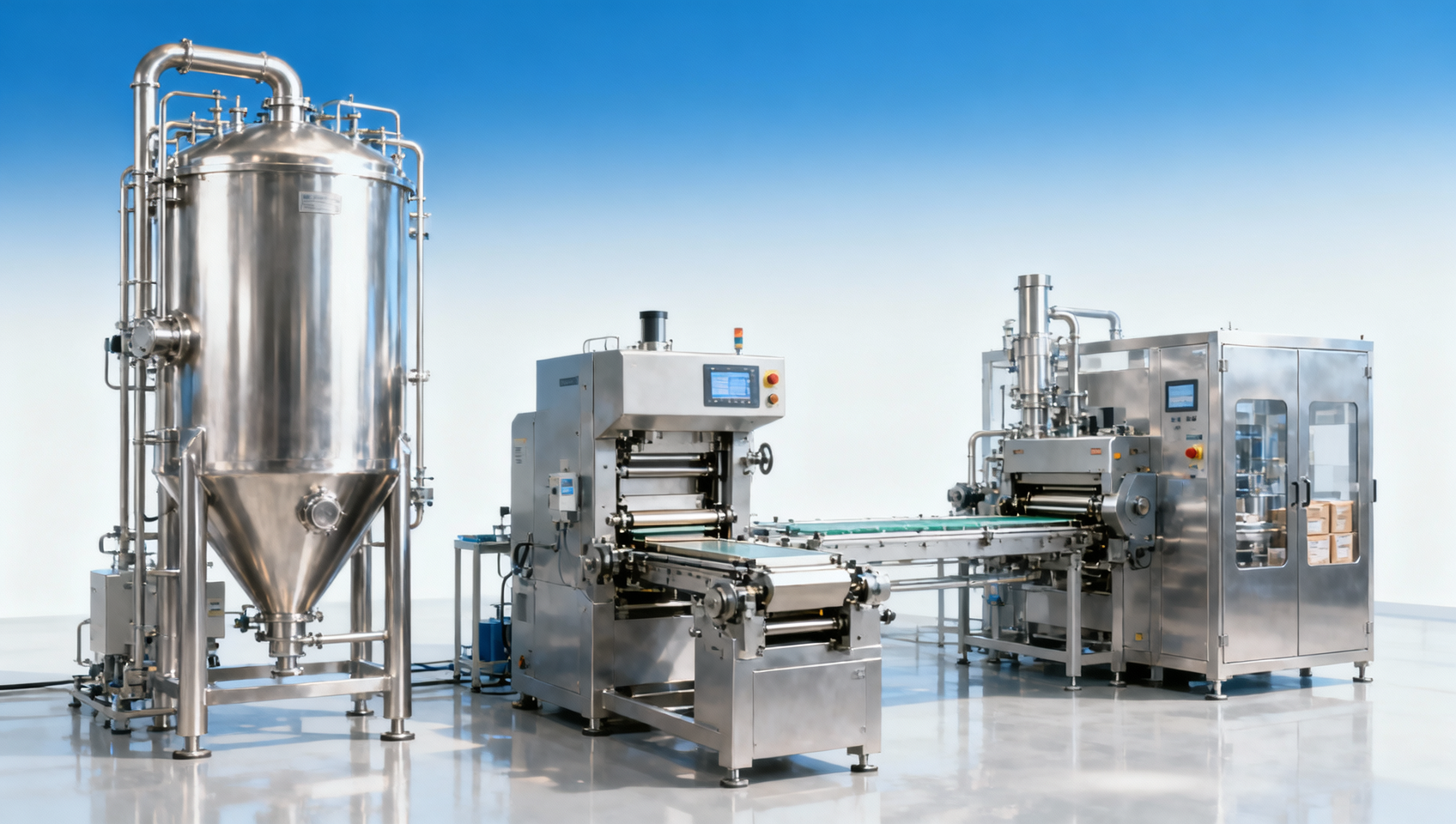
In pharmaceutical production, choosing the right industrial machinery for pharmaceutical industry operations is not about buying the largest system, but the smartest fit. As heavy industry manufacturing and heavy industry automation continue to reshape industrial machinery application, buyers must balance output, compliance, flexibility, and cost. This guide helps procurement teams, operators, and decision-makers avoid overbuying capacity while identifying practical heavy industry solutions that support efficiency and long-term value.
Many pharmaceutical equipment purchases go wrong for a simple reason: companies size machinery for peak expectations, not real operating conditions. The result is familiar—higher capital cost, underused assets, more difficult validation, unnecessary utility consumption, and longer payback periods. For most buyers, the better decision is not the machine with the highest nameplate capacity, but the one that matches actual batch size, process stability, regulatory requirements, labor capability, and future expansion plans.
If you are comparing pharmaceutical machinery suppliers or planning a new investment, the key question is this: can the equipment meet your production and compliance targets without locking you into avoidable cost and complexity? That is the practical lens procurement teams, operators, and business leaders should use.
What does “overbuying capacity” really mean in pharmaceutical machinery selection?
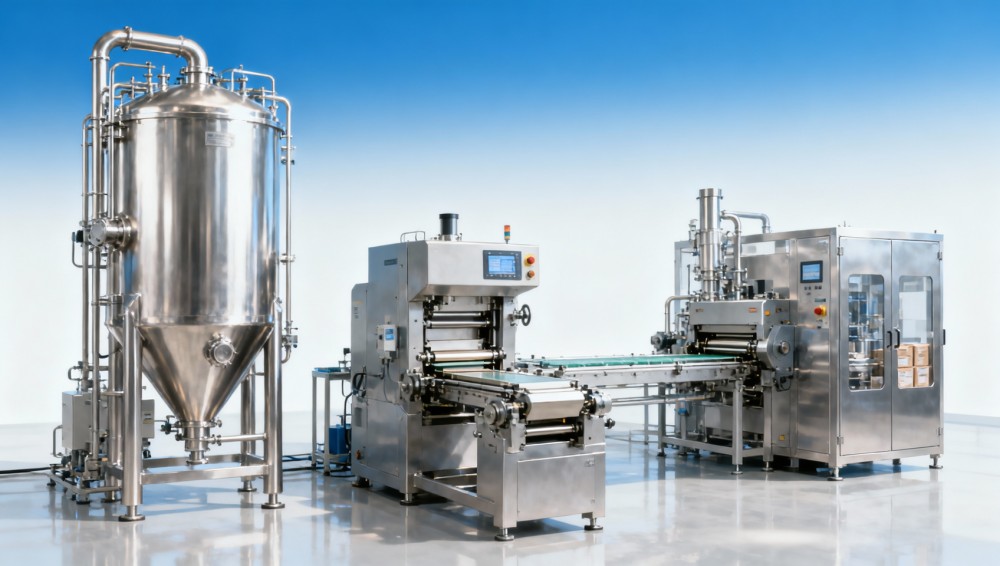
Overbuying capacity does not only mean purchasing a machine that produces more units per hour than you currently need. In pharmaceutical operations, it can also mean buying equipment that is too large, too automated, too integrated, or too specialized for the actual process.
Common examples include:
- Choosing a tablet press designed for very high-volume continuous output when your product mix is mostly small or medium batches
- Installing a granulation or blending system with vessel sizes that create poor fill ratios in normal production
- Selecting a packaging line with speed far above upstream process capability
- Buying advanced automation features that the plant does not yet have the team or digital infrastructure to use well
- Investing in a rigid line layout when product changeovers are frequent
In all of these cases, the issue is not only wasted capacity. It is a mismatch between machinery capability and business reality. That mismatch affects operating efficiency, maintenance, cleaning validation, training burden, energy use, spare parts cost, and even product quality consistency.
What are buyers and operators most concerned about before making a purchase?
Although different stakeholders view equipment from different angles, their concerns are closely connected.
Information researchers usually want to understand the market landscape, the difference between machinery classes, and how industrial machinery application varies by dosage form, scale, and regulatory context.
Operators and users care about whether the machine is practical to run every day. They focus on cleaning, changeover time, ease of operation, troubleshooting, downtime risk, and whether the system performs reliably under real production conditions.
Procurement teams need to compare suppliers, lifecycle cost, qualification burden, lead times, utility requirements, after-sales support, and the total value of different heavy industry solutions—not just the quoted purchase price.
Business decision-makers are typically most concerned with return on investment, speed to production, expansion flexibility, compliance risk, and whether the equipment will support business growth without unnecessary capital exposure.
A useful article on this topic should therefore help readers answer three practical questions:
- How much capacity do we really need?
- What risks come from buying too small versus too large?
- How do we compare pharmaceutical machinery options in a way that reflects real business value?
How to estimate the right capacity instead of buying for unrealistic peak demand
The most reliable way to avoid overbuying is to size equipment around realistic production scenarios rather than optimistic forecasts. This requires more than checking annual output targets.
Start with these inputs:
- Expected commercial demand by product and market
- Batch size ranges, not just maximum batch size
- Number of SKUs and expected changeover frequency
- Actual operating shifts per day and days per year
- OEE assumptions, including planned downtime and cleaning time
- Yield loss, rework, and in-process hold constraints
- Regulatory and validation limits for scale-up
Many teams make the mistake of sizing equipment based on theoretical hourly output. In pharmaceutical manufacturing, usable output is often much lower because of cleaning cycles, line clearance, quality checks, recipe changes, and environmental controls. A machine rated for very high throughput may deliver no meaningful advantage if your upstream or downstream steps cannot keep pace.
A more practical method is to define:
- Base demand: normal production volume under current business conditions
- Stress demand: realistic high-demand periods that may happen seasonally or after product launch
- Expansion trigger: the point at which added modules, duplicate units, or line upgrades become financially justified
This approach supports smarter capital planning. Instead of paying for excess capacity now, you create a staged path for growth.
Why bigger pharmaceutical equipment can create hidden operational and compliance costs
On paper, larger machinery can appear safer because it seems to “future-proof” production. In practice, oversized systems often introduce hidden costs that reduce the expected benefit.
Higher validation burden: Larger or more complex systems may require more extensive installation qualification, operational qualification, performance qualification, software validation, and documentation review.
Reduced process efficiency at low utilization: Some equipment does not perform optimally when running far below designed load. This can affect blending uniformity, filling accuracy, coating consistency, or packaging efficiency.
More expensive cleaning and sanitation: Bigger product-contact surfaces, longer CIP/SIP cycles, more disassembly points, and more difficult access can increase turnaround time and labor cost.
Higher utility consumption: Oversized machinery may require more compressed air, purified water, HVAC support, steam, and electrical load than daily operations justify.
Greater training and maintenance complexity: Advanced heavy industry automation can deliver strong benefits, but only if the site has the technical capability to maintain sensors, control systems, software interfaces, and spare parts planning.
Layout and expansion constraints: Large integrated equipment may be difficult to relocate, isolate, or reconfigure when product mix changes.
For regulated manufacturers, these are not side issues. They directly influence cost per batch, release timelines, audit readiness, and production resilience.
How to balance current production needs with future growth
The goal is not to buy the smallest machine. It is to buy a machine that fits current needs while preserving realistic options for growth. That usually means favoring flexibility over headline capacity.
Good strategies include:
- Choosing modular systems that allow later expansion
- Selecting equipment families with scalable vessel or tooling options
- Prioritizing fast changeover for multi-product environments
- Standardizing controls and spare parts across multiple lines
- Evaluating whether a second parallel unit is better than one oversized unit
For example, a company producing multiple medium-volume products may gain more value from two right-sized flexible machines than from one very large machine. The smaller setup can improve scheduling, reduce downtime risk, and make maintenance planning easier. It also creates redundancy, which matters in pharmaceutical supply continuity.
This is where insights from heavy industry manufacturing are useful. In many industrial settings, capacity planning is moving toward flexible, staged investment rather than one-time overbuilt infrastructure. The same logic can support pharmaceutical operations, especially when demand visibility is limited.
What should be included in a practical equipment evaluation checklist?
When comparing industrial machinery for pharmaceutical industry use, buyers should assess more than throughput and price. A practical evaluation framework should include the following:
- Process fit: Is the machine appropriate for your dosage form, material properties, batch sizes, and cleaning standards?
- Compliance readiness: Does the supplier provide documentation, traceability, validation support, and material certifications suitable for regulated use?
- Usable output: What is the expected output under real operating conditions, not theoretical maximum speed?
- Flexibility: How well does the machine handle multiple SKUs, recipe changes, and future product introductions?
- Operational burden: How many operators are needed, how difficult is cleaning, and what level of training is required?
- Lifecycle cost: What are the expected maintenance, spare parts, utility, calibration, and software support costs?
- Integration: Can the machine connect smoothly with existing upstream and downstream systems?
- Service support: What are the supplier’s response times, local service capability, commissioning support, and parts availability?
- Expansion path: Can capacity be increased later without replacing the whole system?
This kind of checklist helps procurement teams shift the conversation from “Which machine is biggest?” to “Which machine delivers the best operational and financial fit?”
When is higher-capacity equipment actually the right choice?
Avoiding overbuying does not mean always choosing conservative capacity. Larger or more advanced pharmaceutical machinery may be justified when specific conditions exist.
Higher-capacity equipment can make sense if:
- Demand is already stable and consistently close to current capacity limits
- Scale-up later would create major validation or supply chain disruption
- Products are few in number and changeovers are infrequent
- Utility systems, plant layout, and operator capability are already prepared
- The equipment creates measurable cost-per-unit reduction at realistic utilization levels
- Business strategy depends on export growth, contract manufacturing, or long production campaigns
In these cases, the investment decision should still be supported by scenario analysis. Buyers should test best-case, expected-case, and downside-case utilization, then compare payback periods and risk exposure across equipment options.
How suppliers and buyers can work together to avoid poor-fit investments
The best machinery decisions are usually made when suppliers are transparent and buyers provide realistic production data. Poor outcomes often happen when suppliers promote maximum capability while buyers provide incomplete process information.
A better procurement process includes:
- Sharing actual batch and SKU assumptions early
- Requesting performance data under conditions similar to your use case
- Reviewing cleaning, maintenance, and qualification needs before purchase
- Visiting reference sites with comparable product profiles
- Comparing multiple sizing options, not just one recommended configuration
- Discussing phased automation rather than full complexity from day one
For platforms serving global trade participants, procurement managers, and industry professionals, this is where actionable industry information creates value. Buyers do not just need vendor claims—they need comparable benchmarks, realistic application insight, and decision support grounded in actual industrial machinery application.
Final decision rule: buy for fit, not for fear
Choosing pharmaceutical machinery without overbuying capacity comes down to one principle: match equipment to real production needs, compliance obligations, operating capability, and staged growth plans. Bigger systems may look safer during procurement discussions, but they often carry hidden costs in validation, utilities, maintenance, cleaning, and underutilization.
The most effective heavy industry solutions for pharmaceutical manufacturing are not simply high-capacity assets. They are systems that deliver reliable output, manageable operating complexity, regulatory confidence, and a clear return on investment.
For information researchers, operators, procurement teams, and business leaders alike, the strongest buying decision is usually the one supported by realistic demand modeling, lifecycle cost analysis, and an honest assessment of what the plant can run well today. In pharmaceutical production, smart fit beats excess capacity almost every time.

Industry Briefing
Get the top 5 industry headlines delivered to your inbox every morning.