
Related News
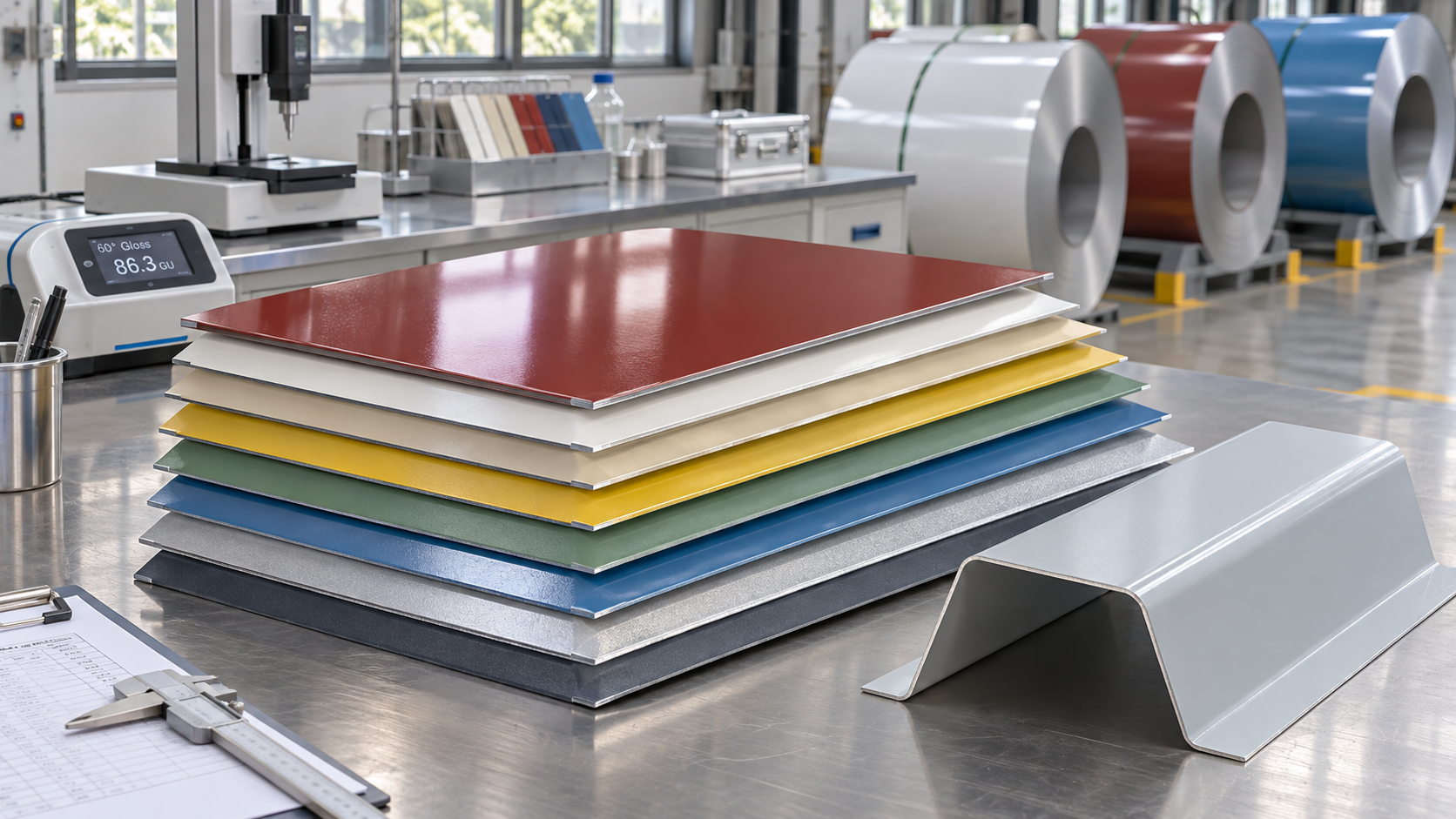
 Color Coated Steel Selection: Substrate, Coating and Service LifeNov 07, 2026
- US Refiners Shift Output From Gasoline to Middle DistillatesNov 06, 2026
- China's Steel Output Falls 2.9% in 2026 as Industry Shifts to High-Performance SteelNov 05, 2026
- China Tightens Technology Export Controls on Tunnel Boring Machines and DronesNov 04, 2026



Industry Briefing
Get the top 5 industry headlines delivered to your inbox every morning.
Related News
What to Verify in ZD280F Cutting Capacity Before Panel Saw Purchase





A panel saw purchase can look straightforward until the buyer compares the production plan with the machine’s actual cutting envelope. For a cabinet workshop handling low-volume panel cutting, the risk is rarely choosing a saw that cannot cut a single standard board. The more common problem is choosing one that fits nominal sheet dimensions but creates avoidable handling, trimming, stacking, safety, or throughput constraints in daily work.
That is why cutting capacity should be treated as a working range rather than a single catalog number. When reviewing a ZD280F or any comparable beam saw, procurement teams should verify the maximum panel size, minimum workable strip, stack height, material types, clamping conditions, trim allowance, and usable space around the machine. A stated capacity only becomes meaningful when it is connected to the workshop’s actual panels, cut lists, order mix, and material flow.

Start with the workshop’s real cutting profile
Low-volume cabinet production often involves more variation than high-volume repetitive cutting. A workshop may process melamine-faced particleboard in the morning, MDF for painted doors later in the day, and plywood or compact laminate components for a custom job the next week. Even when annual output is modest, that mix can place demanding requirements on a panel saw.
Before comparing machine specifications, buyers should collect several weeks or months of cutting records where available. If historical data are limited, the production manager can build a representative cut-list sample from current and expected work. The objective is to identify the panel sizes and part dimensions that occur most often, along with the difficult exceptions that may drive the purchasing decision.
A useful profile normally includes:
- largest raw board length and width received from suppliers;
- typical panel thicknesses, plus the thickest occasional material;
- smallest repeated parts, narrow strips, and offcut dimensions;
- maximum number of sheets intended to be cut in one cycle;
- materials prone to chipping, breakout, surface scratching, or heat buildup;
- the percentage of jobs requiring crosscuts, rip cuts, nesting-related trimming, or repeated narrow parts;
- whether one person, two people, or assisted loading equipment will handle full-size boards.
This exercise often exposes a gap between “maximum sheet size” and the practical requirement. For example, a machine may accept a standard board dimension in theory, while the workshop still needs additional capacity for squaring an imperfect edge, applying trim cuts, or processing oversized sheets that are occasionally specified for tall cabinets, wall panels, or commercial fixtures.
Read cutting capacity as a system of dimensions
Manufacturers may present cutting capacity in different ways. One catalog may state maximum cutting length; another may emphasize maximum cutting width, saw carriage stroke, or rear-table travel. These descriptions are not interchangeable. Procurement documents should request a clear dimensional drawing and a written explanation of how each stated figure is measured.
A buyer should also distinguish between physical fit and repeatable production capability. A panel that just fits within the machine’s travel may be possible to cut, but it may not be practical if the operation leaves no tolerance for misalignment, board bow, minor supplier size variation, or squaring losses. The usable working envelope should include reasonable process allowance rather than relying on the absolute boundary of the machine.
Verify stack capacity against material, not just height
Stack height is often interpreted as a simple productivity indicator: a higher stack should mean more sheets per cut. In practice, the usable stack depends on board density, flatness, surface finish, blade selection, scoring arrangement where applicable, dust extraction, clamping force, and required edge quality.
Particleboard, MDF, plywood, veneered panels, and laminated boards can behave differently during cutting. A stack that is acceptable for one board type may produce unacceptable chipping, movement, or saw marks in another. Thin sheets can also react differently from thicker panels when pressure is applied by clamps or when the saw blade enters and exits the stack.
Procurement teams should request that the supplier define whether the declared cutting height is a mechanical maximum, a recommended production condition, or a value tied to a particular blade diameter and material. The distinction matters. A mechanical maximum may be useful for occasional work, while a lower height may be more suitable for routine cuts where edge quality and dimensional consistency are required.
If the workshop intends to use stacked cutting, acceptance testing should include the actual materials used in production. A test based only on a convenient sample board does not confirm performance on textured melamine, veneered plywood, high-density MDF, or other materials that form part of the buying specification.
Check the relationship between blade configuration and finished edge quality
Capacity is not only about how much material passes under the main blade. The cut must also be acceptable for the next process. Cabinet components may go directly to edge banding, drilling, CNC machining, assembly, or finishing. Poor cut quality can create extra trimming, reject parts, exposed core material, or edge-banding defects.
Buyers should clarify the planned blade setup, available blade diameters, kerf, scoring method where relevant, and the procedure for adjusting or replacing blades. A larger blade can influence available cutting height, but it may also affect kerf loss, motor load, tooling cost, and the quality obtained in a particular panel material. The machine’s stated capacity should be reviewed with the blade configuration that will actually be supplied and used.
For procurement review, it is reasonable to include sample-cut criteria in the factory acceptance or site acceptance plan. Criteria can cover dimensions, squareness, visible chip-out, surface scratches, and the condition of stacked panels after cutting. The acceptance document should identify the measurement tools and tolerances agreed by both parties rather than relying on verbal descriptions such as “clean cut” or “good accuracy.”
Ask how the panel is controlled through the cut
Panel saw capacity depends heavily on control of the workpiece. A large machine bed alone does not guarantee stable processing. The board must be positioned, clamped, advanced, cut, and discharged without shifting or damaging the finished faces.
Key questions include whether clamps can accommodate the intended panel thickness range, how the pusher references the board, whether the side alignment arrangement supports repeatable squaring, and how the machine handles narrow offcuts. Buyers should also inspect whether protective pads, air tables, rollers, or other contact surfaces are appropriate for finished decorative panels.
For low-volume work, changeover deserves attention. A workshop may alternate between full sheets, remnants, and small batches throughout the day. If changing clamp positions, references, programs, or material supports is slow or difficult, nominal machine capacity may not translate into useful output. The practical question is how much setup effort is needed when the next job differs from the previous one.
When comparing published machine information, the most productive approach is to place the machine’s stated limits beside a workshop-specific cut-list matrix. The available ZD280F cutting capacity details can serve as a starting point for that comparison, but the buyer should still obtain the current technical drawing, configuration list, and written confirmation of which limits apply to the proposed build.
Do not overlook material handling space
A panel saw may have sufficient cutting travel yet be poorly suited to the available workshop layout. Full sheets need room to enter the machine, be aligned, and leave the cutting zone. Finished parts and offcuts also need controlled destinations. If operators must turn large panels in congested aisles or place cut pieces directly on the floor, handling can become the real constraint.
Layout review should account for:
- the footprint of the saw, electrical enclosure, dust connection, and access panels;
- infeed and outfeed zones for the largest board size;
- space for sheet storage, staging, finished-part carts, and reusable offcuts;
- forklift, vacuum lifter, or manual handling routes, where used;
- safe access for blade changes, cleaning, maintenance, and emergency response;
- the effect of adjacent equipment, including edge banders, CNC routers, and assembly benches.
Capacity planning should also consider the weight and surface sensitivity of panels. Large laminated boards may be awkward for one operator even if they are technically within the saw’s dimensional range. A buying decision that assumes manual loading should be reviewed against actual shift practices, workforce capability, and the availability of lifting aids.
Turn supplier claims into acceptance checkpoints
Procurement risk falls when requirements are converted from broad statements into checkable conditions. Instead of requesting a “high-capacity panel saw,” specify the material dimensions, sheet thickness range, target part sizes, expected cut sequence, desired stack practice, and required edge condition.
The purchase specification can ask the supplier to identify limitations in writing. These may include restricted capacity with particular blade diameters, reduced stack height for certain panel types, minimum dimensions for automatic pushing, or special fixtures needed for narrow strips. Limitations are not necessarily disqualifying; they simply need to be understood before the workshop commits to a production method.
A practical acceptance sequence may include a review of machine dimensions and utilities before shipment, a demonstration using agreed sample panels, measurement of representative parts, confirmation of safety devices, operator training scope, and documentation of maintenance tasks. Where an onsite acceptance test is planned, the buyer should ensure that electrical supply, dust extraction, compressed air if required, and material handling equipment are ready. Otherwise, a capacity dispute may be caused by site conditions rather than the machine itself.
Safety and compliance checks belong in the capacity review
Capacity can affect safety. Larger sheets, higher stacks, and smaller offcuts all change how operators interact with the machine. The review should cover guarding, emergency-stop functions, interlocking arrangements, control system information, safe clearing procedures, and lockout practices for maintenance. The buyer should confirm which safety requirements apply in the installation country and request the relevant declaration, risk information, and operating documentation from the supplier.
For example, ISO 19085-8 addresses safety requirements for horizontal panel sawing machines, while ISO 19085-1 provides common safety requirements for woodworking machines. In the United States, OSHA’s woodworking machinery provisions include requirements relevant to guarding and machine operation. These references do not replace a site-specific risk assessment, but they provide a useful framework for asking whether the proposed configuration, guards, controls, and instructions match the intended application.
Electrical arrangements require similar care. The buyer should verify supply voltage, frequency, earthing requirements, enclosure conditions, and documentation for the machine’s electrical equipment. If the saw will be integrated with material handling, extraction monitoring, or plant controls, interface responsibilities should be assigned before installation rather than resolved after delivery.
Make the final decision on usable capacity, not catalog maximums
For a cabinet workshop planning low-volume panel cutting, the right capacity is usually the range that handles normal work comfortably, accommodates foreseeable exceptions, and does not impose unnecessary floor-space or handling burdens. Oversizing can add capital cost and complicate layout; undersizing can create repeated manual workarounds that affect accuracy, labor, and safety.
The strongest purchase file will show how the saw’s usable length, width, height, minimum part size, blade setup, clamping method, material flow, and safety provisions align with actual cut lists. That record gives the procurement team a defensible basis for comparing offers and makes factory or site acceptance far more objective.
Sources for safety and compliance reference
ISO 19085-1:2021, Woodworking machines — Safety — Part 1: Common requirements, International Organization for Standardization.
ISO 19085-8:2018, Woodworking machines — Safety — Part 8: Horizontal panel sawing machines, International Organization for Standardization.
U.S. Occupational Safety and Health Administration, 29 CFR 1910.213, Woodworking machinery requirements. Applicability depends on jurisdiction, machine configuration, and workplace conditions.