
Related News
 Are Carbon Fiber Composites Ready for Mass Use in Construction Equipment?Oct 08, 2026
- How to Verify an Industrial Supplier’s Delivery Track RecordOct 08, 2026
 What Should Buyers Do When a Key Supplier Raises Prices Mid-Contract?Oct 08, 2026
- How Do Trade Sanctions Affect Heavy-Industry Supply Chains?Oct 08, 2026
Industry Briefing
Get the top 5 industry headlines delivered to your inbox every morning.
Related News
- processing equipment
- industrial machinery
- heavy industry
- supply chain
- procurement
- global trade
- industrial machinery cost
- food processing equipment
- supply chain outsourcing
- industrial machinery manufacturers
- industrial machinery suppliers
- industrial machinery factory
- industrial machinery specifications
- industrial machinery wholesaler
- industrial machinery for food processing
- heavy industry supply chain
What industrial machinery for food processing costs to run





Running costs for industrial machinery for food processing go far beyond the purchase price. From energy use and maintenance to labor, spare parts, and supply chain outsourcing, buyers must compare industrial machinery specifications, supplier reliability, and long-term efficiency. Whether you are sourcing from an industrial machinery wholesaler, industrial machinery factory, or global industrial machinery manufacturers, understanding total operating cost is essential for smarter procurement and better investment decisions.
What really drives food processing machinery operating cost?
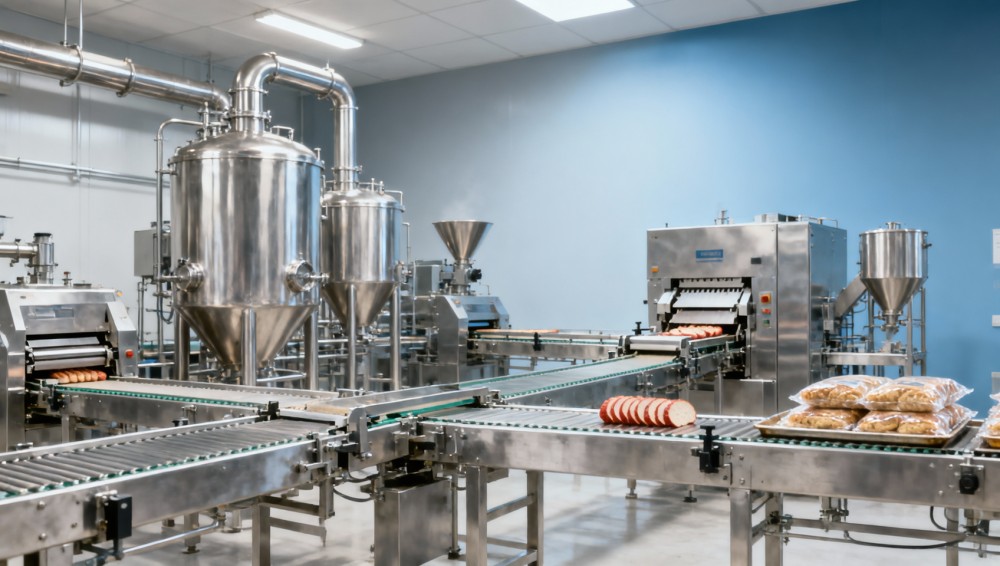
For most buyers, the visible machine price is only the first layer of spending. In food processing, the real financial pressure usually appears over 3 to 7 years of operation, when electricity, steam, water, cleaning chemicals, spare parts, downtime, and labor begin to accumulate. This is why industrial machinery cost analysis should start with total cost of ownership rather than invoice price alone.
Different food categories create different cost patterns. A bakery line, a meat processing line, and a frozen food line may all use conveyors, mixers, slicers, pumps, and packaging systems, but their sanitation cycles, operating temperatures, and continuous run hours are not the same. Equipment that runs 16–24 hours per day under washdown conditions often faces higher wear rates than machinery used in short production batches.
For information researchers and procurement teams, the key question is not simply “How much does this industrial machinery cost?” but “What will it cost to run per shift, per month, and per ton of output?” That shift in perspective helps compare industrial machinery manufacturers more fairly, especially when one supplier offers a lower upfront price but weaker service support or longer spare parts lead times.
For operators and plant managers, cost control is practical. It involves cleaning time, setup changeovers, failure frequency, lubrication intervals, and training quality. A machine that is easy to operate and maintain may save 10–20 minutes per shift, which becomes meaningful over 250–300 production days a year.
Five cost centers buyers should map before comparing suppliers
- Energy consumption: motor load, heating method, compressed air use, refrigeration demand, and idle power draw.
- Maintenance exposure: routine service intervals, wear parts replacement cycles, and need for specialist technicians.
- Labor intensity: number of operators per line, cleaning crews, setup staff, and troubleshooting capability.
- Downtime risk: waiting time for service, spare parts stocking, and fault recovery speed.
- Compliance and quality cost: hygienic design, inspection records, traceability needs, and product loss during changeovers.
A practical procurement review usually starts with 3 core metrics: cost per operating hour, cost per unit of output, and expected downtime hours per quarter. These indicators give enterprise decision-makers a common language across engineering, finance, and operations, making supplier evaluation less subjective and more actionable.
Which operating expenses matter most in daily production?
In daily plant operation, not all expenses move in the same way. Some are fixed, such as planned maintenance contracts or baseline staffing. Others rise directly with production volume, such as power, water, ingredients loss during startup, and consumables. Understanding this difference helps buyers choose between lower-capacity machines, modular expansion, or full-scale automated systems.
Energy is often one of the first operating costs reviewed because food processing equipment may combine motors, heaters, pumps, compressors, and refrigeration devices in one workflow. Typical power demand can range from 5 kW for smaller standalone machines to 100 kW or more for integrated lines. However, the true cost depends on load factor, runtime, and peak-hour tariffs rather than nameplate power alone.
Maintenance cost is equally important. Some machinery requires daily cleaning and weekly lubrication, while other systems follow preventive maintenance cycles every 500–1,000 operating hours. If a supplier cannot provide clear parts lists, maintenance manuals, or service response expectations, the long-term industrial machinery cost may become difficult to forecast.
Labor cost varies with automation level and production complexity. Semi-automatic lines may appear affordable at first, but they can need 2–4 operators per shift for feeding, adjustment, inspection, and packing support. In contrast, a better integrated line may reduce direct labor while requiring stronger technical training for supervisors and maintenance personnel.
Typical operating cost categories for food processing machinery
The table below helps procurement teams compare recurring cost items across common machinery functions. It is not a price list, but a decision framework for evaluating where operating expenses are likely to concentrate during the first 12–24 months of use.
This framework shows why a low purchase quotation does not always lead to a lower run cost. If energy demand is high, spare parts are difficult to source, or weekly cleaning takes 1–2 extra hours, the cost gap can widen quickly. For this reason, industrial machinery suppliers should be compared using both commercial and operational criteria.
A simple 4-step review method
- List all utilities required: electricity, steam, water, compressed air, and refrigeration.
- Estimate maintenance rhythm: daily, weekly, monthly, and annual tasks.
- Model line staffing by shift, including cleaning and changeover time.
- Review supplier support coverage for the first 6–12 months after commissioning.
How should buyers compare industrial machinery options before purchase?
Comparing food processing machinery is difficult because quotes often describe equipment differently. One industrial machinery factory may emphasize capacity per hour, another may focus on motor power, and a third may include automation functions that reduce labor but raise initial investment. To compare options correctly, buyers need a common matrix built around operating outcomes, not brochure language.
A useful approach is to divide machinery into three broad procurement paths: entry-level standalone equipment, semi-integrated production cells, and fully integrated lines. Each path fits a different production scale, staffing model, and budget strategy. Information researchers and enterprise decision-makers can use this structure to align capex planning with actual throughput goals.
Supplier location also affects operating cost. A local or regional industrial machinery wholesaler may provide faster service visits and simpler spare parts logistics. A global industrial machinery manufacturer may offer broader technical capability or stronger automation integration, but delivery cycles can extend to 8–16 weeks depending on customization, controls, and compliance documentation.
In many cases, the best choice is not the cheapest or the most automated. It is the option that matches production rhythm, sanitation requirements, operator skill level, and service access. This is where professional industry information becomes valuable: it helps teams benchmark line configuration decisions against upstream equipment supply and downstream production needs.
Comparison of common sourcing options
The table below compares three common procurement routes for food processing industrial machinery. It helps clarify how run cost, flexibility, and service expectations may differ across sourcing strategies.
The comparison makes one point clear: every sourcing route redistributes cost rather than removing it. A lower capex option may push expenses into labor and downtime. A higher automation option may reduce labor but increase technical dependence. Procurement teams should therefore model at least 3 scenarios before final approval.
Five questions to ask every supplier
- What is the recommended service interval in operating hours or production cycles?
- Which spare parts should be stocked on site for the first 6 months and the first year?
- How many operators are required per shift under normal production and sanitation conditions?
- What is the usual commissioning and training duration: 2–5 days, 1–2 weeks, or longer?
- How are remote support, on-site service, and replacement parts handled across regions?
What technical and compliance factors change long-term running cost?
Technical design has a direct effect on run cost in food processing. Hygienic construction, smooth welds, proper drainage, and easy-access cleaning zones do not just support food safety; they also reduce sanitation time and product retention. Over months of operation, these design details can affect labor hours, water use, and the frequency of unplanned cleaning intervention.
Material selection matters too. Stainless steel construction is common in food-contact areas because it supports washdown environments and helps resist corrosion. But the key procurement issue is not material name alone. Buyers should verify where food-contact surfaces are located, how seals are selected, whether moving parts are protected, and how quickly wear items can be changed during a normal maintenance window.
Control systems can lower operating cost when they improve repeatability and fault visibility. Basic alarms, recipe storage, and production logging may shorten setup time and help operators correct issues before a full stop occurs. For plants running multiple product sizes or recipes, changeover time savings of even 15–30 minutes can improve line economics over a quarter.
Compliance also affects cost. Depending on market destination and product type, buyers may need to review electrical safety, food-contact suitability, sanitary design, and documentation for validation or audit purposes. If this is handled too late, retrofits and paperwork delays can create hidden costs that were not visible in the original machinery quotation.
Key technical and compliance checkpoints
- Hygienic design review: surfaces, drainage, dead zones, and access points for daily cleaning.
- Utility matching: voltage, phase, compressed air pressure, water quality, and drain layout.
- Documentation package: manuals, parts lists, wiring diagrams, and maintenance schedule.
- Operator support: HMI language, alarm clarity, and training materials for 2–3 shift operations.
- Compliance planning: destination market requirements and plant-specific audit expectations.
Why these details matter in B2B sourcing
In heavy industry and linked value chains, machinery decisions rarely stand alone. Upstream component supply, midstream assembly quality, and downstream plant operation all influence the cost to run industrial machinery. A platform that tracks these linkages can help buyers identify not only equipment options, but also spare parts availability, supplier responsiveness, and market timing.
That broader view is especially useful for investors, procurement managers, and cross-border buyers. Instead of making decisions from a single quotation, they can assess industrial machinery manufacturers through production continuity, service infrastructure, and the practical fit between machinery specification and operating environment.
Common mistakes, FAQ, and how to make a safer procurement decision
Many food processors underestimate run cost because they focus on installed capacity rather than usable capacity. A machine rated for high throughput may only achieve that level under ideal conditions with stable product feed, skilled operators, and limited changeovers. In real production, losses during startup, cleaning, and product switching may reduce practical output and raise unit cost.
Another common mistake is ignoring after-sales structure. If spare parts lead time stretches from 3–5 days to 3–4 weeks, one small failure can interrupt production plans and customer delivery commitments. This is why procurement teams should treat service terms, documentation quality, and parts stocking strategy as core operating cost variables rather than optional extras.
A safer procurement decision usually combines 4 actions: define process requirements, compare operating cost assumptions, validate utility and compliance fit, and review support capability after installation. This method reduces the chance of buying industrial machinery that looks attractive on paper but performs poorly in actual plant conditions.
Below are common search-oriented questions asked by operators, sourcing specialists, and decision-makers when evaluating food processing machinery operating cost.
How can I estimate the running cost of industrial machinery before buying?
Start with 5 inputs: utility demand, labor per shift, maintenance interval, expected wear parts use, and probable downtime exposure. Model these over a 12-month period, then compare cost per operating hour and cost per unit of output. Ask each supplier to state what assumptions were used so quotations can be normalized.
Which food processing machines usually cost more to run?
Systems involving heating, cooling, continuous washdown, or complex changeovers often carry higher operating costs. Examples include thermal processing, refrigeration-linked lines, and equipment with multiple product formats. The issue is not only power use, but also sanitation time, seal wear, and process stability during long shifts.
Is a more automated line always cheaper to operate?
Not always. Automation can lower labor and improve consistency, but it may raise dependence on specialized controls, commissioning, and technical support. For low-volume or highly variable production, a modular or semi-automatic system may deliver a better balance. The right answer depends on batch size, skill level, and production hours per week.
What is a reasonable supplier support checklist?
Check 6 items: parts list, wear parts lead time, preventive maintenance plan, operator training scope, remote troubleshooting method, and on-site service availability. If any of these areas are unclear, the total industrial machinery cost may become difficult to control once the equipment is in use.
Why choose us for food processing machinery research and sourcing insight?
For food processing projects, good decisions require more than a catalog. Buyers need timely and actionable insight across heavy industry supply chains, machinery sourcing channels, component availability, and downstream production realities. Our platform is built to support business users, procurement decision-makers, industry professionals, investors, and global trade participants with information that is practical for real B2B evaluation.
We help you move from broad market search to decision-ready analysis. That includes comparing industrial machinery specifications, reviewing industrial machinery manufacturers and wholesaler options, identifying operating cost drivers, and understanding where service or supply chain risk may affect long-term returns. This is especially useful when your team must balance budget, delivery timing, and plant performance.
You can contact us for focused support on 6 practical topics: parameter confirmation, equipment selection logic, typical delivery cycles, custom line planning, common compliance requirements, and quotation comparison. If you are evaluating a new project, replacing aging machinery, or benchmarking supplier offers, we can help organize the information needed for a more confident procurement decision.
If you need a clearer view of what industrial machinery for food processing costs to run, reach out with your product type, target throughput, utility conditions, and sourcing region. We can help you structure a supplier shortlist, compare cost assumptions, and identify the questions that matter before you commit budget or negotiate final terms.