
Related News
 Are Carbon Fiber Composites Ready for Mass Use in Construction Equipment?Oct 08, 2026
- How to Verify an Industrial Supplier’s Delivery Track RecordOct 08, 2026
 What Should Buyers Do When a Key Supplier Raises Prices Mid-Contract?Oct 08, 2026
- How Do Trade Sanctions Affect Heavy-Industry Supply Chains?Oct 08, 2026

Industry Briefing
Get the top 5 industry headlines delivered to your inbox every morning.
Food processing machinery hygiene gaps that trigger recalls





Food recalls often begin with hidden hygiene failures inside industrial machinery for food processing, from hard-to-clean surfaces to poor maintenance design. For buyers, operators, and decision-makers comparing an industrial machinery wholesaler, industrial machinery manufacturers, or an industrial machinery factory, understanding these risks is essential. This article explores where sanitation gaps emerge, how industrial machinery specifications affect compliance, and what to check before requesting an industrial machinery quotation.
Where hygiene gaps usually start in food processing machinery
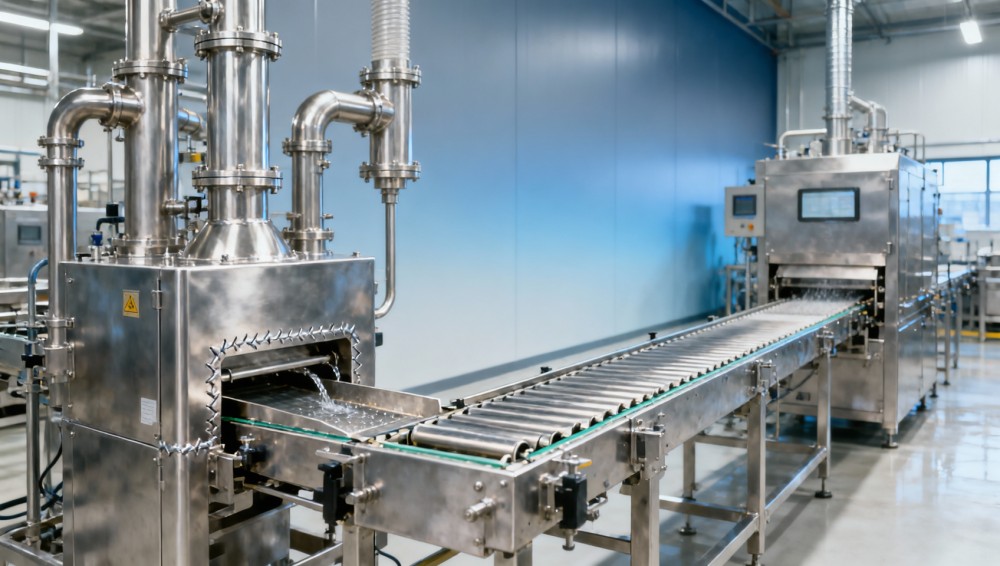
In food plants, contamination rarely starts as a dramatic equipment failure. It more often begins in small design blind spots: hollow frames that trap moisture, dead ends in piping, rough welds, damaged seals, or panels that require 20–30 minutes to open during routine cleaning. These details matter because residues, water, allergens, and microorganisms can remain after sanitation, then spread across batches during 8–16 hour production shifts.
For information researchers and procurement teams, the real issue is not only whether a machine runs at the required throughput. The question is whether its sanitary design supports repeatable cleaning, visual inspection, and maintenance access. An industrial machinery quotation that focuses on output, motor power, or footprint but omits hygiene-critical details creates purchasing risk that may only appear months after commissioning.
Operators see these gaps first. If a conveyor has hidden undersides, if product contact parts need special tools, or if washdown causes water to pool near bearings, then standard operating procedures become harder to follow. In practice, sanitation time may increase from 45 minutes to 90 minutes per changeover, reducing uptime and increasing the chance that shortcuts are taken under schedule pressure.
For decision-makers comparing an industrial machinery factory with multiple industrial machinery manufacturers, hygiene should be treated as a lifecycle issue rather than a one-time checklist. Poor hygienic design affects compliance, labor, spare parts, downtime, and recall exposure across 3 stages: installation, routine operation, and long-term maintenance.
Typical contamination points buyers often overlook
Many buyers assume contamination risk is limited to direct product contact zones. In reality, non-product zones can be equally important when they are close to splash areas, airborne powder, or condensate. A frame leg, cable tray, or motor mounting bracket may become a harborage site if cleaning chemicals and rinse water cannot fully remove buildup.
- Crevices wider than a hairline around gaskets, inspection covers, and bolted joints that repeatedly collect wet product residue.
- Horizontal surfaces and flat ledges where water remains for several hours after washdown instead of draining quickly.
- Poorly finished welds, scratched stainless steel, and damaged coatings that create rough surfaces difficult to sanitize.
- Inaccessible seals, bearings, and guards that delay cleaning verification and make preventive maintenance inconsistent.
These gaps become more serious in multi-product operations, especially where allergen changeovers occur weekly or even daily. In those plants, hygienic machinery design is not just about microbiological control. It also supports segregation, verification, and traceability when different recipes, viscosities, and moisture levels pass through the same line.
What machine specifications reveal about sanitation risk
Industrial machinery specifications should do more than list voltage, dimensions, and capacity. In food processing, the most valuable specifications explain cleanability, material compatibility, drainage, access time, sealing design, and washdown suitability. If these are absent, buyers should ask follow-up questions before comparing suppliers or finalizing an industrial machinery quotation.
Material selection is a common starting point. Stainless steel grade, surface finish, and gasket chemistry affect how equipment handles acids, salts, fats, sugars, and cleaning chemicals. A machine suitable for dry bakery powder may not be ideal for sticky protein paste or high-moisture vegetable applications. Procurement teams need to connect the industrial machinery specifications to actual product behavior, not just generic brochure claims.
Another key issue is access design. If contact parts can be removed in 5–10 minutes without special tools, sanitation tends to be more consistent. If the process requires ladders, multiple fasteners, or difficult reassembly, human error becomes more likely. Over a 6-day production week, those extra minutes scale into major labor and hygiene consequences.
The table below highlights practical specification points that often matter more than headline capacity when assessing sanitary performance across food processing lines.
A useful reading of this table is that hygienic performance depends on design integration, not one isolated feature. A machine can use stainless steel and still present sanitation risk if access is poor or drainage is incomplete. That is why experienced buyers compare industrial machinery manufacturers on total hygienic architecture, not only material labels.
How to question incomplete technical documentation
When a quotation package lacks sanitation detail, buyers should ask for more than a revised price. They should request cleaning method assumptions, dismantling steps, spare seal frequency, recommended sanitation chemicals, and expected turnaround time for routine maintenance. These questions help reveal whether the supplier understands food risk or is simply adapting general industrial machinery for food use.
Three documentation checks before approval
- Confirm whether the machine was designed for dry clean, low-moisture washdown, or full wet washdown. The sanitation regime changes component selection.
- Ask for exploded views or maintenance access diagrams showing the 5–8 most frequently cleaned components.
- Request the recommended preventive maintenance cycle, such as weekly inspection, monthly seal checks, or quarterly bearing review, based on operating intensity.
For a platform serving heavy industry and upstream-downstream value chains, this is where professional information support matters. Buyers often need not only product data, but also the context to compare options across sourcing channels, regional suppliers, and different equipment classes before investing time in factory discussions.
How buyers should compare an industrial machinery wholesaler, manufacturer, and factory
Different sourcing paths can affect hygiene outcomes. An industrial machinery wholesaler may provide faster access to multiple brands and shorter initial response times, while industrial machinery manufacturers or a direct industrial machinery factory may offer better control over customization, documentation depth, and sanitation-specific modifications. The right route depends on urgency, risk tolerance, and process complexity.
For standard conveyors or less complex handling systems, a wholesaler may be practical if documentation is complete and after-sales support is clear. For mixers, fillers, pumps, slicing systems, or integrated washdown lines, direct engagement with the manufacturer often matters more because hygienic details are embedded in geometry, seals, controls, and cleaning validation assumptions.
Decision-makers should also consider how quickly corrective action can be taken if sanitation issues appear after commissioning. A lower initial price may lose value if spare parts take 3–6 weeks, if redesign requests are slow, or if the supplier cannot explain how the machine should be cleaned under the plant’s actual production conditions.
The following comparison table helps procurement teams assess sourcing options in a way that reflects compliance, maintenance, and recall prevention rather than purchase price alone.
The practical takeaway is simple: compare sourcing models based on the complexity of hygienic risk. If the line has allergen changeovers, wet washdown, or frequent product shifts, then engineering access and sanitation support should carry more weight than basic procurement convenience.
A four-step evaluation path for procurement teams
- Define the sanitation profile: dry clean, partial washdown, or full washdown, plus product type, allergen exposure, and shift pattern.
- Shortlist 2–4 suppliers and compare industrial machinery specifications beyond capacity, especially access points and cleanability.
- Review maintenance and spare parts response, including seals, belts, bearings, and standard delivery windows.
- Validate quotation assumptions before order release, including installation boundaries, operator training, and sanitation-related exclusions.
This method is especially useful for enterprises working across multiple sites or cross-border supply chains. A specialized industry information platform can shorten decision cycles by helping teams compare supplier categories, regional availability, and risk signals across the value chain before a formal RFQ enters final negotiation.
Which compliance and maintenance checks matter before requesting a quotation
Before asking for an industrial machinery quotation, companies should clarify which compliance and maintenance assumptions apply to their facility. Food safety obligations differ by product, region, and process, but most buyers should at least review hygienic design suitability, cleaning method compatibility, documentation completeness, and operator safety during disassembly and inspection.
Common reference points may include food-contact material suitability, sanitary design guidance, electrical protection for washdown conditions, and documented cleaning procedures. Depending on the application, procurement teams may also ask whether the equipment aligns with recognized hygienic design principles and whether it can support internal audits performed monthly, quarterly, or per production campaign.
Maintenance planning is equally important. A machine that requires frequent seal changes, difficult guard removal, or long sanitation reset time may look affordable on day one but become expensive over 12–24 months. For operators, accessible maintenance reduces skipped inspections. For managers, it lowers the chance that hidden wear turns into hygiene risk.
The checklist below can help teams prepare a more accurate and comparable quotation request.
Pre-quotation hygiene and compliance checklist
- State the product type clearly: powder, paste, liquid, sticky mass, particulate mix, or allergen-sensitive formulation.
- Define cleaning frequency, such as every shift, daily, weekly deep clean, or between every product changeover.
- Specify whether sanitation uses dry cleaning, foam cleaning, low-pressure rinse, or full high-moisture washdown.
- Ask for the 5 key wear parts, typical replacement intervals, and expected downtime per intervention.
- Request drawings or photos showing access panels, drainage paths, and product-contact transitions.
A stronger RFQ helps both sides. Buyers receive more useful quotations, and suppliers can align industrial machinery specifications with actual plant conditions. This reduces the common problem of comparing numbers that look similar on paper but represent very different hygiene and maintenance outcomes in operation.
Common cost traps hidden behind low initial pricing
Some hygiene-related costs are indirect, so they disappear during early sourcing reviews. Extra cleaning labor, added water use, chemical consumption, lost production during disassembly, and emergency parts freight can easily outweigh a modest purchase discount. Over a year, even 15–20 additional cleaning minutes per shift can become a major operational burden on high-utilization lines.
That is why mature procurement teams assess total operating impact. In a broader heavy-industry information environment, the most valuable insights often come from understanding not just the machine itself, but the supply reliability, maintenance ecosystem, and risk profile across upstream and downstream partners.
FAQ: practical questions from operators, buyers, and business decision-makers
How do I know if a machine is difficult to clean before purchase?
Ask the supplier to demonstrate or document a cleaning sequence. Focus on how many parts must be removed, whether tools are required, and how long routine access takes. If core product-contact areas cannot be inspected within roughly 10–15 minutes, or if hidden zones are only reachable during major maintenance, the hygienic risk is usually higher.
Also examine the geometry. Flat ledges, blind corners, exposed threads near splash zones, and poorly drained covers are warning signs. Buyers comparing industrial machinery manufacturers should request clear photos of opened equipment, not only exterior brochure images.
Are sanitary design requirements the same for every food process?
No. Dry powder handling, high-fat products, wet sauces, and allergen-sensitive lines create different sanitation demands. A machine acceptable for low-moisture handling may not be suitable for full washdown or viscous product transfer. That is why industrial machinery specifications must be matched to the actual product, cleaning method, and production frequency rather than treated as universally suitable.
In practical sourcing, the best approach is to define 3 things early: product behavior, cleaning regime, and expected throughput. These three factors usually reveal whether a standard machine is enough or whether customization is necessary.
What should procurement teams ask when requesting an industrial machinery quotation?
Beyond price and lead time, ask about sanitation access, spare parts availability, maintenance intervals, documentation, and recommended cleaning chemicals. Confirm whether the quoted configuration includes guards, drain design, seal material, and operator training. If the quotation is silent on these points, comparison becomes unreliable.
A practical rule is to compare at least 5 dimensions: hygienic design, cleaning time, maintenance burden, delivery schedule, and after-sales response. This gives enterprise decision-makers a better basis than price alone.
How long is a typical delivery and evaluation cycle?
It varies by equipment type, customization level, and sourcing path. Standard units may move faster, while sanitary modifications, documentation review, and cross-border logistics can extend timelines to several weeks or longer. Internal evaluation also takes time if multiple departments must review compliance, operations, and procurement requirements.
For this reason, early information gathering is valuable. Platforms focused on heavy industry and connected value chains help teams compare supplier capabilities, process fit, and sourcing risk before formal bidding, which can shorten the cycle from inquiry to approval.
Why choose us when evaluating food processing machinery hygiene risk
When recalls are triggered by hidden machinery hygiene gaps, decision quality depends on access to reliable, actionable industry information. Our platform focuses on heavy industry and its upstream and downstream value chains, helping business users, procurement decision-makers, operators, investors, and trade participants move from fragmented data to informed comparison.
Instead of leaving teams to sort through isolated brochures, we support evaluation around the issues that matter in B2B purchasing: industrial machinery specifications, sourcing channel differences, compliance expectations, maintenance burden, delivery considerations, and quotation clarity. This is especially useful when comparing an industrial machinery wholesaler, industrial machinery manufacturers, and a direct industrial machinery factory.
You can contact us for targeted support on parameter confirmation, sanitation-focused product selection, quotation comparison, delivery cycle review, custom configuration direction, and certification or compliance-related information gathering. If your team is narrowing a supplier list, preparing an RFQ, or validating hygiene-critical machinery assumptions before purchase, we can help structure the decision process.
Reach out with your product type, cleaning method, expected capacity range, and current sourcing stage. With that information, we can help you identify key risk points, compare viable supplier routes, and improve the quality of your next industrial machinery quotation request.