
Related News
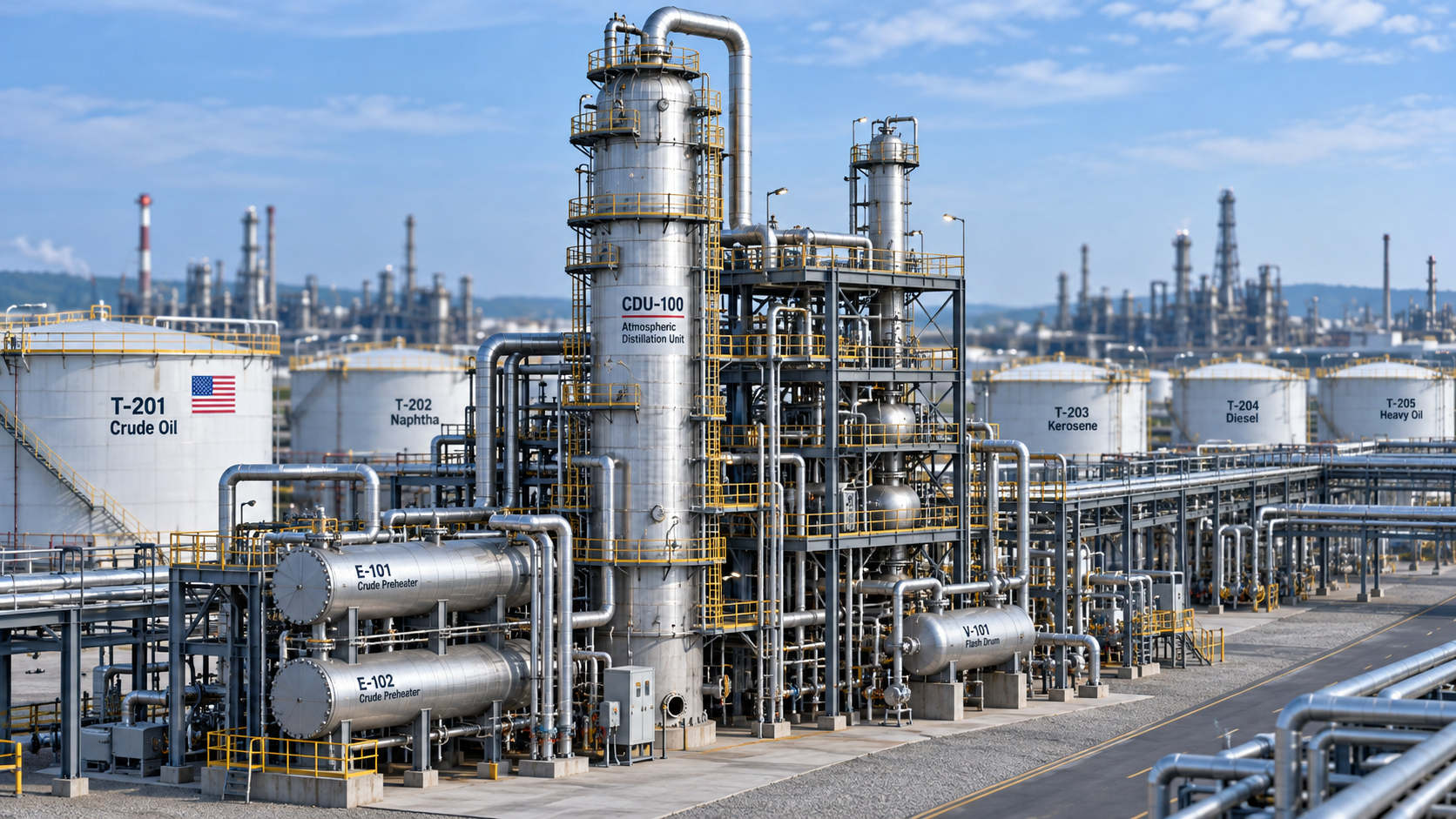
 US Refiners Shift Output From Gasoline to Middle DistillatesNov 06, 2026
- China's Steel Output Falls 2.9% in 2026 as Industry Shifts to High-Performance SteelNov 05, 2026
- China Tightens Technology Export Controls on Tunnel Boring Machines and DronesNov 04, 2026
- World Steel Association Issues Climate Change and Steel Production Position PaperNov 02, 2026
Industry Briefing
Get the top 5 industry headlines delivered to your inbox every morning.
What Is Industrial Automation? Core Systems, Common Use Cases, and ROI Basics





Industrial automation is no longer limited to automotive lines or highly standardized factories. It now shapes how steel mills, mining sites, petrochemical plants, equipment workshops, and logistics hubs improve consistency, reduce downtime, and respond faster to changing market conditions.
At its core, industrial automation connects machines, control logic, sensors, software, and people into a system that can execute tasks with less manual intervention. The real value is not only speed. It is better visibility, tighter process control, safer operations, and more predictable operating costs.
That matters more today because heavy industry faces pressure from energy prices, labor constraints, carbon compliance, equipment modernization, and global supply chain volatility. In that environment, industrial automation becomes a practical business tool, not just a technology upgrade.
What industrial automation actually means

Industrial automation refers to the use of control systems and digital tools to run industrial processes with limited direct manual control. The scope can be small, such as automating one conveyor, or broad, such as coordinating an entire production line.
Simple automation follows fixed rules. More advanced industrial automation adds data feedback, remote monitoring, machine coordination, and analytics. In many plants, the goal is not full lights-out production. It is stable output, fewer process deviations, and faster response when conditions change.
This distinction is important. A robotic arm alone is not the whole answer. Industrial automation works when field devices, controllers, software, and operating procedures are aligned with production targets and maintenance realities.
The core systems behind industrial automation
Most industrial automation environments are built on several layers. Each layer supports a different operational need, from sensing physical conditions to turning plant data into management decisions.
Field devices and sensors
Sensors capture temperature, pressure, vibration, flow, position, and other process variables. Actuators, valves, drives, and motors convert digital commands into physical action. If these devices are unreliable, the entire automation stack becomes unstable.
PLC, DCS, and motion control
PLCs are common in discrete manufacturing and machine-level control. DCS platforms are more common in continuous processes such as refining, chemicals, power, and large-scale materials production. Motion control systems handle high-precision movement in packaging, machining, and assembly.
SCADA and HMI layers
SCADA systems collect, visualize, and supervise operating data across equipment or sites. HMIs allow operators to interact with machines, alarms, and process settings. Clear visualization often matters as much as control logic, especially in complex industrial automation projects.
MES, historians, and analytics
Manufacturing execution systems connect plant activity with production planning, quality tracking, and work order management. Historians preserve operational data. Analytics tools turn that data into insights about bottlenecks, energy performance, maintenance timing, and process drift.
Why the topic is getting more attention
The current interest in industrial automation is tied to economics as much as engineering. Input costs are volatile. Environmental requirements are tightening. Export markets can shift quickly. Equipment owners need better control over throughput, energy use, and compliance reporting.
Another factor is data. Industrial companies now track policy changes, market prices, project activity, and technology upgrades more closely across upstream and downstream value chains. That broader visibility makes automation decisions less isolated. A line upgrade can affect procurement timing, maintenance planning, energy intensity, and competitive positioning.
In practice, industrial automation is increasingly evaluated alongside corporate expansion plans, capacity upgrades, carbon targets, and trade exposure. That is why market intelligence and operational intelligence are starting to overlap.
Common use cases across heavy industry
Industrial automation appears in many forms, depending on the process type, asset intensity, and production risk. Some uses are highly visible, while others work quietly in the background.
Process control in continuous industries
In steel, power, chemicals, and cement, automation helps maintain stable process conditions. It manages temperature bands, fuel-air ratios, pressure levels, and material flow. Small control improvements can reduce scrap, emissions, and unplanned shutdowns.
Equipment coordination in discrete manufacturing
For industrial equipment, transportation equipment, and heavy machinery production, PLC-based industrial automation synchronizes feeders, cutters, presses, welders, and test stations. The benefit is often better takt control, fewer manual handoffs, and clearer quality records.
Predictive maintenance and condition monitoring
Sensors and analytics can identify abnormal vibration, heat, power draw, or lubrication conditions before a failure occurs. This is especially valuable for critical assets such as compressors, crushers, pumps, kilns, conveyors, and rotating equipment.
Warehouse and material handling automation
Automation also reaches beyond production lines. Bulk material handling, finished goods movement, and loading operations can be optimized with conveyors, automated storage, barcode tracking, and dispatch integration. In supply chains, that reduces delays and improves traceability.
- Mining operations use automation for haulage support, ore handling, and remote asset monitoring.
- Petrochemical sites use automation for safety interlocks, continuous control, and emissions tracking.
- Building materials plants use automation to stabilize kilns, mills, and packaging performance.
- Heavy equipment workshops use automation to support welding, machining, inspection, and test procedures.
How to think about ROI without oversimplifying it
ROI in industrial automation is often discussed too narrowly. Labor savings matter, but they are rarely the whole story, especially in heavy industry where downtime, yield loss, and energy waste can outweigh direct headcount effects.
A better view starts with the operational problem. Is the site facing unstable quality, low throughput, rising maintenance costs, compliance pressure, or safety incidents? The strongest automation cases solve a measurable constraint.
Common ROI drivers
- Higher uptime through fewer failures and faster troubleshooting.
- Lower waste from tighter process control and reduced rework.
- Energy savings from optimized setpoints and load management.
- Improved safety through reduced exposure to hazardous tasks.
- Better compliance reporting through automated data capture.
- Faster delivery through improved scheduling and line balance.
Costs should also be assessed carefully. Hardware, integration, software licenses, training, cybersecurity, spare parts, and change management all affect payback. Some industrial automation projects deliver visible gains in months. Others require phased rollout before value becomes clear.
What to evaluate before moving forward
Not every industrial automation investment should begin with a major transformation project. In many cases, a focused assessment produces better results than a broad technology shopping exercise.
A useful starting point is to map one process in detail. Identify failure points, manual bottlenecks, data blind spots, and quality drift. Then compare that process against external signals such as energy costs, policy requirements, raw material volatility, and project expansion plans.
It also helps to separate core needs from optional features. Some sites need stronger basic control and instrumentation before they need advanced analytics. Others already have automation assets but lack integration between machine data, maintenance records, and production planning.
- Check whether the existing control architecture can scale.
- Review cybersecurity and remote access requirements early.
- Use baseline operating data before defining expected returns.
- Prioritize use cases tied to measurable business constraints.
- Track policy, carbon, and trade developments that may change project economics.
A practical way to keep the picture current
Industrial automation decisions rarely depend on technology alone. Equipment pricing, supply-demand shifts, import rules, environmental compliance, and major project activity can all reshape the timing and value of an upgrade.
That is why ongoing industry tracking matters. Developments in steel, energy, petrochemicals, mining, transport equipment, and industrial machinery often reveal where automation spending is accelerating, what problems companies are trying to solve, and which operating models are becoming more resilient.
For the next step, it makes sense to review industrial automation through three lenses at once: plant-level pain points, sector-specific technology trends, and external market or policy signals. When those three align, the case for action becomes much easier to judge.