
Related News
 Are Carbon Fiber Composites Ready for Mass Use in Construction Equipment?Oct 08, 2026
- How to Verify an Industrial Supplier’s Delivery Track RecordOct 08, 2026
 What Should Buyers Do When a Key Supplier Raises Prices Mid-Contract?Oct 08, 2026
- How Do Trade Sanctions Affect Heavy-Industry Supply Chains?Oct 08, 2026



Industry Briefing
Get the top 5 industry headlines delivered to your inbox every morning.
Industrial Air Pollution Control Retrofit: Cost vs Compliance Priorities





Industrial Air Pollution Control Retrofit: Cost vs Compliance Priorities
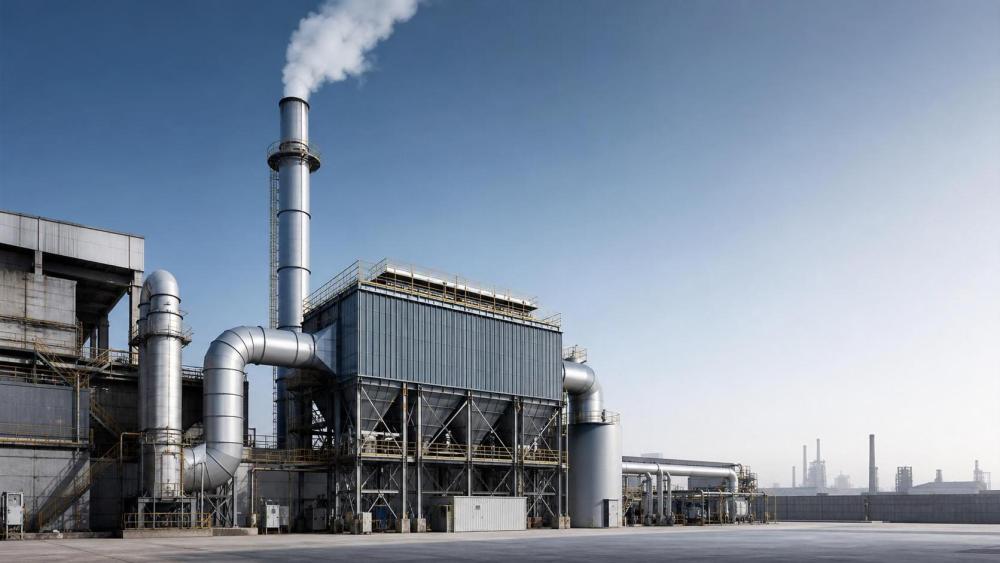
For industrial leaders weighing investment decisions, industrial air pollution control retrofit is no longer just a technical upgrade. It is a strategic choice between cost pressure and compliance security.
That shift is becoming clearer across steel, power, cement, petrochemicals, mining, and heavy equipment manufacturing. Regulators are raising expectations, while communities and customers are watching emissions more closely.
In practical terms, an industrial air pollution control retrofit now affects capex planning, plant uptime, permit stability, financing costs, and export readiness. It also shapes how management teams rank urgent projects.
The real question is not whether a retrofit is needed. The real question is how to choose the right timing, scope, and technology without overspending or creating production risk.
This article looks at industrial air pollution control retrofit decisions through a procurement lens. It focuses on cost, compliance exposure, and the trade-offs that matter most in boardroom decisions.
Why retrofit decisions have moved up the priority list
From recent policy and market changes, one signal stands out. Emissions control projects are no longer treated as optional housekeeping investments.
An industrial air pollution control retrofit often starts with a trigger. It may be a stricter permit, a failed stack test, an expansion plan, a customer audit, or a lender review.
Another common trigger is equipment aging. Legacy baghouses, scrubbers, ESPs, ducts, fans, and monitoring systems frequently underperform long before a full shutdown becomes visible.
This creates a familiar procurement problem. A plant may still be operating, but the margin for compliance keeps shrinking every quarter.
In heavy industry, delayed action can become expensive fast. Unplanned downtime, emergency orders, expedited freight, and rushed installation usually cost more than staged planning.
That is why industrial air pollution control retrofit planning increasingly sits alongside energy efficiency, automation upgrades, and capacity debottlenecking. The projects are connected operationally and financially.
Cost pressure is real, but it is only part of the equation
Most retrofit discussions begin with capital cost. That makes sense, but it can also narrow the decision too early.
An industrial air pollution control retrofit should be evaluated across total lifecycle impact. Purchase price matters, yet operating cost and risk exposure often matter more over time.
A lower-cost system can become the higher-cost choice if it drives pressure drop, energy use, maintenance hours, reagent consumption, or frequent filter replacement.
The same is true for installation strategy. A cheaper retrofit package may require a longer outage window, more civil changes, or harder tie-ins with existing lines.
In actual procurement work, cost should be broken into four layers:
- Direct equipment and engineering cost.
- Installation and outage-related cost.
- Operating and maintenance cost.
- Compliance failure and business interruption cost.
Once these layers are visible, the industrial air pollution control retrofit decision becomes more balanced. It moves from price comparison to risk-adjusted value.
Compliance risk now carries direct commercial consequences
Compliance is not just about avoiding penalties. It increasingly affects project approvals, customer trust, insurance scrutiny, and access to sensitive export markets.
For that reason, industrial air pollution control retrofit projects should be tied to a clear compliance map. The map should include current limits, pending rules, reporting obligations, and likely audit points.
A plant that only targets today’s legal minimum may lock in tomorrow’s problem. That is especially risky where environmental rules are tightening in stages.
A more useful approach is to ask three practical questions before issuing an RFQ:
- Will the retrofit meet expected emission limits, not only current ones?
- Can the system perform under variable load, fuel, and raw material quality?
- Will monitoring and data systems support defensible reporting?
These questions sharpen vendor evaluation. They also reduce the chance of buying a technically compliant system that struggles in day-to-day operation.
How to compare industrial air pollution control retrofit options
Not every industrial air pollution control retrofit requires a full replacement. In many plants, the best answer is selective modernization around the weakest components.
That may include fan upgrades, improved duct balancing, new filter media, sorbent injection, sealing improvements, automation changes, or continuous emissions monitoring enhancements.
For procurement teams, comparison becomes easier when options are grouped by decision logic rather than vendor marketing language.
This framework helps teams compare industrial air pollution control retrofit options on fit, not just on headline price. That is usually where better decisions begin.
What a stronger procurement process looks like
A weak specification often creates a weak outcome. In retrofit projects, vague inputs invite optimistic assumptions and hard-to-compare bids.
A stronger industrial air pollution control retrofit process starts with a disciplined baseline. That means current emissions data, gas volume, temperature range, dust load, process variability, and outage constraints.
It also means defining commercial expectations early. Suppliers should know how performance guarantees, spares, commissioning support, liquidated damages, and service response will be evaluated.
In practice, the most useful RFQ packages usually include:
- Measured operating data across normal and peak conditions.
- Required emission targets and reporting standards.
- Shutdown window and site execution limits.
- Utility availability, layout constraints, and tie-in points.
- Expected lifecycle cost submission format.
This structure makes industrial air pollution control retrofit bids easier to score objectively. It also exposes suppliers who are pricing low by pushing hidden risk back to the owner.
Common mistakes that raise total retrofit cost
Several mistakes appear repeatedly across retrofit projects. Most of them are avoidable.
The first is underestimating process variability. An industrial air pollution control retrofit designed for average conditions can struggle badly during startup, upset conditions, or fuel changes.
The second is treating controls and monitoring as secondary. Poor automation logic can erase the value of good hardware.
The third is ignoring maintainability. If access is poor or spare parts are specialized, operating cost rises and system reliability drops.
The fourth is separating retrofit procurement from wider plant planning. Emissions upgrades often interact with energy use, production scheduling, and future expansion.
A disciplined industrial air pollution control retrofit review should therefore include operations, maintenance, engineering, EHS, and finance. Narrow ownership usually leads to narrow decisions.
A practical decision model for balancing cost and compliance
When timing is uncertain, a simple decision model helps. It keeps the discussion grounded in business reality instead of opinion.
Start by scoring each industrial air pollution control retrofit path against five factors: compliance urgency, capex burden, outage impact, operating cost, and upgrade flexibility.
Then assign weight based on plant context. A site facing permit pressure may rank compliance urgency highest. A cyclical business may give more weight to outage timing and cash flow.
This does not remove uncertainty, but it makes trade-offs visible. That is exactly what procurement and investment decisions need.
In the end, the best industrial air pollution control retrofit is rarely the cheapest bid or the most advanced brochure. It is the option that protects compliance, fits operations, and holds up financially over time.
For industrial businesses tracking policy shifts, market signals, equipment upgrades, and supplier capability, the advantage goes to those that connect technical choices with commercial judgment early. That is where retrofit decisions become more predictable, and far more effective.