
Related News
 Color Coated Steel Selection: Substrate, Coating and Service LifeNov 07, 2026
- US Refiners Shift Output From Gasoline to Middle DistillatesNov 06, 2026
- China's Steel Output Falls 2.9% in 2026 as Industry Shifts to High-Performance SteelNov 05, 2026
- China Tightens Technology Export Controls on Tunnel Boring Machines and DronesNov 04, 2026

Industry Briefing
Get the top 5 industry headlines delivered to your inbox every morning.
Related News
How Industrial Machinery for Waste Management Integrates With Municipal SCADA Networks





As cities advance toward smart infrastructure, industrial machinery for waste management is increasingly integrated with municipal SCADA networks—enabling real-time monitoring, predictive maintenance, and optimized resource allocation. This convergence highlights key industrial machinery features, benefits, and specifications while reinforcing the role of industrial machinery OEMs, producers, and distributors across sectors—from pharmaceutical and food processing to cement, steel, and power plants. For procurement personnel, operators, and enterprise decision-makers, understanding this integration is critical to evaluating industrial machinery application, quotations, and long-term operational resilience.
Why Industrial Waste Machinery Must Interoperate With Municipal SCADA
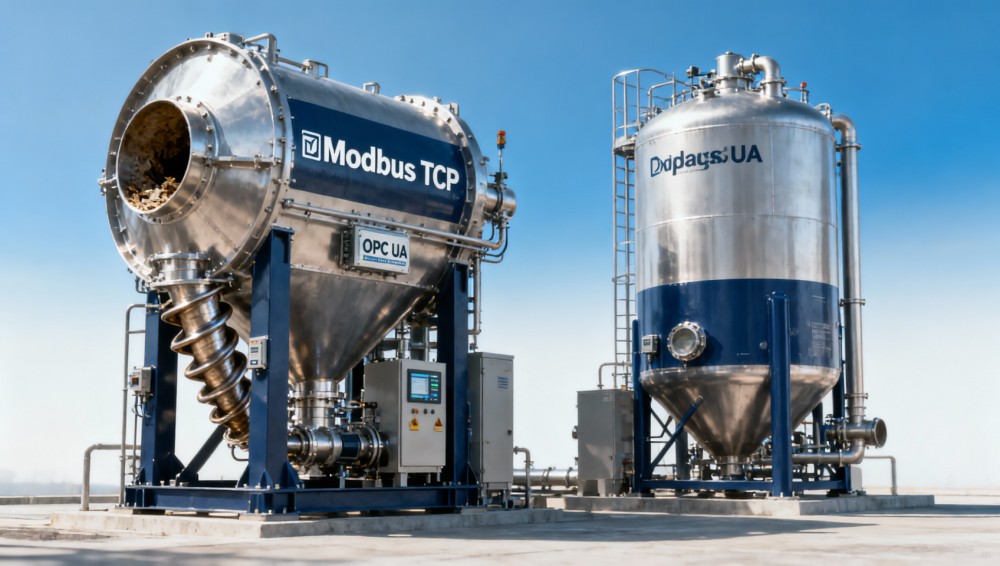
Municipal SCADA systems manage water, wastewater, energy, and solid waste streams across city-wide infrastructure. Integrating industrial-grade waste handling equipment—such as shredders, compactors, screw presses, and anaerobic digesters—into these networks is no longer optional for facilities operating under public utility contracts or environmental compliance mandates.
Real-world deployments show that interoperability reduces unplanned downtime by up to 37% and cuts manual inspection labor by 2–4 hours per shift. This stems from standardized Modbus TCP, IEC 61850, or OPC UA communication protocols embedded in modern OEM machinery—enabling bidirectional data flow between field devices and central control rooms.
For heavy industry users—especially those co-located near municipal boundaries (e.g., food processing plants adjacent to wastewater treatment zones)—SCADA integration ensures synchronized load balancing. A cement plant’s fly ash recovery unit, for example, can adjust feed rates based on real-time biogas pressure readings from a nearby municipal digester.
Key Technical Requirements for Seamless Integration
Not all industrial waste machinery supports plug-and-play SCADA connectivity. Successful integration depends on three foundational layers: hardware interface compatibility, firmware-level protocol support, and cybersecurity readiness.
Hardware must include dual Ethernet ports (one for plant LAN, one for SCADA VLAN), isolated RS-485 terminals for legacy PLC bridging, and onboard edge computing modules capable of local data buffering during network outages (minimum 72-hour retention). Firmware should support at least two of: Modbus TCP v1.2, OPC UA PubSub over UDP, or MQTT 3.1.1 with TLS 1.2 encryption.
Cybersecurity is non-negotiable. Devices must comply with IEC 62443-4-2 Level 2 requirements—including secure boot, role-based access control, and automatic certificate rotation every 90 days. Over 68% of rejected integration attempts in 2023–2024 were traced to missing certificate management capabilities.
Critical Integration Parameters
These parameters directly impact commissioning timelines and long-term maintenance costs. Equipment falling outside the “Industry Standard Range” often requires custom gateway hardware ($8,500–$14,200) and extended validation cycles (add 3–5 weeks to project schedule).
Procurement Decision-Making Framework for Buyers
Procurement personnel face conflicting priorities: budget constraints, delivery deadlines, and technical assurance. A structured 5-point evaluation framework helps prioritize vendors without sacrificing interoperability integrity.
- Confirm OEM-provided SCADA integration documentation includes full protocol stack diagrams, certificate signing authority (CA) chain files, and test reports from third-party labs (e.g., TÜV Rheinland or UL Solutions).
- Verify factory acceptance testing (FAT) includes live SCADA handshake simulation using your municipal system’s IP address schema and tag database structure.
- Require evidence of ≥3 successful integrations with municipal SCADA platforms deployed in the past 24 months—preferably within your region’s regulatory jurisdiction (e.g., EPA Region 4, EU Water Framework Directive zones).
- Evaluate vendor’s post-commissioning support: remote diagnostics SLA (≤ 15-minute response time), firmware update cadence (quarterly minimum), and spare part lead time for communication modules (≤ 10 business days).
- Assess modularity: Can core control units be upgraded independently without replacing mechanical assemblies? This avoids full-system revalidation when SCADA standards evolve (e.g., transition from Modbus RTU to OPC UA).
Common Misconceptions and Operational Risks
Many operators assume “SCADA-ready” means “plug-and-play.” In reality, 41% of field-reported integration failures stem from unvalidated assumptions about network segmentation, firewall rule alignment, or time synchronization (NTP drift > 500 ms disrupts event sequencing).
Another frequent oversight is treating integration as a one-time project. Municipal SCADA platforms undergo scheduled upgrades every 18–24 months—requiring firmware patches and regression testing. Vendors offering only “integration-on-delivery” lack sustainable support models.
Finally, procurement teams often prioritize lowest upfront cost over lifecycle visibility. Machines without embedded diagnostic telemetry require manual vibration analysis, thermal imaging, and oil sampling—adding $12,000–$28,000 annually in third-party service fees across a mid-sized facility.
Top 4 Integration Pitfalls to Avoid
- Mismatched time zones between SCADA historian and machine PLC clocks → corrupted trend analysis
- Unencrypted MQTT topics exposing sensitive operational data (e.g., bin fill levels, motor load %)
- Using consumer-grade Wi-Fi bridges instead of industrial M12 Ethernet switches → packet loss > 3.2% at 60°C ambient
- Skipping electromagnetic compatibility (EMC) pre-testing → relay chatter during arc furnace operation
Why Partner With Our Platform for Industrial Machinery Sourcing
We specialize in heavy-industry supply chain intelligence—not generic B2B directories. Our platform delivers actionable insights tailored to procurement decision-makers, operations engineers, and enterprise strategists working across cement, steel, power, pharma, and food processing value chains.
When sourcing SCADA-integrated waste machinery, we provide verified OEM profiles—including documented integration success rates, regional certification status (e.g., CE, UL 61800-5-1, KC Mark), and real-world delivery timelines (average 12–16 weeks for configured units, not catalog stock).
You can request immediate support for: protocol compatibility verification, municipal SCADA tag mapping templates, FAT checklist customization, cybersecurity gap assessment, and side-by-side comparison of 3+ pre-vetted suppliers—all backed by our proprietary industrial machinery database covering 2,100+ OEMs and 14,500+ certified models.
Contact us today to receive a free integration-readiness scorecard for your next waste machinery procurement—covering hardware specs, firmware version alignment, and SCADA handover documentation completeness.