
Related News
 Are Carbon Fiber Composites Ready for Mass Use in Construction Equipment?Oct 08, 2026
- How to Verify an Industrial Supplier’s Delivery Track RecordOct 08, 2026
 What Should Buyers Do When a Key Supplier Raises Prices Mid-Contract?Oct 08, 2026
- How Do Trade Sanctions Affect Heavy-Industry Supply Chains?Oct 08, 2026


Industry Briefing
Get the top 5 industry headlines delivered to your inbox every morning.
Emission Control Technology Options for Plants Facing Tighter Compliance Rules





Why is emission control technology now a plant-wide compliance issue?
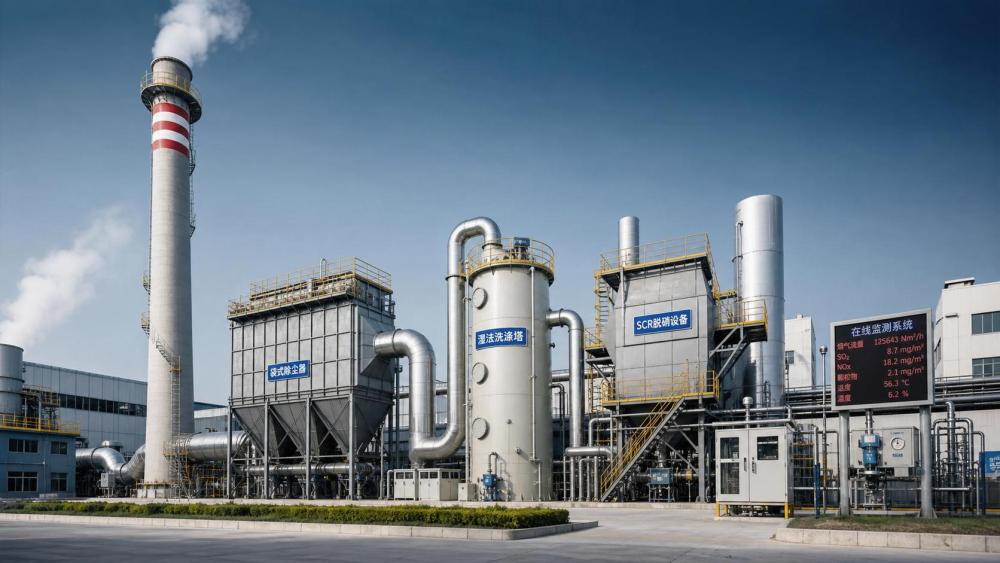
Tighter limits on dust, SOx, NOx, VOCs, and hazardous air pollutants are changing plant decisions far beyond the environmental department.
In steel, power, petrochemicals, mining, cement, and heavy equipment manufacturing, emission control technology now affects product quality, uptime, permit risk, and export readiness.
That shift matters because new rules are rarely isolated. They often connect with carbon reporting, fuel choices, raw material quality, and stricter operating records.
A plant may meet its old permit on paper, yet still face problems when production rises, feedstock changes, or local monitoring becomes more frequent.
In practical terms, the right emission control technology helps reduce variability. It supports stable combustion, cleaner handling, and fewer shutdowns caused by failed inspections or off-spec emissions.
This is why industrial news, policy tracking, and market intelligence increasingly overlap. Compliance decisions now depend on regulation updates, project timing, equipment supply, and regional cost signals.
Which emission control technology options are most common in heavy industry?
Most plants do not choose one device. They build a control chain based on pollutant type, gas temperature, moisture, particle size, and process stability.
The more useful question is not “What is the best system?” but “What problem must the system solve under real operating conditions?”
In actual applications, particulate control is often the starting point. Dust limits are visible, measurable, and closely tied to housekeeping, safety, and product contamination.
Gas-phase pollutants are usually harder. Their control depends more on chemistry, residence time, reagent dosing, and consistent process windows.
How do you decide which option fits your plant instead of copying another project?
Plants in the same sector may still need very different emission control technology. Fuel mix, throughput swings, and moisture can change the answer quickly.
A more reliable selection process starts with five checks.
- Define the regulated pollutants and the real compliance margin, not just the permit headline.
- Map process variability across startup, shutdown, peak load, and feedstock changes.
- Review gas conditions, including temperature, humidity, oxygen, particle loading, and corrosive content.
- Check space, duct layout, utility limits, and tie-in windows for retrofits.
- Estimate operating burden, including reagent use, cleaning, maintenance labor, and spare parts availability.
This is where policy updates and market tracking become useful. New standards may tighten faster than capex approval cycles, while catalyst, media, fan, and valve lead times can extend unexpectedly.
A low-cost system can become expensive if it struggles under future loads or cannot document continuous performance for regulators, insurers, or export-facing audits.
More common, and more costly, is underestimating monitoring. A strong control device without reliable instruments often creates reporting gaps and weak root-cause analysis.
Baghouse, scrubber, or SCR: what differences matter most in daily operation?
These technologies solve different problems, so direct comparison only works when operating context is clear.
When dust is the primary risk
Baghouses usually provide high particulate capture and predictable outlet performance. They are widely used where dust consistency can be managed.
However, they dislike sudden heat spikes, sticky dust, and neglected leak detection. Poor hopper discharge can also undermine otherwise good performance.
When acid gases drive compliance pressure
Scrubbers are often preferred for SOx, HCl, and related compounds. They can be effective, but they shift attention toward water chemistry, sludge, and corrosion control.
In sectors with unstable sulfur levels, scrubber performance depends heavily on reagent control and maintenance discipline.
When NOx limits get sharper
SCR can achieve deeper NOx reduction than SNCR, especially where limits are stringent. Yet catalyst life, pressure drop, and ammonia management must be watched closely.
For kilns, boilers, and furnaces, the true choice often comes down to temperature profile and how much operational variation the process creates.
If the plant expects future production upgrades, selecting emission control technology with expansion flexibility is usually wiser than optimizing only for today’s average load.
What implementation mistakes create the biggest compliance and safety setbacks?
The largest failures usually come from assumptions, not from the core equipment itself.
- Sizing equipment to normal production while ignoring upset conditions.
- Using poor inlet data, especially for dust loading, sulfur, chlorine, or solvent composition.
- Treating controls as separate from combustion tuning, material handling, and preventive maintenance.
- Overlooking explosion isolation, spark detection, or corrosion allowances.
- Planning too little downtime for retrofit tie-ins and commissioning.
Another common mistake is chasing a permit number without checking byproducts. Wet systems may create wastewater burdens. Dry systems may raise sorbent disposal costs.
Documentation also matters more than many teams expect. Regulators increasingly ask for trend records, alarm responses, maintenance logs, and evidence that deviations were investigated.
In broader industrial supply chains, that record can influence customer qualification, insurance review, and financing discussions, especially for large upgrades or cross-border business.
How should costs, timing, and future standards be evaluated together?
The best emission control technology is rarely the cheapest bid. It is the option that stays compliant with manageable operating risk over the asset’s real life.
A practical review should compare capital cost with four moving factors: energy use, reagent exposure, downtime risk, and likely regulatory tightening.
It also helps to watch regional policy moves, supplier activity, and industrial project trends. Those signals often reveal where costs, standards, and equipment lead times are heading next.
What is the smartest next step if a plant expects tighter rules soon?
Start with a gap review, not with vendor brochures. Compare current emissions, monitoring quality, maintenance history, and permit conditions against likely future limits.
Then rank priorities by exposure. A dust issue with recurring bag leaks is different from a future NOx risk on an expansion project, and both need different timelines.
The most useful short list usually includes one quick optimization, one medium retrofit path, and one long-range investment option.
That approach keeps decisions grounded in operations, policy direction, and market reality. It also makes emission control technology part of plant resilience, not just permit defense.
Where standards, trade conditions, and industrial upgrades are all moving, careful comparison is the better strategy. Confirm pollutant profile, compare lifecycle cost, test implementation timing, and build documentation discipline early.
Plants that do this well are usually better prepared for inspections, customer review, and future expansion without scrambling for emergency fixes.