
Related News
 Are Carbon Fiber Composites Ready for Mass Use in Construction Equipment?Oct 08, 2026
- How to Verify an Industrial Supplier’s Delivery Track RecordOct 08, 2026
 What Should Buyers Do When a Key Supplier Raises Prices Mid-Contract?Oct 08, 2026
- How Do Trade Sanctions Affect Heavy-Industry Supply Chains?Oct 08, 2026




Industry Briefing
Get the top 5 industry headlines delivered to your inbox every morning.
Related News
- heavy industry
- building materials
- carbon compliance
- price monitoring
- international trade
- industrial upgrading
- environmental equipment
- air pollution control equipment
- energy efficiency
- safety standards
- capacity expansion
- plant modernization
- steel and metals
- petrochemicals
- air pollution control equipment demand outlook
- cement and building materials
Air Pollution Control Equipment Demand Outlook Through 2026





The air pollution control equipment demand outlook through 2026 is gaining weight across heavy industry because regulation, plant modernization, and trade-linked investment are moving at the same time.
That combination is changing how projects are specified, when equipment is ordered, and which product categories move first in different regions.
For companies tracking industrial markets, this is no longer a narrow environmental topic. It now sits at the intersection of compliance, production continuity, export access, and capital planning.
Why the market is drawing closer attention
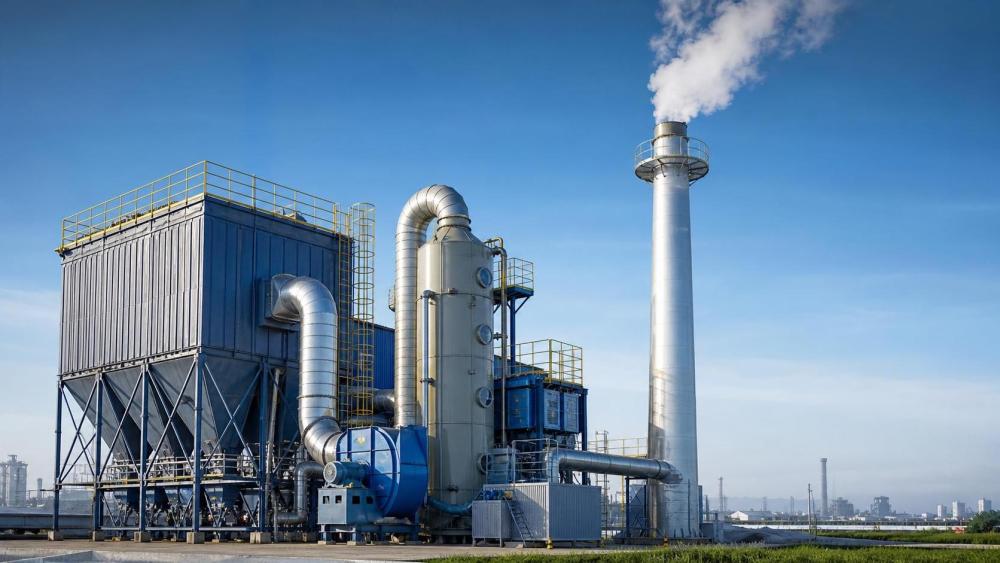
The current air pollution control equipment demand outlook reflects pressure from several directions, not just tighter emissions caps.
Steel, cement, power, petrochemicals, mining, transport equipment, and industrial processing lines are all facing stricter operating expectations.
In many cases, the trigger is policy.
Updated air rules, carbon compliance frameworks, permit conditions, and local enforcement campaigns are forcing older systems to be replaced or upgraded.
In other cases, the trigger is commercial.
Export-oriented facilities increasingly need stable environmental performance to meet customer audits, cross-border standards, and financing requirements.
That matters because environmental equipment demand often follows broader industrial signals.
Capacity expansion, line retrofits, fuel switching, energy efficiency projects, and plant digitization all tend to create linked demand for dust, gas, and particulate control systems.
What the demand outlook actually covers
The phrase air pollution control equipment demand outlook is broad, and it helps to define what sits inside it.
It includes both complete systems and key replacement components used to reduce particulate matter, sulfur oxides, nitrogen oxides, volatile compounds, and process emissions.
Typical categories include baghouse filters, electrostatic precipitators, scrubbers, catalytic systems, thermal oxidizers, fans, ducting, sensors, and emissions monitoring units.
Demand also comes in two forms.
One is project-based demand tied to new plants, brownfield expansions, or major process upgrades.
The other is recurring demand linked to maintenance cycles, media replacement, retrofit kits, control upgrades, and spare parts support.
Through 2026, recurring demand may be easier to underestimate.
Many industrial users are delaying full replacement but spending more on extending system life and keeping compliance risk under control.
Which heavy industry segments are likely to lead
Not every industrial segment moves at the same speed.
The strongest opportunities usually appear where emissions intensity, policy exposure, and capital spending overlap.
This pattern shows why a general market view is not enough.
A useful air pollution control equipment demand outlook needs to be tied to plant type, emission source, and investment cycle.
Policy, trade, and project signals behind 2026 demand
One practical way to read the market is to follow the signals that usually appear before equipment orders.
Policy updates are one of the clearest leading indicators.
Changes in emissions thresholds, operating permits, environmental inspection schedules, and industrial park rules often move demand months before contracts are visible.
Corporate news matters as well.
Production line expansions, furnace revamps, new energy projects, M&A integration, and overseas plant construction can all create fresh equipment requirements.
Trade intelligence adds another layer.
Tariff changes, localization rules, shipping disruptions, and regional certification needs can reshape which suppliers are competitive in a given market.
That is why platforms focused on heavy industry value chains are increasingly useful.
They connect policy tracking, price monitoring, project news, technology updates, and export developments into a more actionable view of demand timing.
Regional variation will remain significant
Demand growth will not be evenly distributed.
Some markets will lean on retrofit activity, while others will be driven by new industrial clusters, public infrastructure, and energy transition projects.
As a result, the air pollution control equipment demand outlook through 2026 should be read region by region, not as a single global curve.
How demand is shifting at the product level
Product demand is becoming more selective.
Buyers are paying closer attention to lifecycle cost, retrofit compatibility, emissions data visibility, and delivery certainty.
This favors equipment lines that can fit existing plant layouts and meet tighter reporting expectations without causing long shutdowns.
- Filter media and modular upgrades are gaining interest where full system replacement is too expensive.
- Digital monitoring and control integration is becoming easier to justify during compliance reviews.
- High-temperature and corrosive-gas solutions remain important in metals, cement, and chemical processing.
- Spare parts availability is a stronger buying factor than before, especially in volatile logistics conditions.
In practical terms, the air pollution control equipment demand outlook is no longer just about volume.
It is also about specification depth, service intensity, and the ability to support installed equipment over time.
What deserves closer evaluation in real business decisions
A strong market outlook can still lead to poor decisions if demand is read too broadly.
Several checkpoints help separate attractive opportunities from noisy signals.
Check the trigger behind the order
Compliance-driven orders usually move faster but can be highly specific.
Expansion-driven orders may be larger, yet they often depend on financing, permits, and construction schedules.
Compare replacement demand with new-build demand
Replacement cycles can create steadier turnover.
New-build projects offer bigger upside but usually bring longer qualification and delivery timelines.
Watch local standards and import conditions
Technical fit alone is not enough.
Certification rules, customs treatment, localization policies, and after-sales expectations can all affect market access.
Track upstream cost movement
Steel, specialty materials, fans, controls, and sensor components influence pricing and margin stability.
That link is especially important in a market where quotation validity can shorten quickly.
Reading the outlook through 2026 with more precision
The most useful reading of the air pollution control equipment demand outlook through 2026 is neither overly optimistic nor defensive.
Demand should remain supported by regulation, industrial upgrading, and environmental scrutiny across heavy industry value chains.
Still, growth will likely be uneven by region, technology route, and end-use segment.
The strongest results are likely to come from aligning market watching with concrete signals.
That means following policy changes, project pipelines, industrial price trends, equipment replacement cycles, and international trade conditions together.
A broad headline is useful, but decisions improve when the outlook is translated into segment-level demand maps, product priorities, and timing assumptions.
From here, the next step is to build a short watchlist.
Focus on policy-sensitive sectors, active retrofit markets, and projects where environmental equipment is tied directly to commissioning or export readiness.
That approach turns the air pollution control equipment demand outlook from a general market theme into a practical basis for comparison, prioritization, and timing.