
Related News
 Are Carbon Fiber Composites Ready for Mass Use in Construction Equipment?Oct 08, 2026
- How to Verify an Industrial Supplier’s Delivery Track RecordOct 08, 2026
 What Should Buyers Do When a Key Supplier Raises Prices Mid-Contract?Oct 08, 2026
- How Do Trade Sanctions Affect Heavy-Industry Supply Chains?Oct 08, 2026




Industry Briefing
Get the top 5 industry headlines delivered to your inbox every morning.
Related News
China’s Lithium Battery Chain Sees Strong Q2; Overseas Storage Orders Land





August 15, 2026 was not tied to a disclosed policy release date in the source note, but a Guosen Securities biweekly report points to a clear execution signal for the lithium battery supply chain: Q2 activity remained strong, battery makers kept production highly elevated, and overseas energy storage orders continued to be signed across Europe, Australia, and India. For exporters, EPC contractors, local integrators, and procurement teams, the key issue is less the headline order count than what it implies about delivery readiness, technical fit, and the credibility of Chinese suppliers in cross-border projects.
Q2 output strength and overseas storage wins in one signal
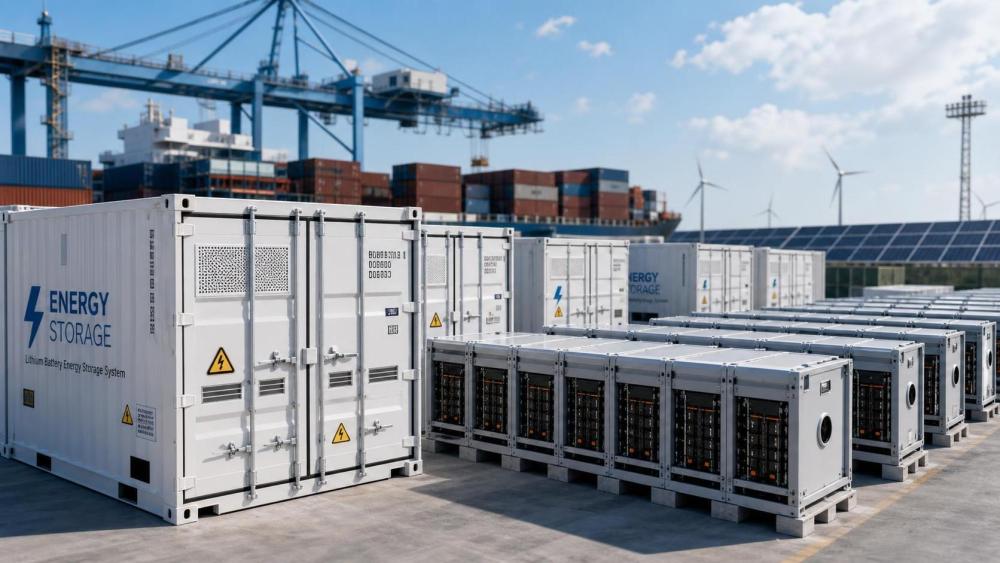
The source note says Guosen Securities reported on August 15, 2026 that six battery companies posted year-on-year production growth of 70% in Q2. It also says CATL, Hithium Energy Storage, and Ronjay Energy recently secured more than 8.2 GWh of overseas energy storage orders in Europe, Australia, and India. The note links these developments to international recognition of Chinese high-end industrial equipment and systems integration capabilities among mainstream power operators and energy groups.
What this means for cross-border procurement and project delivery
Exporters and channel traders will be judged on delivery proof
From an industry perspective, large overseas storage orders usually raise the bar on shipping schedules, packaging standards, customs documents, and after-sales coordination. For direct trade firms and channel distributors, the practical pressure is likely to fall on order fulfillment, batch consistency, and whether the supplier can support project timelines without raising compliance or logistics risk.
Project EPC work now depends more heavily on technical alignment
For EPC contractors and system integrators, the more relevant issue is not just price but whether the equipment matches local grid requirements, tender specifications, and project acceptance procedures. At this stage, the report should be read as a signal that technical documentation, interface compatibility, and commissioning support are becoming part of procurement screening, especially in overseas utility-scale projects.
Certification and test files may carry more weight in sourcing decisions
For certification-related firms and testing service providers, the implied impact is stronger document scrutiny. Buyers may increasingly compare product test reports, quality traceability records, and conformity evidence before awarding or finalizing contracts. That does not mean a new rule has been announced here; it does mean qualification materials are becoming more important in purchase review and project onboarding.
What companies should check before treating this as a firm market shift
Verify the documentation chain behind each order
Companies involved in export and project supply should review whether commercial invoices, packing lists, test reports, and technical manuals are aligned with the destination market and the project scope. Where local acceptance or grid-side requirements apply, suppliers should confirm the document set early rather than after shipment.
Stress-test supplier stability and substitution options
Procurement teams should assess whether a candidate supplier can sustain capacity, delivery timing, and spare-parts support across the full project cycle. If a project depends on a single brand or model, it is prudent to check whether substitute configurations or alternative components have already been validated.
Watch for follow-on tender and acceptance language
What deserves closer attention is whether future tenders, purchase orders, and acceptance clauses begin to reference stricter technical compatibility, certification evidence, or service response terms. Those details will matter more than the headline order volume when judging whether this is a durable execution trend or a short-term booking pattern.
Reading the signal without overstating it
Analysis suggests this is better understood as a market execution signal than as proof of a formal rule change. The source note does not provide a new regulation, standard revision, or customs measure. Instead, it shows that overseas buyers are still placing sizable storage orders with Chinese suppliers, which implies continued attention to delivery reliability, technical adaptation, and project-level compliance. The most useful response now is to track how these orders are executed in practice, rather than assuming the backlog alone guarantees broader market acceptance.
How to frame the development for business use
For the industry, the main takeaway is cautious: Chinese battery and storage suppliers are still winning overseas business, but the real test will be whether they can pass buyer-side checks on delivery, conformity, and project support. This is best treated as a live market signal with compliance relevance, not as a finished policy outcome.
Source basis and remaining verification points
This article was generated from the provided title, event timing, and summary only. No specific official source link was included in the input. Related source types for continued verification typically include official announcements, regulator releases, customs or trade authority information, industry association notices, standard-setting documents, and authoritative media reports. Further monitoring should focus on policy details, certification interpretation, tender language, trade execution, and actual supplier performance in overseas projects.