
Related News
 US Refiners Shift Output From Gasoline to Middle DistillatesNov 06, 2026
- China's Steel Output Falls 2.9% in 2026 as Industry Shifts to High-Performance SteelNov 05, 2026
- China Tightens Technology Export Controls on Tunnel Boring Machines and DronesNov 04, 2026
- World Steel Association Issues Climate Change and Steel Production Position PaperNov 02, 2026
Industry Briefing
Get the top 5 industry headlines delivered to your inbox every morning.
Switchgear Electrical Equipment: Key Specs That Affect Safety and Lifespan





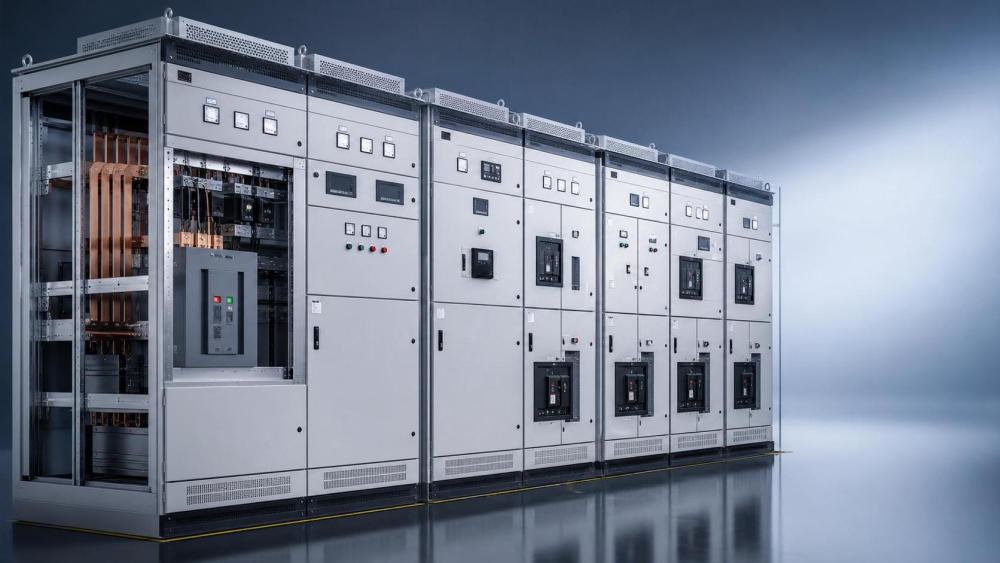
Switchgear electrical equipment sits at the center of industrial power distribution, yet its real value is often judged too narrowly by voltage class and current rating alone.
In heavy industry, a weak specification can turn into an outage, a safety event, or years of avoidable maintenance. That is why technical evaluation now goes deeper.
Insulation strength, interruption capability, enclosure protection, heat control, and mechanical endurance shape how long equipment remains safe, stable, and economical in service.
This matters across steel, mining, petrochemicals, transport equipment, construction machinery, utilities, and large industrial plants where operating conditions are rarely ideal.
Why specification depth matters more now
Industrial power systems are under pressure from expansion projects, electrification, automation upgrades, and stricter compliance expectations.
At the same time, policy updates, carbon targets, import rules, and supply chain volatility are changing how equipment is selected and sourced.
For switchgear electrical equipment, this means the safest choice is not always the cheapest quoted unit or the most familiar brand configuration.
A sound decision needs technical fit, lifecycle visibility, standards alignment, and realistic awareness of the operating environment.
Platforms that track industrial news, regulatory changes, project activity, technology upgrades, and trade developments can support that judgment with timely market context.
What switchgear electrical equipment is expected to do
At a practical level, switchgear electrical equipment controls, protects, isolates, and distributes electrical power inside industrial networks.
It must clear faults fast, contain internal stress, support routine switching, and remain accessible for inspection without creating new hazards.
In continuous-process industries, the expectation is even higher. A failure may stop production lines, damage upstream machinery, and affect downstream delivery commitments.
That is why evaluation should consider not only normal operation, but also abnormal conditions, maintenance intervals, and future system changes.
The core specifications that influence safety and lifespan
Some parameters are easy to compare on a datasheet. Their real significance becomes clearer when linked to site risk and operating duty.
Insulation level and dielectric withstand
Insulation rating shows whether the assembly can tolerate operating voltage, temporary overvoltage, and impulse events without breakdown.
In dusty plants, coastal sites, or high-altitude installations, the margin here becomes especially important.
Short-circuit withstand and interrupting capacity
This determines whether switchgear electrical equipment can survive and clear fault energy before catastrophic damage spreads.
Fault levels should be checked against present conditions and planned expansions, not just current plant loading.
Ingress protection and enclosure integrity
IP rating affects resistance to dust, moisture, washdown, and accidental contact.
For mining, cement, ports, and outdoor substations, enclosure performance often drives service life as much as electrical design.
Temperature rise and thermal management
Excess heat accelerates insulation aging, weakens contacts, and increases nuisance failures.
Busbar design, ventilation path, conductor sizing, and panel arrangement all shape temperature behavior under real load.
Mechanical and electrical endurance
Frequent switching applications need verified endurance, not assumptions based on nominal duty.
This is especially relevant for motor control, capacitor switching, renewable integration, and automation-heavy production lines.
Internal arc performance
Internal arc classification is critical where personnel access is routine and fault containment must protect nearby equipment areas.
A stronger arc-resistant design can reduce injury risk and limit secondary asset damage.
How these parameters play out in real industrial settings
The best specification mix depends on application, environment, and consequence of failure. One rating alone never tells the whole story.
This is where switchgear electrical equipment evaluation becomes a cross-functional exercise, connecting design assumptions with site evidence and expansion plans.
Standards, compliance, and market signals should not be separated
Technical performance cannot be viewed apart from standards compliance and market availability.
IEC and regional requirements shape test expectations, safety margins, documentation depth, and acceptable installation practice.
Import-export rules, local certification paths, and carbon-related policy changes may also affect sourcing lead time and total project risk.
In recent industrial projects, supply chain shifts have made substitution decisions more common. That increases the need for disciplined parameter comparison.
Continuous tracking of policy updates, equipment trends, and project delivery signals can help identify whether a technically acceptable option is also operationally realistic.
A practical checklist for comparing options
Before approving switchgear electrical equipment, a structured review often reveals hidden mismatches.
- Confirm fault level calculations against future capacity additions, not only present operating load.
- Check ambient temperature, dust, humidity, altitude, and corrosive exposure against enclosure and insulation claims.
- Review temperature-rise test basis and compare it with expected load profile, harmonics, and ventilation constraints.
- Verify switching duty for motors, transformers, capacitors, and automation cycles.
- Examine maintenance access, spare part continuity, and ease of condition monitoring.
- Request clear evidence of type testing, routine testing, and applicable compliance documentation.
These checks help separate a well-matched system from one that only appears acceptable on paper.
Looking beyond the purchase decision
The long-term value of switchgear electrical equipment is created after commissioning, not at order placement.
Condition monitoring, thermal inspection, contact resistance checks, and disciplined maintenance records can extend usable life and reduce unplanned shutdowns.
Technology upgrades also matter. Digital monitoring, smarter protection logic, and better asset visibility are changing how aging switchgear fleets are managed.
For industrial operators following equipment modernization trends, these developments are no longer optional background information. They influence investment timing and replacement strategy.
A useful next step is to map each installation against actual duty, site exposure, compliance needs, and supply risk, then compare that profile with the critical specifications discussed above.
That approach turns switchgear electrical equipment selection from a catalog exercise into a more durable safety and lifecycle decision.