
Related News
 Color Coated Steel Selection: Substrate, Coating and Service LifeNov 07, 2026
- US Refiners Shift Output From Gasoline to Middle DistillatesNov 06, 2026
- China's Steel Output Falls 2.9% in 2026 as Industry Shifts to High-Performance SteelNov 05, 2026
- China Tightens Technology Export Controls on Tunnel Boring Machines and DronesNov 04, 2026



Industry Briefing
Get the top 5 industry headlines delivered to your inbox every morning.
Related News
Panel Products Market: Which Segments Are Driving Price and Demand Changes?





The panel products market is moving through a more uneven cycle, where prices no longer respond to one broad trend alone. Demand from construction, furniture, packaging, transport equipment, and industrial applications is shifting at different speeds, while fiber, resin, energy, labor, and freight costs continue to reshape margins.
That makes the current market especially relevant across heavy industry value chains. Panel producers, converters, traders, and downstream buyers now need a sharper reading of segment-level changes, not just headline volume figures, to judge procurement timing, pricing exposure, and regional opportunity.
Why segment tracking matters more now
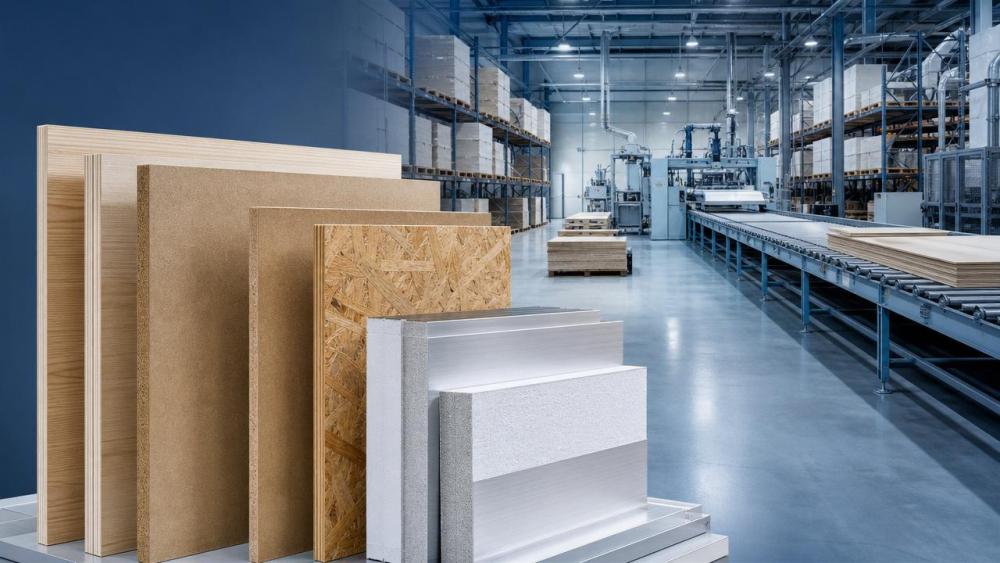
The panel products market covers a wide mix of materials and end uses. Wood-based boards, decorative panels, insulation panels, metal-faced composites, and engineered industrial panels do not move in lockstep.
A housing slowdown may weaken demand for some interior boards, while data centers, logistics facilities, and factory upgrades support other categories. In practical terms, one segment can be under pricing pressure while another stays tight.
This is why market monitoring has become more granular. It is no longer enough to ask whether the panel products market is rising or falling. The better question is which segment is setting the direction.
The segments shaping current price and demand trends
Several segments are having an outsized impact on the panel products market. Each reacts to a different mix of construction activity, industrial output, policy shifts, and input costs.
Wood-based structural and interior panels
Plywood, MDF, particleboard, and OSB remain central to many market assessments. These products are highly exposed to residential construction, commercial fit-out activity, and furniture production.
When new building starts weaken, volume often softens quickly. Yet replacement demand, renovation programs, and export orders can prevent a full collapse, especially in regions where lower-cost housing and light commercial activity remain active.
Prices in this segment are also sensitive to timber availability, adhesive costs, and power tariffs. Even when end demand is mixed, cost inflation can delay price declines.
Decorative and laminated panels
This segment tends to follow consumer-facing sectors more closely. Orders from cabinetry, modular interiors, retail fixtures, and office refurbishment often determine short-term momentum.
Demand can recover faster here than in core structural panels when renovation spending improves. However, buyers are usually more price-sensitive, which increases competition and compresses margins.
Insulated and engineered building panels
Insulated sandwich panels and related systems are benefiting from a different demand base. Warehouses, clean rooms, cold storage, industrial sheds, and energy-efficient buildings continue to support this area.
Environmental compliance and building efficiency standards matter more here. Carbon rules, thermal performance requirements, and faster installation needs can keep this segment firmer than general construction materials.
Industrial and transport panels
Panels used in trailers, rail interiors, equipment housing, and industrial enclosures are linked to manufacturing cycles rather than housing alone. Production upgrades and fleet replacement programs can create more stable demand.
This segment often absorbs technology upgrades faster. Lighter materials, fire resistance, acoustic performance, and automation compatibility can justify stronger pricing even when commodity panels face pressure.
What is changing the cost base
In the panel products market, cost movement often travels through several layers before it appears in transaction prices. That is why supply-side monitoring remains essential.
The importance of these drivers varies by product. In commodity board categories, input inflation can trigger frequent list price adjustments. In engineered panels, certification, customization, and project lead times play a larger role.
Regional trade flows are redrawing the market map
The panel products market is also being reshaped by trade policy and logistics. Import tariffs, anti-dumping measures, emission standards, and customs requirements are changing supplier selection in several regions.
Where domestic capacity expansion is underway, import dependence may decline. Where construction recovers faster than local output, overseas supply can quickly regain market share if freight costs ease.
This is where integrated industry intelligence becomes valuable. Policy updates, trade signals, project tracking, and price monitoring together offer a more complete reading than shipment data alone.
How to read demand signals in real business settings
A useful way to interpret the panel products market is to separate cyclical demand from structural demand. Cyclical demand moves with short-term construction and manufacturing conditions. Structural demand reflects longer-lasting shifts in regulation, technology, and investment patterns.
- Track residential starts for commodity structural boards.
- Watch office, retail, and interior renovation for decorative panels.
- Follow cold chain, warehousing, and industrial parks for insulated panels.
- Monitor transport equipment orders for technical panel applications.
- Compare regional policy shifts with plant expansion announcements.
This approach reduces the risk of reading a single weak indicator as a market-wide downturn. It also helps identify segments where prices are likely to stay resilient despite broader softness.
Where the strongest pricing power may hold
Not all products in the panel products market compete on the same basis. Commodity grades usually face sharper discounting when supply builds. Higher-specification panels often retain pricing support for longer.
Three conditions usually strengthen pricing power. One is technical differentiation, such as fire rating, insulation performance, or lightweight engineering. Another is project-linked demand with strict delivery windows. The third is regulatory alignment, where certified materials face fewer substitutes.
That means the most important question is not only where volumes are rising. It is also where replacement is difficult, compliance matters, and switching costs are high.
Practical checkpoints for the next market move
For anyone evaluating the panel products market, a short checklist can improve timing and reduce uncertainty.
- Compare order intake with actual shipment pace, not quotations alone.
- Review resin, timber, and energy trends together before pricing decisions.
- Separate project-driven demand from restocking activity.
- Watch for new capacity, line upgrades, or shutdowns in nearby markets.
- Check whether trade rules could alter import competition within one quarter.
- Use regional market signals instead of relying on one national benchmark.
The panel products market is unlikely to move as one uniform category in the near term. Segment leadership will keep shifting as construction patterns, industrial investment, compliance rules, and trade flows evolve.
The most reliable next step is to build a segment-based view: identify which panels matter most to current demand, which inputs are driving cost risk, and which regional signals may change supply conditions first. That creates a stronger basis for pricing, sourcing, and market positioning over the coming quarters.