
Related News
 Are Carbon Fiber Composites Ready for Mass Use in Construction Equipment?Oct 08, 2026
- How to Verify an Industrial Supplier’s Delivery Track RecordOct 08, 2026
 What Should Buyers Do When a Key Supplier Raises Prices Mid-Contract?Oct 08, 2026
- How Do Trade Sanctions Affect Heavy-Industry Supply Chains?Oct 08, 2026

Industry Briefing
Get the top 5 industry headlines delivered to your inbox every morning.
How to Choose Refractory Castables for High-Heat Linings





Choosing refractory castables for high-heat linings is rarely a simple temperature decision. Lining life, heat retention, shutdown frequency, and repair cost all depend on how well the material matches the real service environment.
Across steel, power, petrochemicals, cement, nonferrous metals, and waste treatment, operating conditions have become less forgiving. Higher efficiency targets, fuel shifts, emissions controls, and tighter maintenance windows are pushing refractory selection into a more strategic role.
That is why refractory castables should be judged not only by maximum service temperature, but also by abrasion resistance, thermal shock behavior, chemical compatibility, anchoring design, curing practice, and installation consistency.
What refractory castables need to do in service
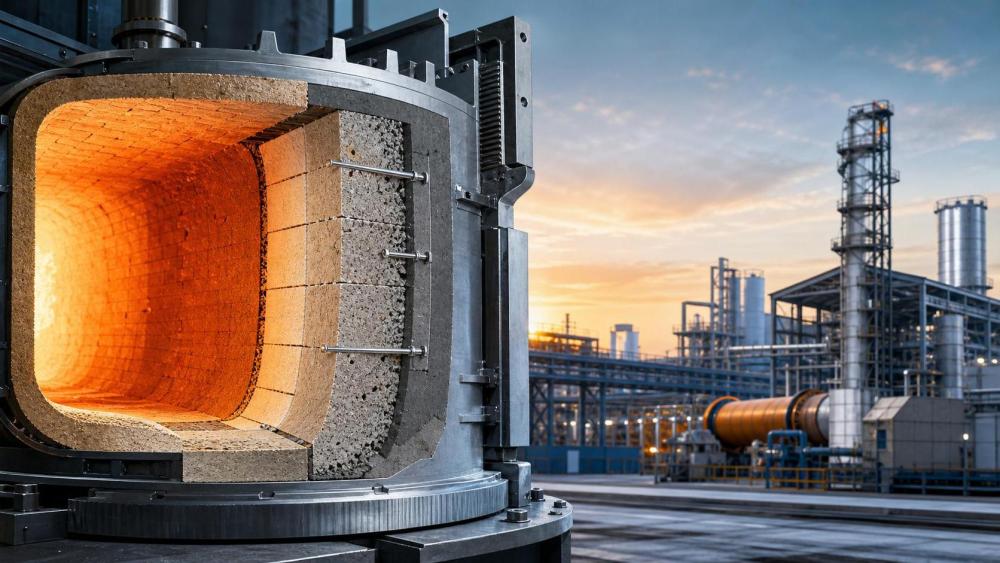
In practical terms, refractory castables are monolithic linings placed by casting, pumping, gunning, or vibration. They replace or complement brick linings where shape complexity, maintenance speed, or joint reduction matters.
Their job is broader than surviving heat. A high-heat lining must resist mechanical wear, carry structural loads, limit heat loss, and maintain stability through start-stop cycles.
This explains why two furnaces running at similar temperatures may require very different refractory castables. One may suffer slag attack, while another fails from spalling, dust erosion, or rapid heating during restart.
Why selection matters more in today’s industrial environment
Heavy industry is dealing with rising pressure on energy efficiency, emissions compliance, asset uptime, and input costs. A poor lining choice now affects more than maintenance budgets.
It can change fuel consumption, production stability, and even compliance performance. In some plants, a refractory failure also interrupts downstream logistics, delivery schedules, and export commitments.
Market and policy signals also matter. Price movements in alumina, bauxite, magnesia, and bonding systems can influence sourcing strategies. At the same time, environmental rules and efficiency upgrades are reshaping furnace operation profiles.
For that reason, lining evaluation increasingly sits close to broader industry intelligence. Technology upgrades, project expansions, and trade shifts can all change the preferred refractory castables mix.
Start with the real operating profile, not the catalog limit
The most common mistake is selecting by stated maximum temperature alone. Catalog numbers are useful, but they do not describe the full thermal and chemical environment.
A better starting point is the operating profile. That includes normal temperature, peak excursions, heating rate, cooling rate, atmosphere, mechanical load, and contact with slag, ash, metal, clinker, or gases.
It also helps to map the lining by zone. Burner areas, slag lines, impact zones, roof sections, and discharge points usually face different failure mechanisms.
When this profile is clear, comparing refractory castables becomes more meaningful. Without it, even premium materials can underperform.
Key material properties that deserve closer attention
Several performance indicators are worth reading together rather than in isolation. A single strong laboratory value does not guarantee long campaign life.
Density, porosity, and strength
High-density refractory castables often offer better abrasion resistance and lower permeability. That can be valuable in cyclones, transfer chutes, burner quarls, and high-velocity gas zones.
Still, higher density is not always better. Some linings benefit from lower thermal conductivity or improved thermal shock performance, especially where frequent cycling is expected.
Thermal shock resistance
Units with repeated starts, emergency shutdowns, or variable fuel regimes should weigh spalling resistance carefully. A castable that survives steady heat may fail during repeated temperature swings.
Chemical compatibility
Acidic, basic, and neutral process environments do not attack linings in the same way. Slag chemistry, alkali load, sulfur compounds, and reducing conditions all change the selection logic.
In petrochemical and power applications, atmosphere shifts can be as important as temperature. In metals and minerals processing, slag penetration may be the dominant failure driver.
Installation method can make or break performance
Even well-chosen refractory castables fail early when installation conditions are poorly controlled. Water addition, mixing time, vibration quality, curing, and dry-out all affect final structure.
This is especially relevant when comparing conventional, low-cement, ultra-low cement, self-flowing, insulating, and shotcrete grades. Each type brings different handling discipline and field risk.
- Use actual site installation capability as part of material selection.
- Check whether anchor layout matches shrinkage and load expectations.
- Review dry-out schedules against thickness and moisture sensitivity.
- Treat repair access and shutdown duration as design inputs.
In other words, the best refractory castables on paper may not be the best option for a site with limited placement time or uneven dry-out control.
Typical selection patterns across heavy industry
Different sectors often prioritize different failure risks. Looking at the application context helps narrow choices faster.
These patterns are only starting points. Local fuel quality, process upgrades, and imported feedstock changes can quickly shift the preferred refractory castables specification.
How market, standards, and project changes influence decisions
Selection is no longer just a plant-floor decision. Broader industry developments increasingly affect refractory planning.
Capacity expansion projects can change equipment size, fuel mix, and uptime targets. Equipment modernization may introduce hotter zones or faster cycles that make older lining specifications less reliable.
Trade and supply chain shifts also deserve attention. Changes in raw material availability, import rules, or logistics cost can alter lead times and consistency for refractory castables.
Standards and environmental requirements matter as well. Emissions controls, carbon strategies, and energy-saving retrofits often change internal process conditions before the lining design is updated.
That makes continuous industry tracking useful, especially when evaluating whether a current lining issue is a material problem, an operating change, or a supply-side variation.
A practical framework for narrowing the options
A disciplined review usually produces better outcomes than jumping straight to brand comparison or unit price.
- Define each lining zone by heat, chemistry, abrasion, and cycling severity.
- List the dominant failure mode from maintenance history, not assumptions.
- Match candidate refractory castables to installation capability and shutdown limits.
- Compare life-cycle cost, not only purchase price per ton.
- Check whether recent process, fuel, or policy changes affect lining behavior.
When those points are documented, testing and supplier discussions become more productive. The conversation shifts from generic performance claims to evidence tied to the actual lining duty.
The next step is usually to build a short list by zone, validate dry-out and anchoring assumptions, and compare refractory castables against expected campaign length, energy impact, and maintenance risk.
In demanding operations, that structured approach often delivers more value than simply choosing the highest temperature rating available.