
Related News
 Are Carbon Fiber Composites Ready for Mass Use in Construction Equipment?Oct 08, 2026
- How to Verify an Industrial Supplier’s Delivery Track RecordOct 08, 2026
 What Should Buyers Do When a Key Supplier Raises Prices Mid-Contract?Oct 08, 2026
- How Do Trade Sanctions Affect Heavy-Industry Supply Chains?Oct 08, 2026




Industry Briefing
Get the top 5 industry headlines delivered to your inbox every morning.
Related News
- industrial equipment
- industrial supply
- industrial components
- heavy industry
- manufacturing
- industrial supply for manufacturing
- construction machinery
- heavy equipment
- building materials
- carbon compliance
- industrial standards
- international trade
- power equipment
- certification requirements
- capacity expansion
- freight rates
- steel and metals
- petrochemicals
Industrial Supply for Manufacturing: How to Avoid Stock Disruptions





Why does industrial supply for manufacturing fail even when demand looks predictable?
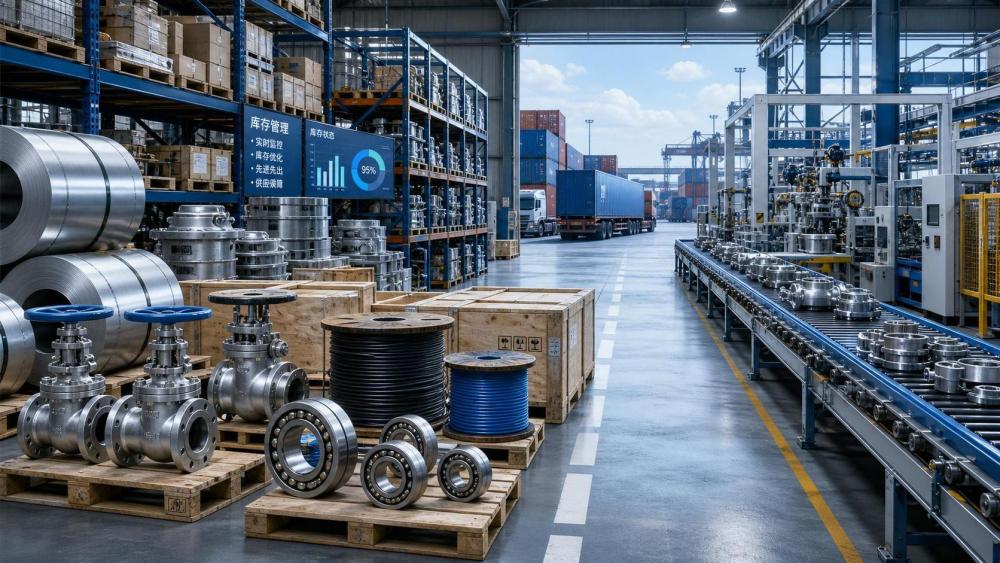
Industrial supply for manufacturing breaks down less from one big shock and more from several smaller misses happening together.
A plant may forecast output correctly, yet still face shortages caused by delayed imports, energy volatility, maintenance overruns, or sudden policy changes.
In heavy industry, supply continuity depends on upstream and downstream visibility. Steel, petrochemicals, power equipment, spare parts, and transport capacity often move as one risk chain.
That is why industrial supply for manufacturing is no longer only about negotiating the lowest unit price.
A lower quote can become expensive when delivery windows slip, carbon compliance rules tighten, or a supplier reallocates output to another market.
A more practical view is to treat supply security as part of operating uptime.
In real purchasing work, the most resilient teams watch news, policy, freight, and project activity together rather than reviewing purchase orders in isolation.
When capacity expansion, export restrictions, environmental inspections, or regional outages appear in market coverage, supply risk usually changes before invoices do.
Which warning signs usually appear before a stock disruption?
The early signals are often visible, but they are easy to dismiss when inventory still looks acceptable.
A common mistake is waiting for on-site stock to fall before investigating the cause.
More useful signals tend to appear in lead time, allocation behavior, and market language.
- Suppliers stop confirming delivery dates firmly and switch to broader shipping windows.
- Freight rates rise faster than material prices in the same region.
- Maintenance shutdowns, safety checks, or environmental audits increase across similar producers.
- Large project awards suddenly absorb equipment, metals, or industrial components.
- Import rules, tariff notices, or certification requirements change with short implementation periods.
Industrial supply for manufacturing becomes fragile when several of these signals appear together within one category.
For example, a stable raw material price does not guarantee availability if shipping slots tighten and technical approvals take longer.
This is where structured market intelligence matters. Coverage across metals, energy, mining, heavy equipment, transport equipment, and industrial support sectors helps connect events that seem unrelated at first.
A quick way to judge whether the risk is short term or structural
Short disruptions usually come from weather, port congestion, labor gaps, or temporary outages.
Structural risk is different. It follows policy tightening, capacity closures, trade realignment, or sustained demand from large infrastructure cycles.
If the issue appears across several regions or persists beyond one buying cycle, industrial supply for manufacturing may need a sourcing redesign, not a rush order.
How can supply risk be assessed before placing the order?
The strongest decisions happen before the purchase request becomes urgent.
Instead of comparing price sheets only, evaluate the full supply position around the item.
The table below works well as a practical screening tool.
This kind of review is especially useful for metals, energy-linked materials, industrial equipment, heavy spare parts, and cross-border components.
It also explains why industrial supply for manufacturing should be tied to policy updates, project tracking, and international trade intelligence rather than handled as a stand-alone transaction.
Is dual sourcing always the best answer?
Not always. Adding suppliers can reduce dependency, but it can also introduce quality variation, certification delays, and smaller volume leverage.
The better question is whether the item justifies redundancy.
For critical components with long qualification cycles, relying on one source is risky.
For low-value items with abundant local substitutes, broader sourcing may add administrative work without reducing disruption meaningfully.
A balanced industrial supply for manufacturing strategy usually separates items into three groups.
- Strategic items: secure multiple qualified options, technical approval, and visible allocation terms.
- Market-sensitive items: buy against price and trend signals, but protect lead time.
- Routine items: simplify ordering and avoid overengineering the sourcing process.
In actual operations, the real advantage comes from matching sourcing depth to business impact.
If downtime from one missing bearing, valve, cable, or specialty alloy is expensive, extra qualification work usually pays back quickly.
If not, focus on monitoring and reorder discipline instead of building unnecessary supplier complexity.
How much inventory is protection, and when does it become hidden cost?
More stock can reduce panic, but it is not the same as resilience.
Excess inventory often hides weak forecasting, poor supplier communication, or missing market insight.
The goal is not the highest safety stock. It is the right buffer for the item’s risk profile.
A useful method is to set inventory by disruption exposure, not by habit.
- Increase buffers for imported items facing customs, tariff, or shipping uncertainty.
- Reduce buffers where domestic alternatives are validated and lead time is stable.
- Review stock more often for energy-linked materials with strong price swings.
- Separate maintenance parts from production materials when usage patterns differ.
Industrial supply for manufacturing improves when inventory policy reflects real market conditions.
That means watching regional supply-demand shifts, transport availability, and changes in industrial standards or environmental requirements.
A warehouse full of the wrong grade or outdated specification does not protect production.
One practical checkpoint before raising stock levels
Ask whether the disruption is likely to repeat within the next two ordering cycles.
If the answer is no, temporary expediting may be cheaper than permanent inventory expansion.
If the answer is yes, the issue should be treated as a planning change, not a one-off exception.
What information helps most when markets are moving quickly?
In fast-changing conditions, raw price data alone is rarely enough.
Industrial supply for manufacturing becomes easier to manage when decision-making combines several information layers.
- Industry news that reveals shutdowns, expansions, accidents, and delivery shifts.
- Policy and regulatory updates covering emissions, trade rules, standards, and import requirements.
- Market trend monitoring for bulk materials, energy products, and industrial goods.
- Corporate and project tracking that shows where future demand may tighten.
- Trade intelligence highlighting tariff changes, export pressure, and overseas demand swings.
This broader view matters across steel and metals, power, petrochemicals, mining, construction machinery, heavy equipment, transport equipment, and building materials.
In practice, the best decisions often come from linking one policy update with one logistics trend and one supplier event.
That combination shows whether a delay is local noise or a meaningful threat to industrial supply for manufacturing.
So what should be done next to reduce disruption risk?
Start by identifying which materials, components, and spare parts actually stop production when they fail to arrive.
Then compare those items against current lead time behavior, regional concentration, and compliance exposure.
Where risk is high, build a response path before the next shortage appears.
- Define trigger points for expediting, resourcing, or stock increases.
- Review supplier transitions, plant maintenance schedules, and route dependency.
- Track policy, carbon, trade, and standards changes affecting incoming goods.
- Use regular market and project intelligence to test assumptions every buying cycle.
Industrial supply for manufacturing is strongest when cost control and continuity planning are managed together.
A resilient supply position does not come from reacting faster only.
It comes from seeing upstream pressure earlier, judging which signals matter, and adjusting sourcing before disruption reaches the site.
The next useful step is to build a simple review list for critical items, then test it against current market news, policy changes, and supplier developments.