
Related News
 Are Carbon Fiber Composites Ready for Mass Use in Construction Equipment?Oct 08, 2026
- How to Verify an Industrial Supplier’s Delivery Track RecordOct 08, 2026
 What Should Buyers Do When a Key Supplier Raises Prices Mid-Contract?Oct 08, 2026
- How Do Trade Sanctions Affect Heavy-Industry Supply Chains?Oct 08, 2026




Industry Briefing
Get the top 5 industry headlines delivered to your inbox every morning.
Environmental Regulations Reshaping Industrial Project Approval





Environmental regulations now shape industrial project approval as much as engineering design, financing, and procurement. In heavy industry, a permit pathway can accelerate investment, delay commissioning, or force redesign. That shift matters across steel, energy, petrochemicals, mining, transport equipment, and industrial materials, where environmental review is increasingly tied to carbon exposure, water use, emissions control, trade requirements, and long-term operating credibility.
Why approval has become more complex
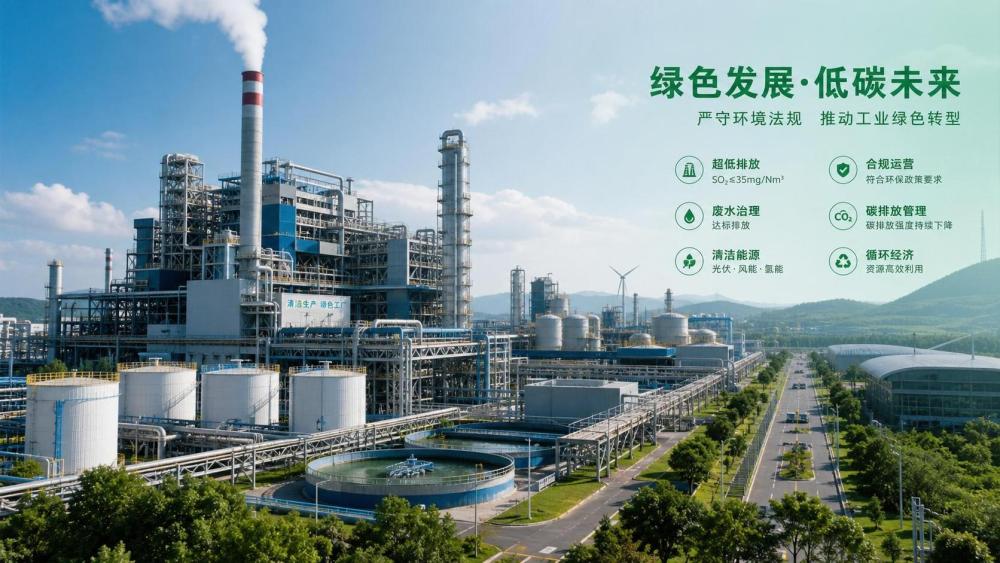
Project approval used to focus heavily on land, safety, and production capacity. Today, environmental regulations expand that checklist into a broader risk review.
Authorities are asking tougher questions about air emissions, wastewater discharge, solid waste handling, energy efficiency, biodiversity impact, and carbon intensity. In some regions, regulators also examine cumulative impact, not only plant-level performance.
This is especially visible in high-emission sectors. A new smelter, refinery unit, power asset, quarry, or heavy equipment plant may face layered approvals from environmental, planning, water, and trade-related agencies.
More importantly, environmental regulations are no longer a final-stage compliance issue. They now influence site selection, technology choice, equipment specification, contractor scope, and even expected return on capital.
What environmental regulations mean in project terms
In practical terms, environmental regulations define the conditions under which a project can be built, expanded, modified, or operated. They set measurable thresholds and procedural obligations.
Those obligations often include environmental impact assessment, baseline monitoring, public disclosure, emissions modelling, mitigation planning, permit applications, and post-approval reporting.
For industrial projects, compliance is not limited to one law or one permit. It usually sits inside a regulatory network that may include:
- sector-specific emissions standards;
- local land and water constraints;
- carbon compliance frameworks;
- import-export rules for equipment or materials;
- industry standards linked to energy efficiency and waste control.
That is why approval timing increasingly depends on how early these requirements are translated into project decisions, not how quickly forms are submitted.
The main industry signals behind the shift
Several trends are pushing environmental regulations to the center of industrial project approval.
Carbon and energy performance now affect bankability
Financiers and approval authorities increasingly view emissions intensity as a structural project risk. A technically viable plant may still struggle if its carbon profile is weak.
This applies to blast furnace upgrades, thermal assets, cement lines, petrochemical expansions, and mineral processing projects. The approval file now needs a stronger decarbonization narrative.
Resource constraints are becoming approval constraints
Water stress, land sensitivity, grid pressure, and waste disposal capacity can become deciding factors. In some industrial parks, resource competition matters as much as emissions compliance.
Trade exposure is changing compliance expectations
Export-oriented projects increasingly face downstream scrutiny from overseas buyers, customs frameworks, and carbon-related trade measures. Environmental regulations at home and market access rules abroad now interact more directly.
Public transparency is higher
Environmental data, project disclosures, and community concerns move faster than before. Weak documentation, unclear mitigation plans, or inconsistent baseline data can quickly create approval friction.
Where delays and hidden costs usually appear
Many approval setbacks do not come from a single rejected permit. They come from assumptions made too early and tested too late.
In other words, environmental regulations affect both schedule logic and cost logic. A project can appear on track in engineering terms while quietly slipping in regulatory terms.
How this plays out across heavy industry
The approval burden is not identical across sectors, but the pattern is similar: higher scrutiny, more integrated review, and tighter evidence standards.
Steel and metals
Projects are judged closely on particulate control, energy intensity, slag handling, water recirculation, and transition pathways toward lower-carbon production.
Energy and power
Fuel mix, cooling water demand, stack emissions, grid connection, and carbon exposure all shape environmental approvals. Hybrid and retrofit projects often require more detailed scenario analysis.
Petrochemicals and refining
Hazardous waste, VOC control, flare performance, leak detection, and emergency response planning are major review points. Small design gaps can become large approval issues.
Mining, extraction, and building materials
Land disturbance, tailings safety, dust, blasting impact, rehabilitation obligations, and community interface are central. Environmental regulations often extend well beyond construction.
Industrial equipment and manufacturing facilities
Approval may seem lighter, yet coating lines, heat treatment, wastewater treatment, and energy systems still require close review, especially in export-linked supply chains.
A better way to read the approval environment
Teams benefit from treating environmental regulations as a live market signal, not only a legal requirement. Regulatory changes often move alongside price shifts, trade rules, technology upgrades, and capital allocation trends.
That is why integrated industry intelligence matters. Tracking policy updates alone is not enough. Approval risk becomes clearer when regulation is read together with project news, commodity pressure, equipment changes, and cross-border demand signals.
For example, a new emissions rule may alter equipment choices. A carbon border measure may change the economics of an export-facing facility. A water-use restriction may affect regional expansion plans before permits are filed.
When those signals are monitored continuously across heavy industry value chains, it becomes easier to anticipate approval bottlenecks instead of reacting to them late.
Practical steps that reduce approval risk
Environmental regulations cannot be simplified by wishful planning, but they can be managed more intelligently.
- Map permits early against site conditions, utilities, logistics, and export exposure.
- Align feasibility work with likely emissions, water, and waste thresholds before equipment is locked.
- Test multiple technology options, including retrofitability and future carbon performance.
- Check whether imported systems meet local certification and environmental monitoring requirements.
- Build baseline data discipline early, because weak data often creates avoidable review cycles.
- Follow policy and regulatory updates together with project tracking and market signals.
Usually, the strongest projects are not the ones with the most paperwork. They are the ones where environmental assumptions, engineering choices, and commercial expectations stay aligned from the beginning.
What to watch next
Environmental regulations will likely become more integrated with industrial policy, carbon accounting, digital monitoring, and trade governance. That means approval decisions may rely more on traceable data and less on broad compliance claims.
Projects entering the pipeline should be reviewed through several lenses at once: regulatory timing, regional resource pressure, technology maturity, buyer expectations, and downstream market access.
A useful next step is to compare planned assets against current policy updates, regional approval trends, and similar project outcomes across the value chain. That approach creates a clearer basis for design choices, budget protection, and approval sequencing.
In a market where environmental regulations increasingly shape project viability, better decisions start with better visibility. The sooner those signals are built into planning, the fewer surprises appear when approval becomes the critical path.