
Related News
 Are Carbon Fiber Composites Ready for Mass Use in Construction Equipment?Oct 08, 2026
- How to Verify an Industrial Supplier’s Delivery Track RecordOct 08, 2026
 What Should Buyers Do When a Key Supplier Raises Prices Mid-Contract?Oct 08, 2026
- How Do Trade Sanctions Affect Heavy-Industry Supply Chains?Oct 08, 2026



Industry Briefing
Get the top 5 industry headlines delivered to your inbox every morning.
Cross-Border Trade Mining Equipment: Common Delays and How to Avoid Them





Where cross-border trade mining equipment delays usually begin
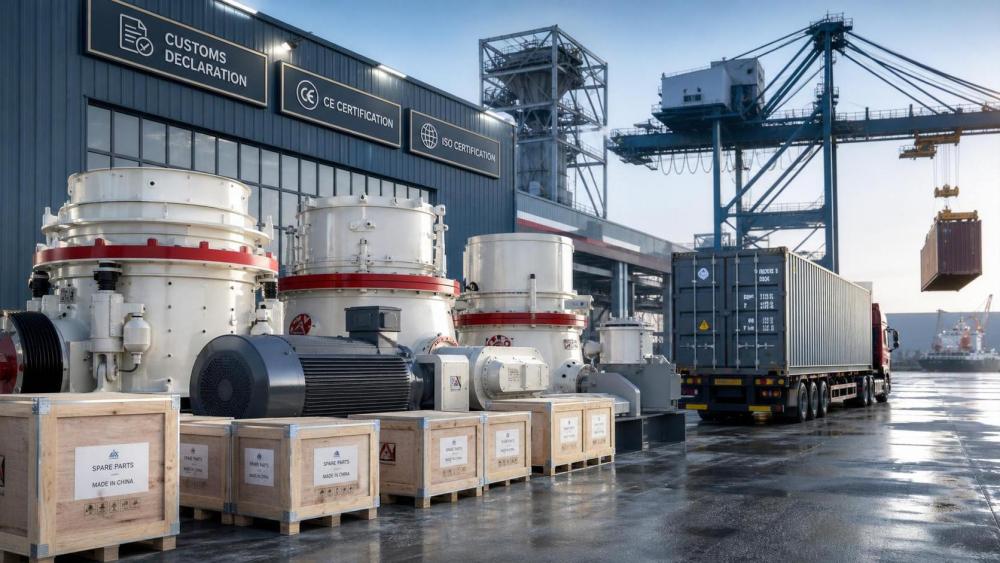
Cross-border trade mining equipment deals rarely fail because of one dramatic problem. They usually slow down through several small gaps that were not aligned early.
A shipment may be technically ready, yet customs documents are incomplete. A machine may be sold, yet local certification is still unclear. Delivery dates move, budgets stretch, and downstream project schedules become harder to protect.
In heavy industry, that delay matters beyond one purchase order. Mining, metals, power, transport, and construction projects often depend on synchronized equipment arrivals, commissioning windows, and site readiness.
That is why cross-border trade mining equipment planning should be treated as an operating risk issue, not only a logistics task. The most reliable decisions combine trade intelligence, regulatory tracking, supplier visibility, and timing discipline.
Why the same equipment order behaves differently across projects
Not every international order faces the same pressure points. Delay risk changes with equipment size, destination rules, port capacity, site conditions, and how much integration is required after arrival.
A standard pump or motor package often moves through a familiar process. A modular crusher line, underground loader, or processing system usually involves more documents, more interfaces, and more approval checks.
In actual transactions, the key question is not whether delay is possible. The better question is where the delay is most likely to appear, and which dependency can shift the entire project calendar.
This matters for platforms covering industrial news, policy updates, price monitoring, project tracking, and export intelligence. Those signals often reveal trade friction before it becomes a direct delivery problem.
A quick comparison of common delay patterns
Different cross-border trade mining equipment scenarios create different bottlenecks. A simple comparison helps separate routine shipments from high-exposure ones.
When customs clearance looks routine but becomes the first bottleneck
Customs delay is one of the most common issues in cross-border trade mining equipment. It is also one of the most underestimated because teams often assume the freight forwarder will resolve everything.
That assumption works only when product descriptions, technical specifications, invoice language, and HS classification all match. Heavy equipment shipments often contain attachments, control units, and spare kits that complicate declarations.
A more challenging situation appears when one shipment mixes complete equipment with service tools or consumables. Customs may split the review, reassess duties, or request supporting material that was never prepared.
The practical fix is to align the commercial invoice, packing list, technical sheet, and regulatory certificates before dispatch. In cross-border trade mining equipment, document consistency usually saves more time than last-minute expediting.
What gets missed most often
- Attachments listed as accessories without separate technical descriptions
- Incorrect product naming between contract and customs paperwork
- Missing origin evidence for tariff treatment or free trade eligibility
- No early check on restricted import categories or destination licensing
Certification gaps usually surface later than expected
Certification problems do not always stop a deal at the contract stage. More often, they appear when cargo is ready, inspection starts, or site installation cannot proceed without local approval.
This is especially relevant in cross-border trade mining equipment involving electrical systems, pressure components, emissions controls, or safety-critical assemblies. One missing document can stall commissioning, even after the machine physically arrives.
Used equipment brings another layer of complexity. Condition certificates, refurbishment records, and environmental compliance may matter more than original factory specifications.
A sound approach is to verify destination acceptance standards during supplier evaluation, not after shipping space is booked. In many cases, the real issue is not certification cost, but lead time to obtain missing approvals.
Shipping disruptions hit harder when delivery sequence matters
For some projects, a one-week shipping delay is manageable. For others, it triggers idle labor, crane rescheduling, storage exposure, and missed construction milestones.
Cross-border trade mining equipment is often moved in split consignments. Structural frames, drives, control panels, and wear parts may travel through different ports or carriers. If one critical unit slips, the entire installation plan can pause.
That risk grows in periods of port congestion, vessel reshuffling, geopolitical rerouting, or inland transport shortages. Market trend monitoring becomes useful here because freight volatility often follows broader changes in energy, metals, and industrial demand.
The more reliable strategy is to identify critical-path components early. Not every crate deserves premium handling, but key modules, control systems, and commissioning parts usually do.
A practical way to rank shipment priority
- Prioritize items that block installation or testing
- Separate low-value consumables from high-impact components
- Match shipment sequence to on-site construction progress
- Reserve contingency time for oversized cargo and remote routes
Supplier coordination becomes the hidden delay in larger packages
In larger cross-border trade mining equipment packages, delays often come from fragmented responsibility rather than transport alone. One supplier handles the main machine, another handles motors, and a third manages automation or wear parts.
On paper, each delivery may look on time. In practice, missing interface drawings, late factory testing, or unconfirmed cable specifications can push the complete package behind schedule.
This is where project tracking matters. News about capacity expansion, production line upgrades, labor constraints, or order backlogs can reveal supplier pressure long before a formal delay notice appears.
A better control method is to review cross-border trade mining equipment orders by interface milestone, not only by shipment date. Documentation release, inspection completion, packing readiness, and destination handover should each have clear ownership.
Different situations need different delay-prevention tactics
Not every risk should be managed in the same way. The right response depends on whether the order is standard, modular, refurbished, oversized, or tied to a live project handover.
Misjudgments that make cross-border trade mining equipment delays worse
One frequent misjudgment is focusing only on machine specifications. Technical performance matters, but many delays come from trade conditions, local standards, and execution dependencies outside the datasheet.
Another common error is treating similar destinations as if they share the same import process. Neighboring markets may apply very different rules for emissions, used equipment, tax treatment, or pre-shipment inspection.
Cost analysis can also become too narrow. A lower equipment price may lose its advantage when demurrage, reinspection, storage, or site standby costs are included.
In actual operations, the safest judgment combines regulatory updates, freight conditions, supplier readiness, and project timing. That wider view is usually what prevents routine delays from becoming expensive disruptions.
What to check before the next international equipment move
Before the next cross-border trade mining equipment order advances, it helps to review the transaction through a few practical filters rather than one overall timeline.
- Map the critical-path components, not just the full shipment value
- Confirm customs codes, invoice wording, and destination document requirements
- Check whether certifications support import, installation, and operation
- Review supplier production pressure, testing milestones, and interface dependencies
- Build schedule buffers around ports, inland transport, and remote site handling
- Track policy shifts, tariff changes, and logistics signals affecting heavy industry trade
Cross-border trade mining equipment moves more smoothly when the scenario is defined clearly before execution starts. Once the likely delay point is identified, prevention becomes much more practical.
The next useful step is to compare project conditions, route constraints, compliance needs, and supplier timelines in one review framework. That usually leads to better timing, clearer risk ownership, and fewer avoidable surprises.