
Are industrial machinery buyers underestimating thermal stress in high-cycle environments?




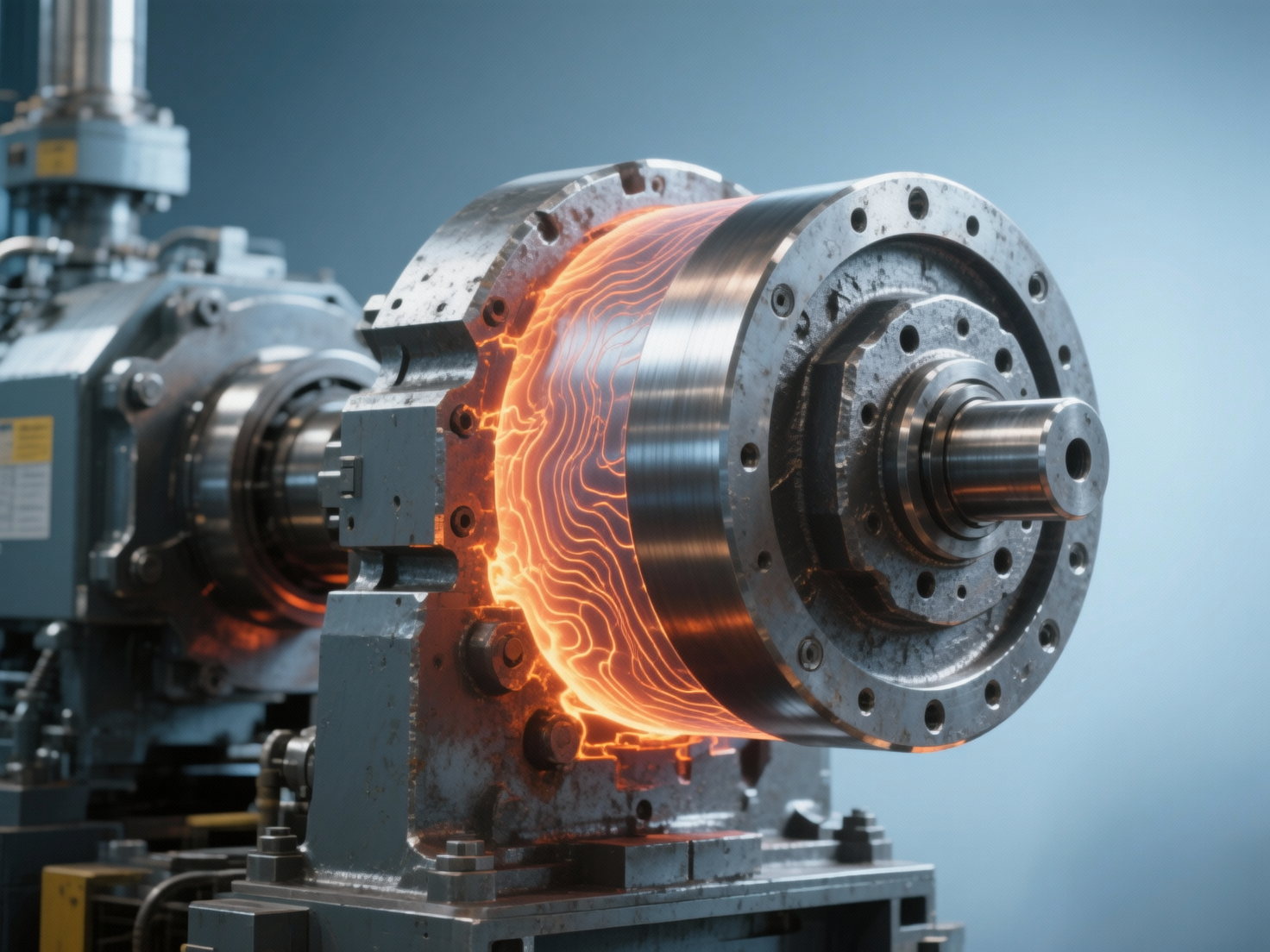
In high-cycle industrial environments—from steel and energy production to mining and heavy equipment manufacturing—thermal stress silently degrades machinery performance, reliability, and lifespan. Yet procurement teams, operations personnel, and decision-makers often underestimate its impact during sourcing, supply chain planning, or equipment lifecycle management. As global trade accelerates and industrial supply chains grow more complex, overlooking thermal resilience in industrial machinery, machinery parts, and processing equipment can lead to unplanned downtime, cost overruns, and safety risks. This article examines how manufacturing professionals and equipment suppliers can integrate thermal stress assessment into procurement strategy, supply chain risk mitigation, and industrial equipment specification—ensuring long-term operational integrity across heavy industry and industrial wastewater treatment applications.
Why do procurement teams overlook thermal stress—and what’s at stake?
Thermal stress arises when repeated heating and cooling cycles cause differential expansion and contraction in metal components—especially at welds, bearings, and housing interfaces. In high-cycle settings (e.g., blast furnace taphole drills operating 200+ cycles/day or continuous casting rollers exposed to 800°C–1200°C thermal swings), cumulative micro-cracking reduces fatigue life by up to 40% before visible wear appears.
Procurement decisions often prioritize upfront cost, delivery speed, or dimensional compatibility—while deferring thermal analysis to maintenance or engineering teams post-installation. But 68% of unplanned shutdowns in steelmaking facilities trace back to thermally induced failures that were neither specified nor verified during purchase. That delay compounds risk: retrofitting thermal-resistant alloys or redesigning cooling paths after commissioning adds 3–6 weeks to recovery time and increases total cost of ownership by 22–35%.
The root cause isn’t ignorance—it’s structural fragmentation. Procurement rarely owns thermal specifications; design engineers seldom define cycle-based thermal loads for suppliers; and operators report symptoms (vibration spikes, lubricant degradation) only after failure thresholds are crossed. Bridging this gap requires embedding thermal resilience criteria directly into sourcing workflows—not as an afterthought, but as a non-negotiable procurement dimension.
Which high-cycle applications demand thermal stress validation—and how?
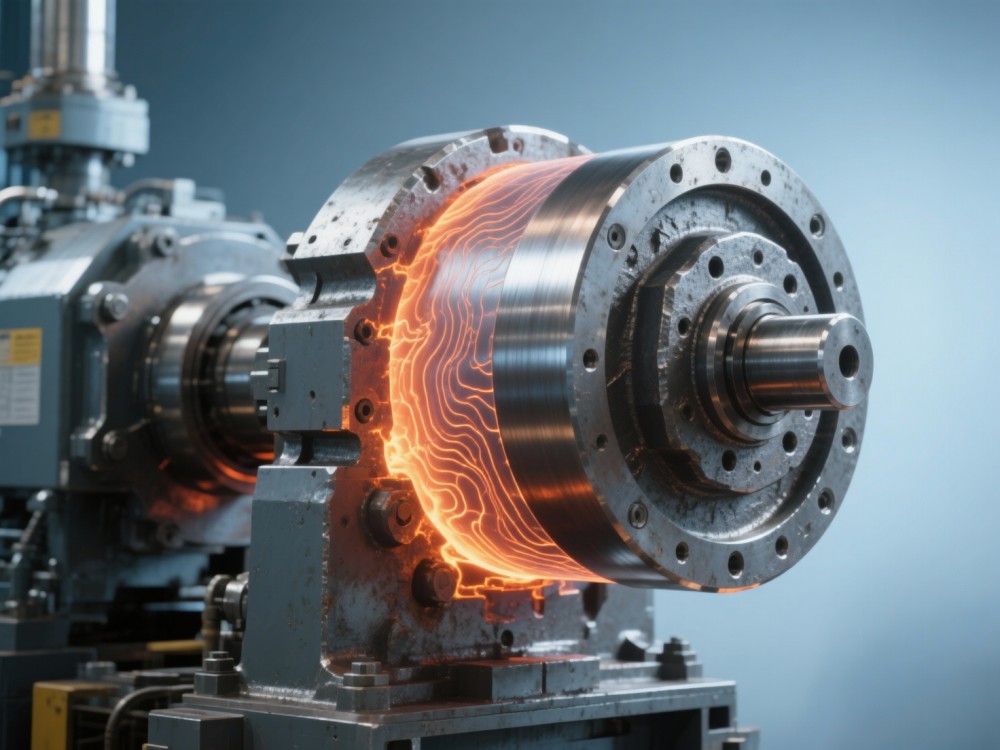
Thermal stress exposure varies significantly across industrial subsectors. Below is a cross-reference of high-risk application clusters, typical thermal cycling profiles, and minimum validation requirements for procurement teams:
This table clarifies why “thermal stress” isn’t a single metric—it’s a system-level behavior shaped by material selection, geometry, duty cycle, and environmental interface. Procurement teams must require documentation aligned to these application-specific thresholds—not generic “high-temp grade” claims. For example, a crusher liner rated for 300°C static use may fail catastrophically at 220°C under rapid cyclic loading due to embrittlement in the heat-affected zone.
How to evaluate thermal resilience during supplier qualification
Supplier evaluation should move beyond certifications and brochures. Focus on verifiable evidence tied to your actual operating envelope. Start with these 4 non-negotiable checks:
- Request FEA simulation reports validated against physical thermal cycling tests—not just static thermal conductivity values.
- Verify material traceability: alloy batch certificates must include thermal aging data (e.g., ASTM A999 tensile results after 1000 hr at service temperature).
- Confirm supplier has conducted accelerated thermal fatigue testing matching your expected cycle count (e.g., 10⁵ cycles for continuous-process dryers vs. 10⁴ for batch mixers).
- Require third-party inspection reports for critical welds—including post-weld heat treatment (PWHT) records and hardness mapping across heat-affected zones.
Without these, even ISO 9001-certified suppliers may deliver components optimized for room-temperature assembly—not thermal endurance. One OEM found 37% of rejected castings failed thermal fatigue screening despite passing dimensional QA—a gap only revealed through mandatory cycle-simulated validation.
What thermal stress oversight costs your operation—and how to act now
Underestimating thermal stress doesn’t just increase maintenance spend—it distorts capital allocation. A recent benchmark across 22 heavy industry plants showed thermal-related failures accounted for 29% of total unscheduled downtime, yet received just 6% of predictive maintenance budget allocation.
Our platform enables procurement and engineering teams to close this gap with actionable intelligence: real-time thermal performance benchmarks by equipment type, supplier-specific failure rate dashboards, and pre-vetted thermal specification templates aligned to ASME BPVC Section VIII, EN 13445, and API RP 581. We support rapid validation of thermal resilience claims—within 48 hours for standard components, or 5 business days for custom-engineered systems.
If you’re sourcing machinery for high-cycle environments—or managing legacy assets nearing thermal fatigue thresholds—we offer free thermal specification review and supplier capability mapping. Contact us to request: (1) application-specific thermal load templates, (2) thermal fatigue test report checklist, or (3) supplier qualification scorecard with thermal resilience weighting.

Industry Briefing
Get the top 5 industry headlines delivered to your inbox every morning.